What today’s sustainable self-builders can learn from an iconic noughties Grand Design
More than 25 years after Sarah and Jeremy built their dream home in a north London cul-de-sac, it continues to offer useful lessons to anyone planning a green self-build today
Architect Sarah Wigglesworth and her partner Jeremy Till recently returned from a holiday in Tunisia – via train, the couple don’t travel by plane – where the changing landscape offered a reminder of how important it is for architecture to respond to its environment.
In the north the country is green and mountainous, while further south the land gives way to desert. The buildings in each accommodate this change in an often unassuming – but extremely effective – way.
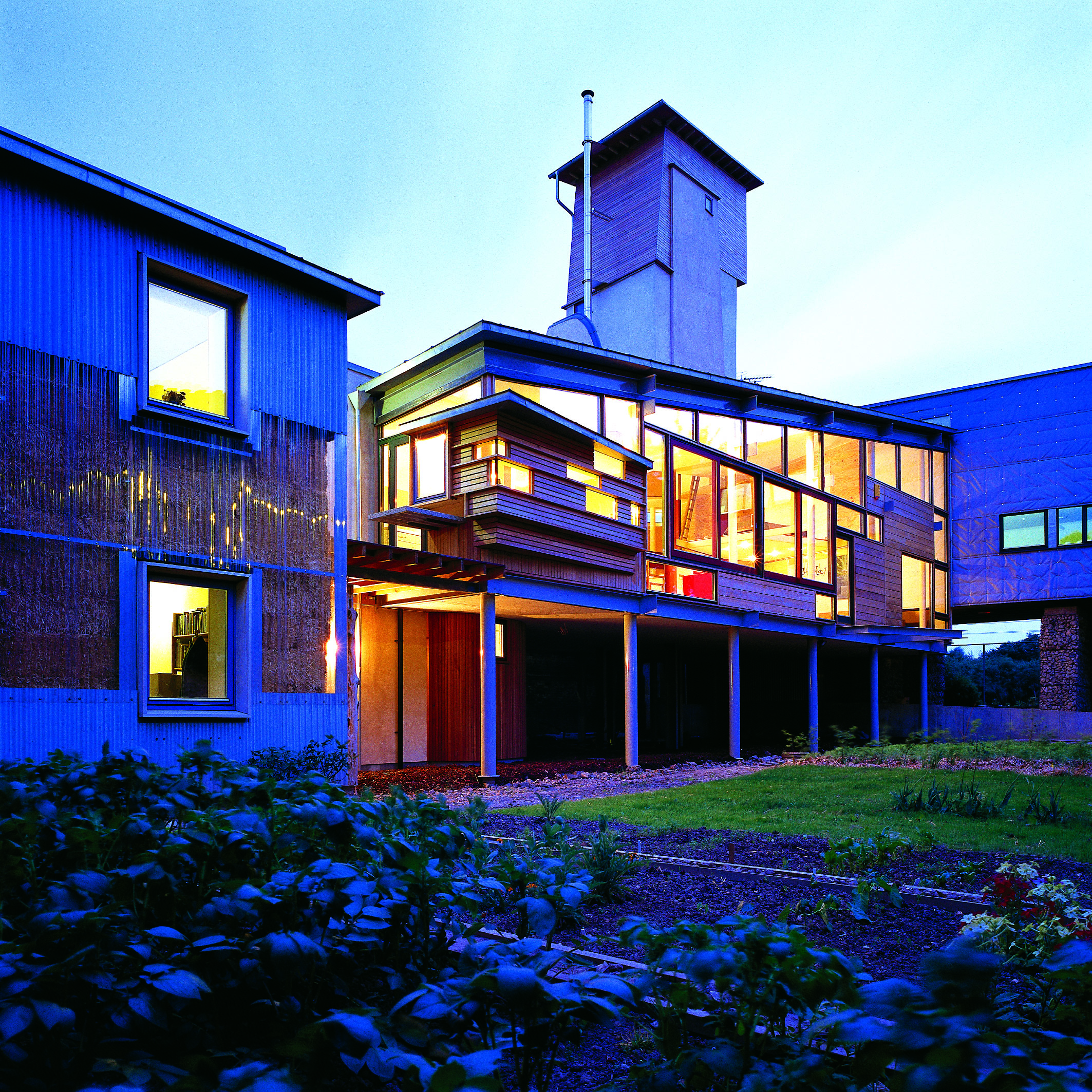
For Sarah, the trip resurfaced the questions that shaped Stock Orchard Street, (2001), the live/work complex that featured in Series 1 of Grand Designs. The project was experimental, low-budget, climate-responsive and deeply practical.
It was also an attempt to work out what genuinely green architecture could look like when built in an urban environment with the materials close at hand.
At present, when many self-builders are weighing up Passivhaus standards, embodied carbon, reclaimed materials and overheating risk, Sarah believes the original green principles of her Grand Design still hold.
“The sun still rises in the east and sets in the west,” says Sarah. “You still have to think about building orientation, breezes, light, shading, insulation and the relationship between the building and its site. In my experience, it’s often the simple techniques that’ve been tried and tested for years that are the most resilient.”
Going green
Sarah founded Sarah Wigglesworth Architects in 1993, just after she had become interested in sustainable design. Her practice began with modest work, including small extensions and residential projects.
A Fulbright Fellowship in the US helped to spark her thinking. While there, Sarah and Jeremy were struck by the gap between population and resource use, and by how narrow their earlier architectural education had made the subject of green building feel.
“Sustainability had been taught as a technical matter,” Sarah recalls. “There wasn’t enough attention to consumption, economics and the social habits that shape the built environment. In the US, the relationship between consumption of resources, waste and lifestyle was stark to us.
“When we returned to the UK, we wanted to test out a different approach. Instead of pursuing high-status architectural materials, we began looking at what was cheap, local, recycled, available and low impact. I suppose much of that thinking is an idea that today would be referred to as the circular economy.”
A sustainable Grand Design
©Sarah Wigglesworth and Jeremy Till
Stock Orchard Street became the place where those ideas could be put into practice and tested. Sarah describes the project as a leap into the unknown.
They had acquired the site, committed their money and put their professional reputation on the line. Then they started seriously learning all there was to know about ecological building design.
“Construction began at the end of 1997 and was meant to take a year. Naturally, this timescale went out of the window, and the house ended up being finished at the end of 2000, with the Grand Designs episode airing in early 2001.”
The experience was full of valuable learnings and still shapes Sarah’s advice to other self-builders today.
“A project doesn’t have to be finished in every detail before it becomes liveable. If your budget is under strain, the priority is to reach the point where you can move in safely and continue the work later. Learning when to compromise, delay or adapt became part of the design process itself for us.”
‘I’m still surprised by how much we got right!’
Sarah says that a green self-build begins with understanding building physics. Before selecting products or systems, self-builders should take time to learn how their building will relate to the sun, wind, water and surrounding site.
“At Stock Orchard Street, our approach drew on passive solar design. The principles it’s based on are that you make use of the resources available in the environment, meaning the building takes care of tempering conditions before the technical equipment is even factored in. That also saves money in running costs.” says Sarah.
“The building was oriented towards the sun, shaded in summer and heavily insulated to the north, where most heat is lost.
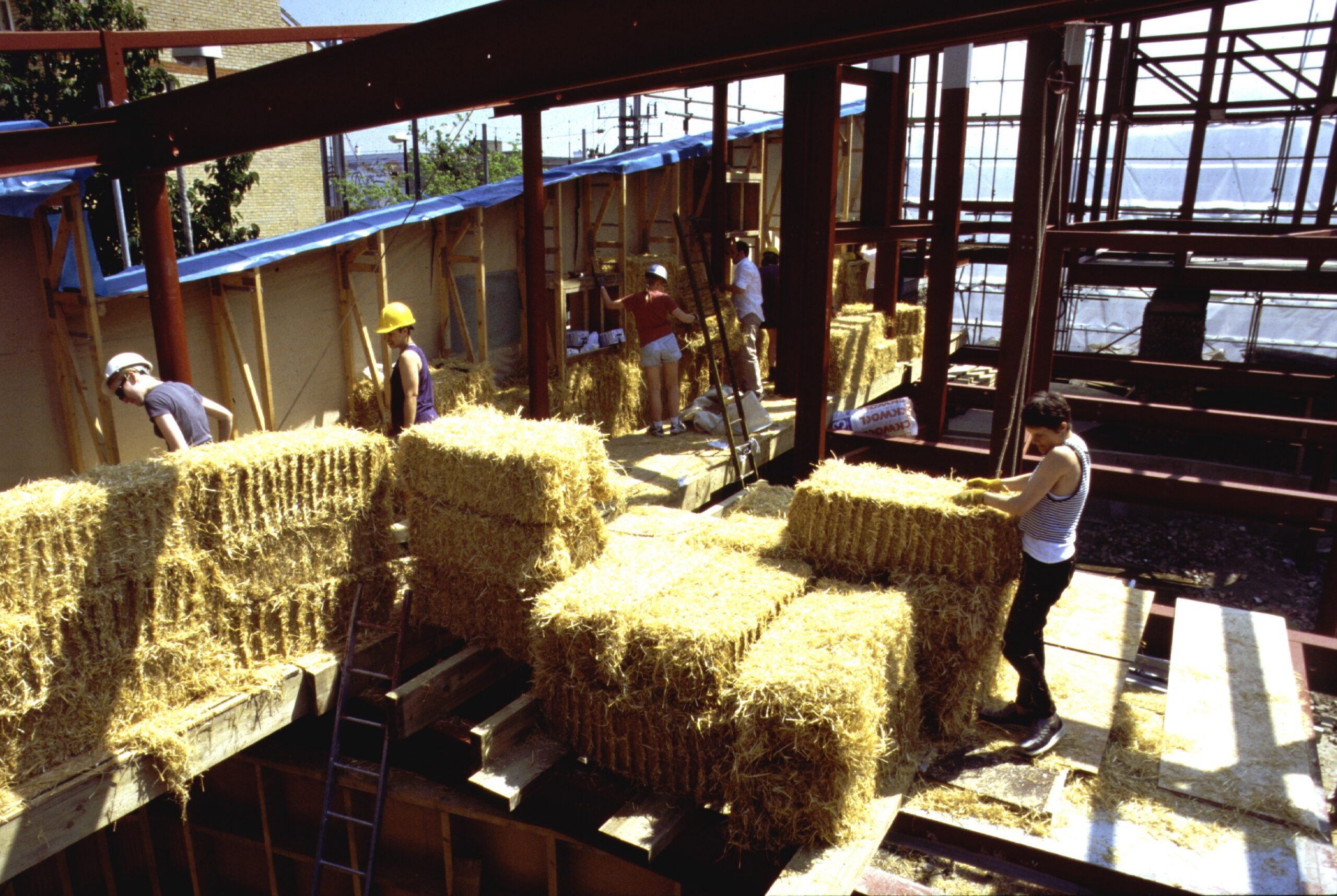
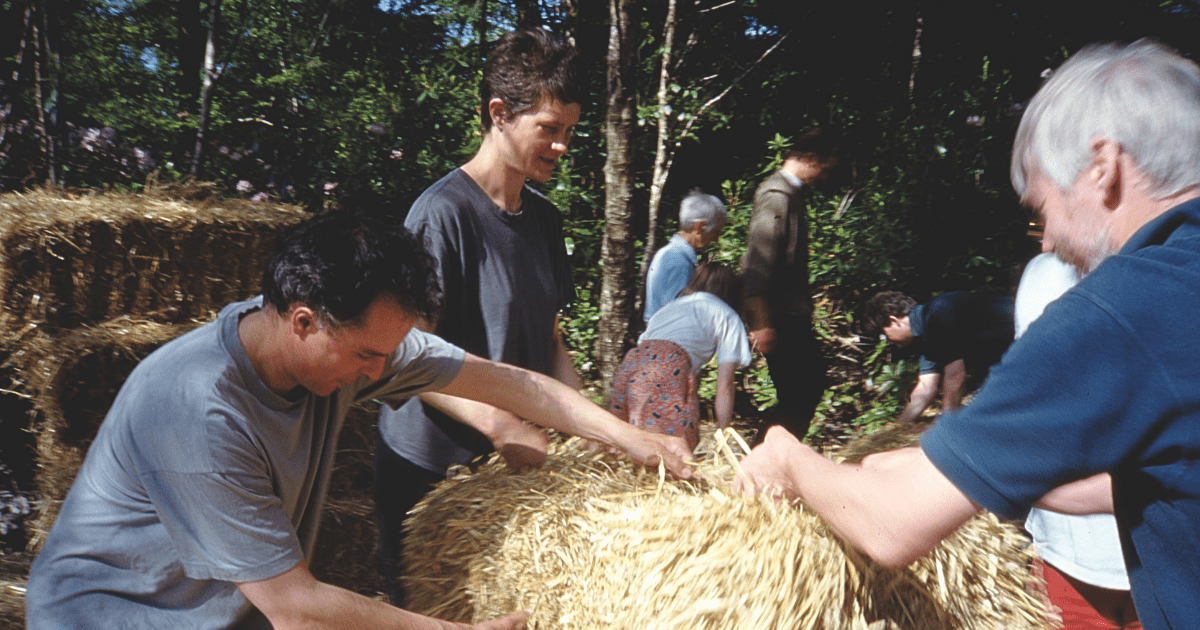
“Straw bales formed part of the wall build-up and natural ventilation was designed through adjustable louvres and vents which we control
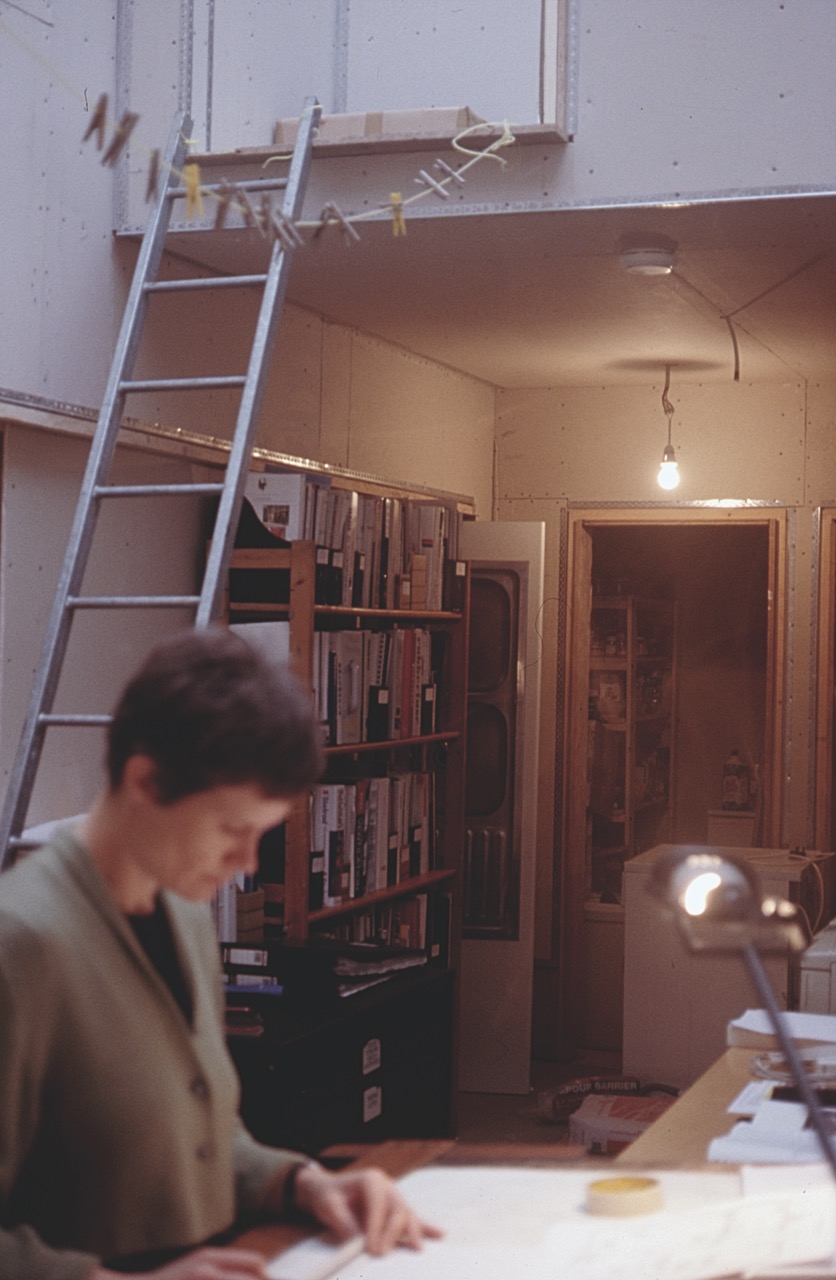
“Our methods were pragmatic, rather than glamorous or polished. Drawings were all done by hand, and the details were developed in discussion with our builder.
“We couldn’t afford the level of consultancy support now common on low-energy projects, which sometimes still makes me surprised by how much we got right!”
The Passivhaus technique
©Sarah Wigglesworth and Jeremy Till
For eco-minded self-builders today, Passivhaus can offer a more structured route. Sarah notes its value, especially where energy bills and performance targets are the main concern.
“I think it’s one route among several, but not a substitute for design judgement. It’s also quite technical and, for most people, and will require employing a competent environmental designer.
“I sometimes feel that the method can lead to very ordinary looking buildings if followed without enough attention to space, proportion, pleasure and design. A high-performing home should still be a good piece of architecture.”
Building for a changing climate
After living at Stock Orchard Street for the last 25 years, Sarah says she’s increasingly aware of the warming climate in London. Summers are hotter, and shading has become more important, particularly on glazed south and south-west façades.
“For self-builders, this means thinking carefully about window size, orientation, external shading and summer comfort from the earliest stage,” she says. “It also means paying more attention to rainwater.
“The UK is also getting wetter in the winter, while having more summer droughts. Roof design, water harvesting and drainage can be an important part of building in long-term resilience to your home.
“I think self-builders today should read widely about how to make their home both green and adaptable. But try to avoid sources that make sustainable construction feel more difficult than it is.
“One book that had a big influence on Stock Orchard Street was The Straw Bale House. It was refreshing to read because it didn’t say, ‘you must build like this’.
The logic was explained and helped us to understand how moisture migrates through straw bales, and how their structural stability works. The authors do a really good job of demystifying the whole thing.”
Finding building materials
©Sarah Wigglesworth and Jeremy Till
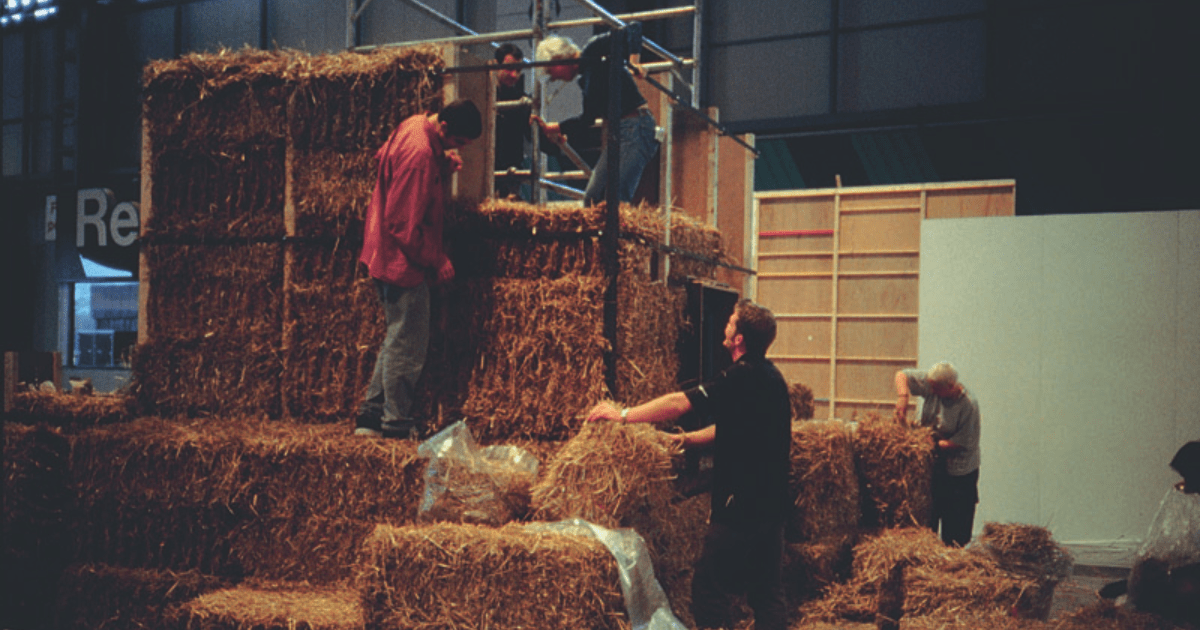
A striking part of Stock Orchard Street was its big use of reclaimed materials.
“The gabions, for instance, were filled with crushed concrete from yards in Stratford,” explains Sarah. “Without that reuse, the material would likely have been processed further for new concrete.
“Obviously, using these products might imply a new aesthetic for your building
“Some manufacturers are beginning to get on board, too. Plasterboard manufacturers, for example, can take back what you’re not able to use and recycle it into new gypsum products.
“Something like a straw bale can come from a farm. If you’re in an area with clay soil, you can dig it out of the ground. Those are very good regenerative materials because crops can regrow, and you can let a building go back into the ground at the end of its life.
“You could also go to a local lumber merchant and research whether there’s any recycled timber around, or what’s local, rather than importing wood from somewhere further afield.”
Also, Tipping Point East has recently opening with a view to kick-starting the recycling economy in London. That’s a great move which could move the dial in terms of where we source our building materials.
Reclaimed or new-eco?
Sarah says she’s not dogmatic about reclaimed materials. New-eco products, such as clay panels or unfired bricks, may have an important part to play. But she’s wary of assuming that progress always means a new manufactured product.
“Traditional building methods often contain intelligent climate responses. In hot climates, thick mud walls can help keep interiors cool. In the UK, the use of thermal mass in the built fabric will become more important as our summers grow hotter.
“Our homes will need to recover some of that adaptability very soon. If you plan to be there for any length of time, think about what the future will look like, for you and the climate, and anticipate accordingly.
“For self-builders, the lesson here is to think about performance first, fashion later. A new-eco method or material is useful only when it suits the building, the site and the lifestyle, capability and technical know-how of those who’re going to live there.”
Making the most of your garden
©Paul Smoothy
The experimental design of Stock Orchard Street doesn’t stop at the walls of the house. Its garden is thoughtfully landscaped to provide shade, help manage rainwater and create a habitat for insects, birds, squirrels and foxes. Greenery can be used to shade sunny aspects and help cool the setting around buildings.
“It also supports food growing and makes our daily life more self-sufficient,” says Sarah. “This wider thinking really matters. Where a home is, how we travel, and whether a building can adapt across different stages of life all form part of its environmental impact.
“To me, that’s the long-lasting freedom you gain as a self-builder. With enough care at the beginning, you can design a home that can change, age and respond along with you and your needs.
“Stock Orchard Street was never a polished eco blueprint but resembles a research project.
“Its value lies in showing how much can be learned from building with conviction, using what is to hand and carefully considering the world outside your window.”