Extend, Interior Design, Renovate
A Transformation in Tooting: Explore this Exquisite Edwardian Terrace
The project transformed an end-of-terrace property that had not been updated in over 30 years
New London architecture practice, Studio Colab, has reimagined an early Edwardian home in Merton, South London, with a carefully considered extension that brings light, clarity and contemporary elegance to the period property.
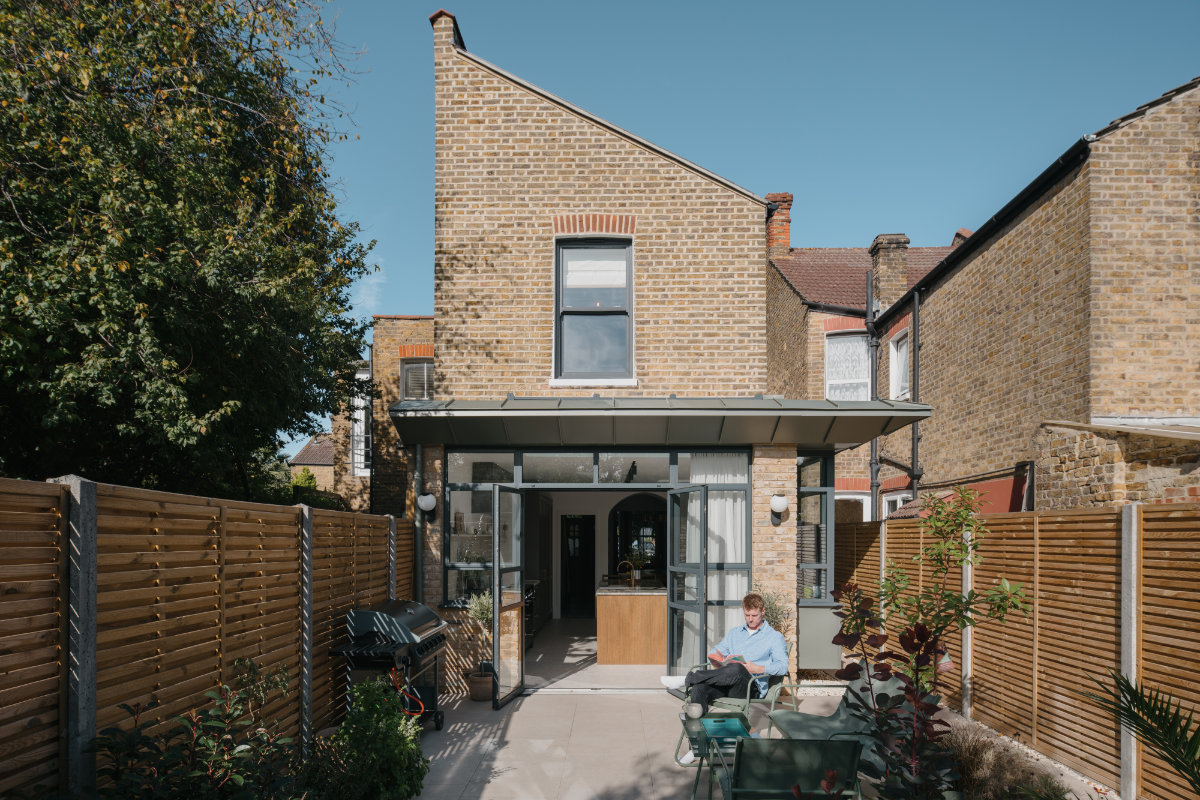
Defined by a sculptural green zinc canopy and a projecting oriel window, the renovation transforms the home’s relationship with both daylight and the garden, while introducing a more intuitive flow between its living spaces.
Known as Tooting House, the project sees an end-of-terrace residence, untouched for more than three decades, thoughtfully reconfigured to suit contemporary family life without losing sight of its Edwardian character.
Studio Colab’s intervention focused on strengthening the visual and physical connection to the rear garden, creating a sequence of light-filled interiors while celebrating, rather than erasing, the home’s original architectural fabric.
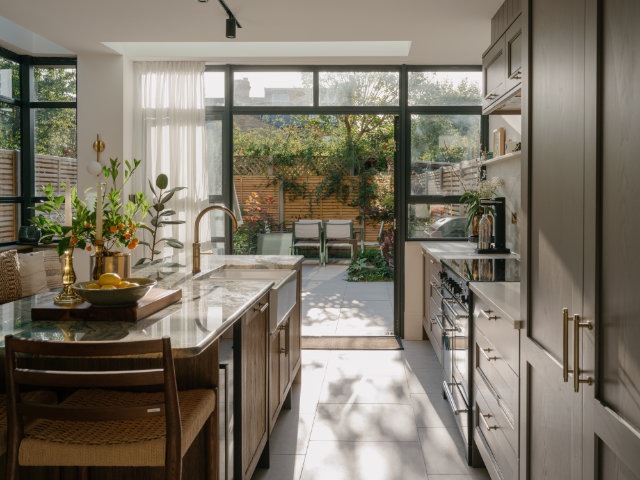
Photo: Tim Crocker
Reimagining the relationship between house and garden
For Studio Colab founder Fabian Danker, the brief extended well beyond creating additional floor space. Instead, the project became an exploration of how architecture could reshape the experience of everyday living.
“The project was about transforming the home‘s relationship with its garden and creating more flexible living spaces,” explains Danker.
“It grew from a conversation about connection — specifically, how to bridge the divide between a traditional Edwardian floor plan and the way people want to live today.
“Previously, the ground floor was arranged as a series of small, disconnected rooms, with a narrow kitchen and very limited access to natural light at the rear.
“While the front of the house enjoyed generous north-facing sash windows, the south-facing rear remained unexpectedly dark and enclosed.
“The original arrangement isolated the kitchen from the dining and living spaces, creating both physical and social separation. Our ambition was to dissolve those boundaries entirely.
“We envisioned a fluid ground floor, anchored by the kitchen as the social heart of the home, while establishing a seamless dialogue with the garden beyond.
“Ultimately, the project was never simply about introducing more daylight — it was about carefully choreographing how the clients move through, inhabit and experience their home.”
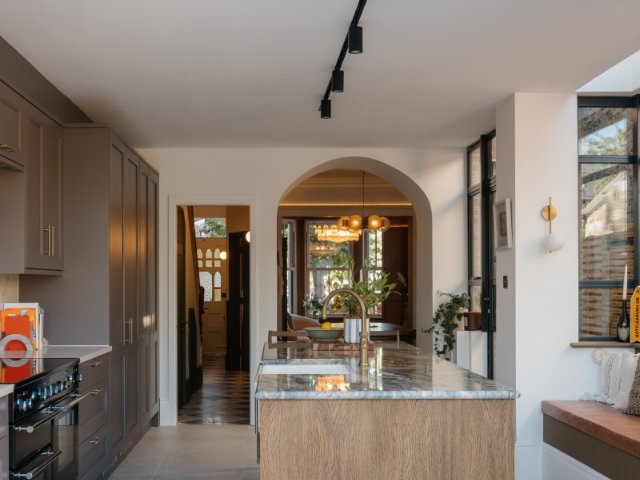
Photo: Tim Crocker
Designing for longevity
Every ambitious renovation presents its own challenges, but for Tooting House, the defining constraint was not the existing building – it was the budget.
Rather than allowing financial limitations to compromise the design, Studio Colab used them to shape a longer-term architectural strategy.
“Rather than viewing the budget as a setback, we treated it as an opportunity to develop a phased masterplan,” explains Danker.
“Our priority was ensuring that every investment made during this first phase would continue to deliver value well into the future.
“Structural steelwork and service connections for a future loft conversion were incorporated from the outset, effectively future-proofing the home before the next stage of the project even begins.
“When the clients are ready to extend upwards, the infrastructure will already be in place, allowing the house to evolve with minimal disruption to everyday life.
“It was important that the architecture could grow alongside the family, rather than requiring another fundamental intervention further down the line.”
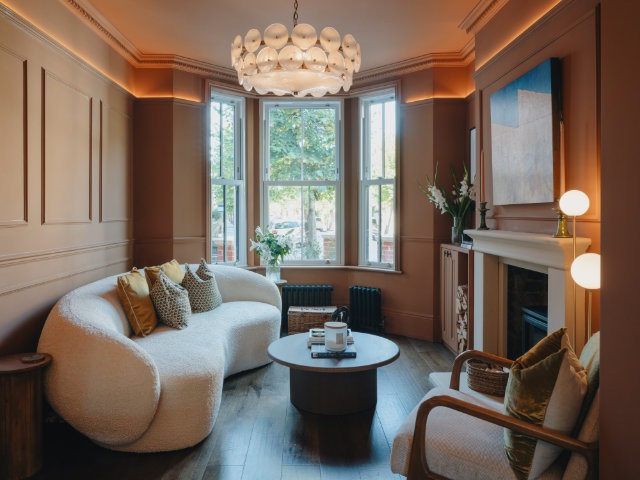
Photo: Tim Crocker
Working with the existing fabric
Ahead of construction, the homeowners stripped the property back to its original brick shell, exposing the building’s structure and providing the design team with a clear understanding of the house’s potential.
While this created greater freedom for the renovation, Danker believes no period home is ever truly a blank canvas.
“Every existing building reveals its own story once the layers are removed,” he says.
“Stripping back an older property frequently exposes structural quirks and hidden repairs that would never appear during a conventional survey.
“Although these discoveries can initially feel unsettling for homeowners, they are an essential part of the restoration process.
“Resolving them ensures the finished home is not only visually refined, but structurally resilient for decades to come.”
A considered architectural intervention
At the heart of the transformation is a carefully composed single-storey extension, conceived as a natural continuation of the original Edwardian home rather than a competing architectural statement.
“The extension introduces a generous open-plan kitchen centred around a new oriel window, creating a space equally suited to everyday family life and entertaining,” explains Danker.
“Floor-to-ceiling Crittall-style glazing and a sequence of rooflights draw daylight deep into the plan, while framing carefully considered views towards the garden.
“The positioning of each glazed element follows a deliberate rhythm informed by the proportions of the kitchen itself, creating a consistent architectural language throughout the extension.
“That same language continues into the projecting oriel window and glazed side entrance, allowing every new intervention to feel connected as part of a single architectural composition.”
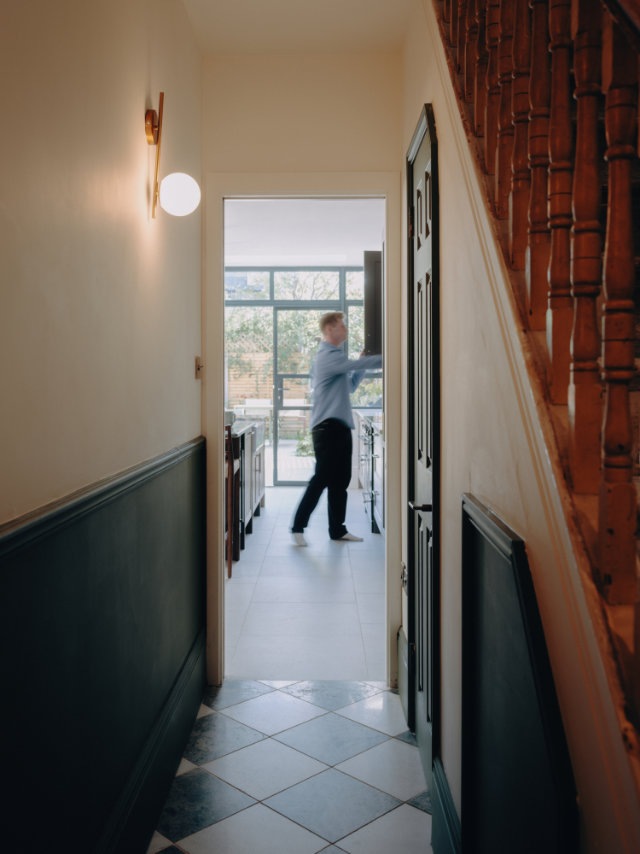
Photo: Tim Crocker
Designing with daylight
Bringing natural light into the previously enclosed rear of the property formed one of the defining ambitions of the brief.
Rather than relying solely on larger areas of glazing, Studio Colab adopted a more measured approach, carefully balancing daylight with thermal comfort.
“We used daylight simulation modelling to move beyond intuition and understand precisely how light would behave throughout the home,” says Danker.
“Introducing more glazing is only part of the solution. Equally important is controlling solar gain, particularly as our summers continue to become warmer.
“The architectural canopy became the answer. More than a visual gesture, it functions as a passive environmental device, carefully angled to welcome low winter sunlight while providing generous shade during the height of summer.
“It allows the house to respond naturally to the changing seasons, improving comfort without relying solely on mechanical systems.”
The sculptural green zinc canopy
Among the project’s defining architectural features is the distinctive green zinc canopy, a contemporary addition that unifies the rear and side elevations while giving the extension its unmistakable identity.
Far more than an aesthetic flourish, the canopy performs multiple roles — providing passive shading, protecting external circulation routes and establishing a striking architectural silhouette inspired by the patina of naturally weathered copper.
“The canopy is a highly engineered piece of architecture,” explains Danker.
“We developed a series of bespoke steel fins through detailed 3D modelling before wrapping them in plywood and cladding the structure in green zinc.
“The same level of precision informed the projecting oriel window, which is bolted directly to the structural columns to achieve the appearance of a floating cantilever.
“Even the steel posts were carefully aligned with the glazing bars, allowing the structural engineering to disappear almost entirely from view and creating a remarkably lightweight architectural expression.”
The projecting bay window was equally considered, carefully balancing the clients’ practical requirements with the architectural composition of the extension.
“Maintaining secondary access to the rear garden was an important part of the brief, so the oriel projects beyond the façade without interrupting the side passage.
“The green zinc canopy wraps elegantly around both the side and rear elevations, bringing the composition together as a single architectural element.
“Designed to evoke the appearance of naturally oxidised copper, it provides passive shading and weather protection while framing carefully curated views of the garden.
“Its tapered leading edge conceals an integrated gutter system, allowing the roof to appear lighter and more refined than its structural depth would otherwise suggest.”
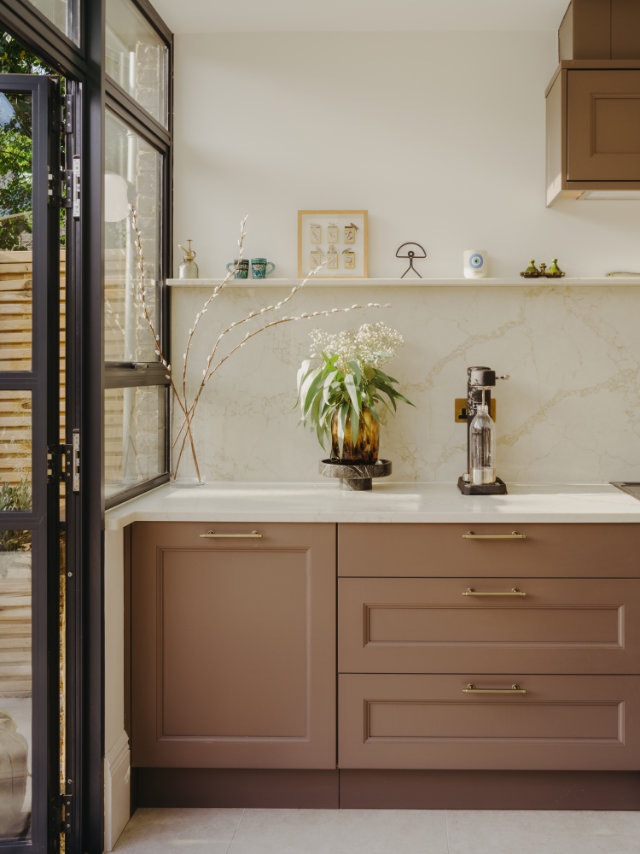
Photo: Tim Crocker
Social choreography
Rather than simply creating open-plan living, Studio Colab carefully considered how the family would occupy the home throughout the day.
The result is a subtle hierarchy of spaces that balances openness with privacy, allowing the house to adapt effortlessly to both quiet family life and larger gatherings.
For Danker, the approach is less about following contemporary design trends and more about responding to the individual rhythms of his clients’ lives.
“For these clients, the home is a social hub, so we focused on what we describe as ‘social choreography’.
“The ground floor became the public heart of the house — a series of interconnected spaces designed for cooking, dining and entertaining — while the upper floors remain a calm, private retreat.
“The aim was to create a home that could transition effortlessly from a quiet morning coffee to hosting friends for dinner, without ever feeling as though the architecture had to work too hard.”
Functionality informed every design decision, including the relocation of the utility room to a cupboard on the first-floor landing.
By moving laundry facilities closer to the bedrooms, valuable floor space was released within the kitchen while creating a more intuitive arrangement for everyday living.
“Positioning the utility upstairs made practical sense,” says Danker.
“It also reinforced the distinction between the home’s social spaces and its more private domestic functions.”
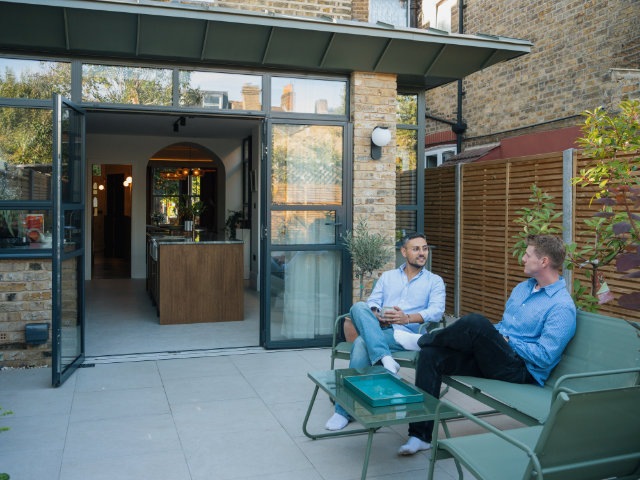
Photo: Tim Crocker
A seamless dialogue between old and new
The success of Tooting House lies not in the scale of its extension, but in the subtlety with which contemporary architecture has been woven into the fabric of the original Edwardian home.
Rather than competing with the period property, each intervention feels purposeful, measured and quietly confident.
Natural light now reaches deep into the plan, carefully framed views strengthen the connection to the garden and the once-fragmented ground floor has become a sequence of calm, generous spaces that feel both contemporary and enduring.
For Danker, however, the project’s greatest achievement lies in the experience of inhabiting the house.
“I’m incredibly proud of how naturally the spaces transition from one to another.
“By recessing the door tracks into the floor and continuing the same material palette from the kitchen onto the terrace, we’ve deliberately blurred the boundary between inside and out.
“Achieving that level of simplicity demands an extraordinary amount of coordination between design and craftsmanship.
“The team at TBS realised the project with exceptional precision, and seeing the clients embrace the spaces exactly as we had imagined is ultimately the most rewarding part of the process.”
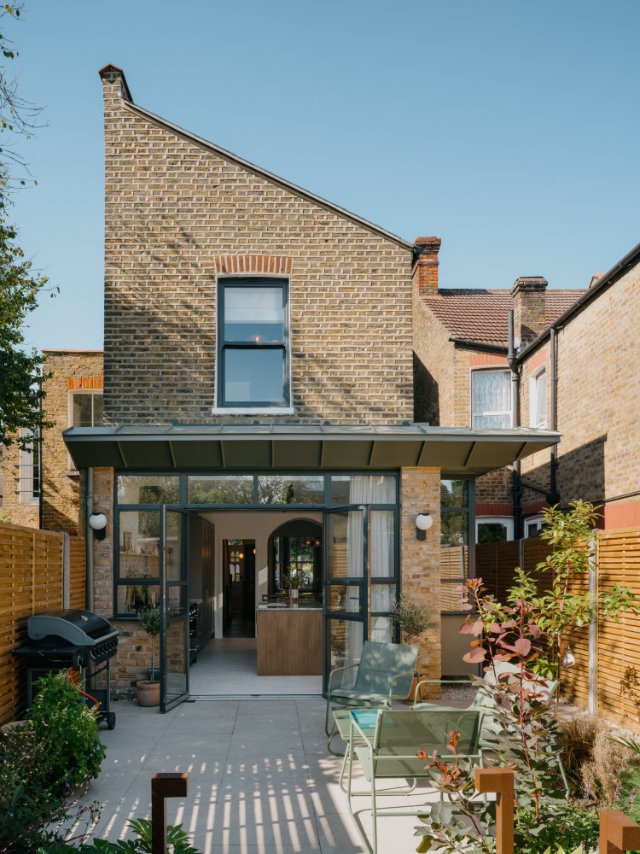
Photo: Tim Crocker
Find out more about Tooting House, or discover Studio Colab’s wider portfolio and practice here.