Period Charm Meets Modern Drama
George and Alice’s Edwardian home is transformed with a dramatic concrete and glass extension, balancing historic character with light-filled contemporary living
Flooded with natural light and framed by raw concrete and slender steel. This Edwardian house extension transforms a traditional home in North London, while honouring its historic character.
Inspired by Alexandra Palace, the design balances period detail with contemporary needs for space, light and family life.
“We bought it in 2018 from an elderly lady,” says owner George Marlowe. “It was evident how much she had loved the place, and we wanted to honour that.”
Light as the Starting Point
The house, where the family lived for five years before starting the project, had a typical Edwardian layout with just four bedrooms. It is now a five-bedroom home across four stories.
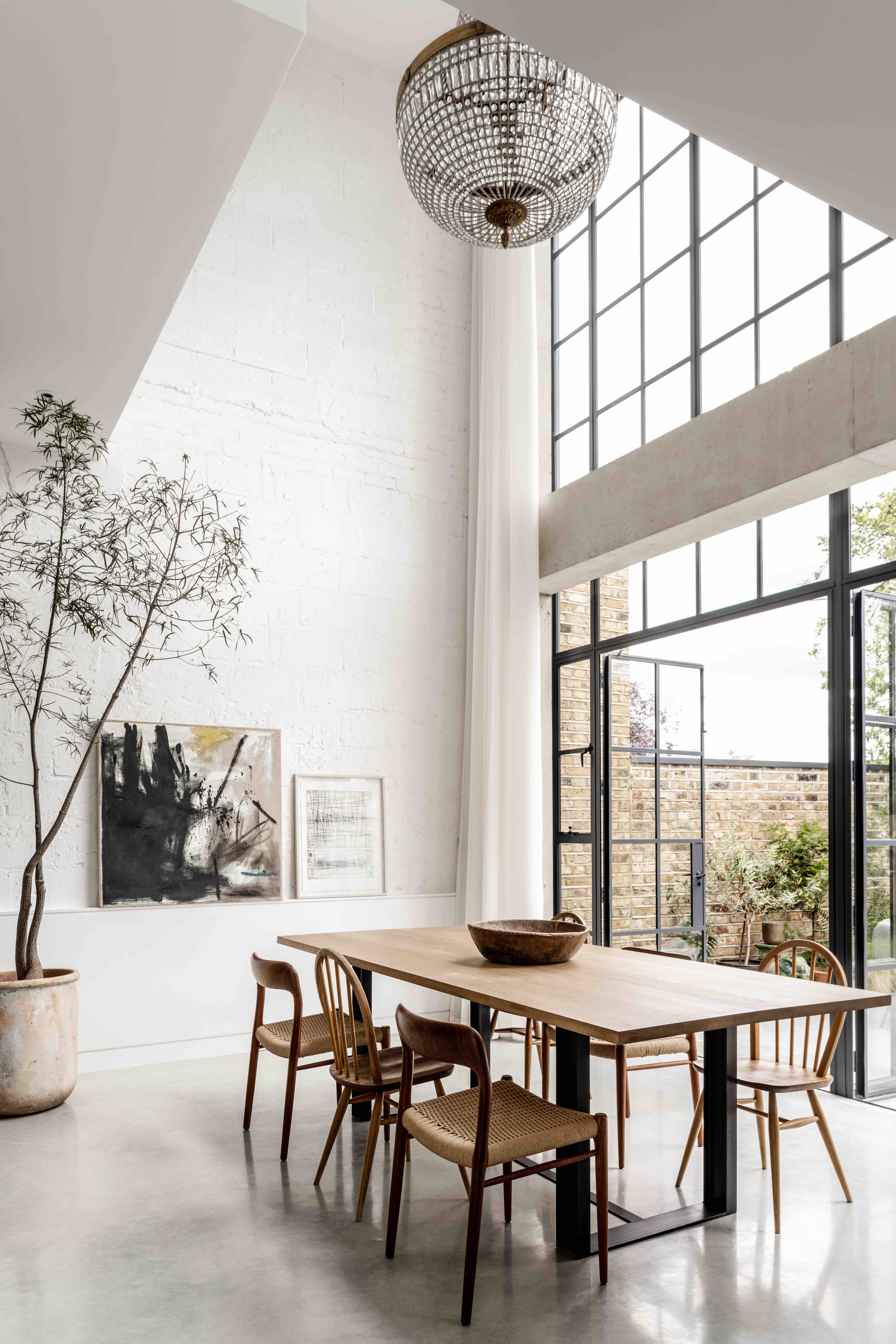
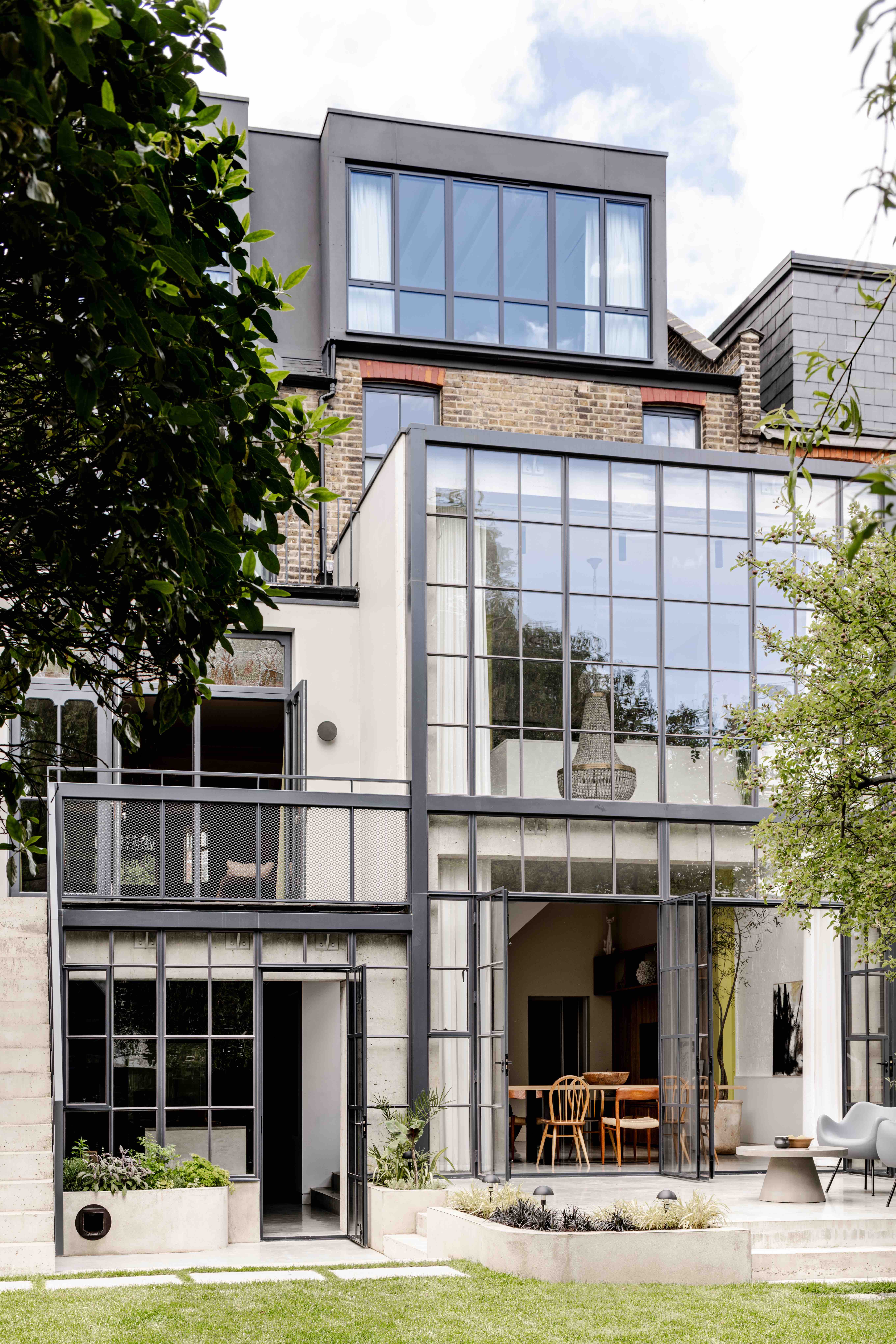
The new double-height rear extension is constructed in raw concrete, with extensive glazing using a slender steel-framed system from FabCo Sanctuary.
This floods the home with natural light, improves energy efficiency, and creates a genuine connection with the garden, where the family’s favourite willow tree is the focal point.
“The house is high up and enjoys an openness at the back with trees and blue sky. We wanted to make the most of that,” says George.
Glazing is a defining feature of the home, both in the extension and the dormer for the new master suite on the top floor.
This creates cohesion across the different floors while enhancing thermal efficiency.
“What continues to surprise us is the quality of natural light throughout the day, each time we visit the house,” says Lu Bai, project lead and associate director of Matthew Giles Architects.
“While we anticipated generous daylight, the way the spaces transform with sudden shifts in London’s weather, from sunshine to storm, creates a theatrical play of light and shadow.”
Re-working an Edwardian Plan
The split-level layout of the original home presented a challenge, but the architects embraced it as an opportunity.
Rather than create uniformity, Lu’s design celebrates the variation, creating interconnected living spaces, each with a distinct function. In this Edwardian house extension, the kitchen and dining room occupy slightly different levels, for example, but share the double-height airiness of the new extension, connected to the garden by a wall of glass.
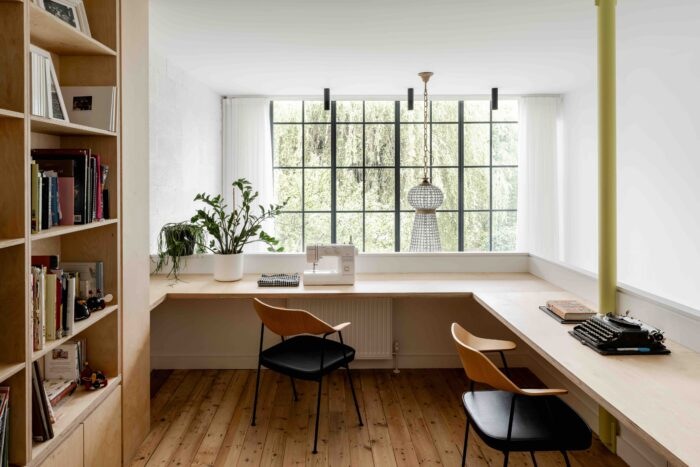
“The biggest challenge was… the split-level layout. We overcame this by creating a central vista to the garden from the front door, and by introducing the double-height living space, which links the various levels visually and spatially,” explains Lu.
Practicality for everyday family life was a key consideration in George and Alice’s design brief. As a result, the new basement accommodates a laundry, utility, and bike store, all of which are central to how the family lives and plays.
“The design was about making it work for us as a family,” explains George. Both he and his wife, Alice, a former vintage furniture dealer, have a strong design sensibility.
Material Choices
This sensibility is evident in the material choices throughout this Edwardian house extension.
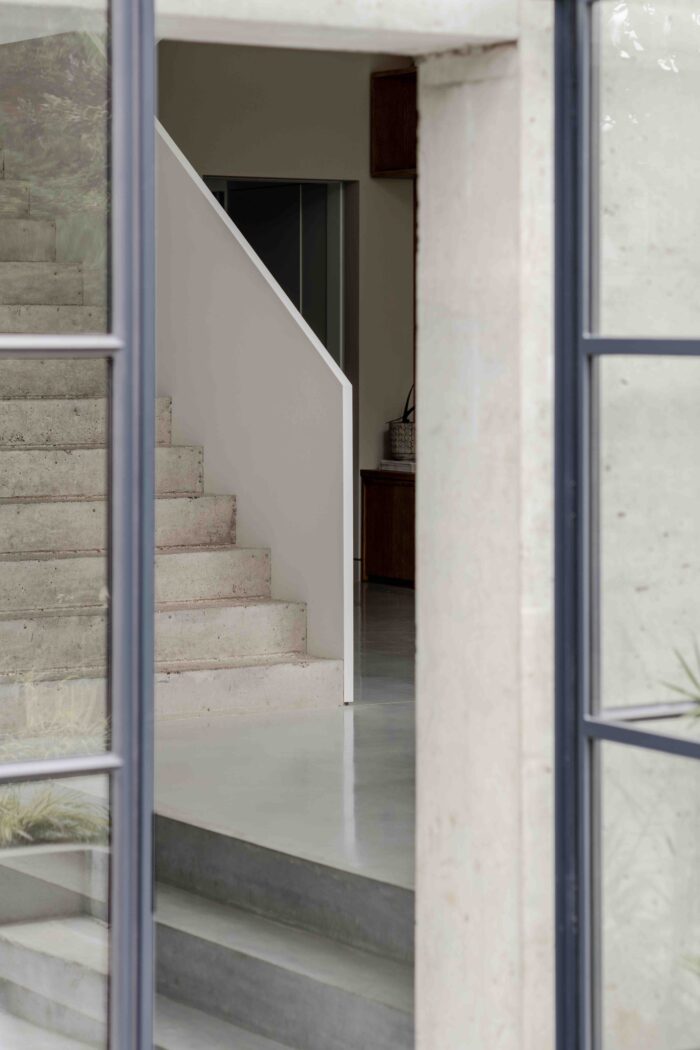
Industrially inspired textured concrete is paired with floor-to-ceiling glass, creating a restrained yet tactile aesthetic.
“We are fans of Brutalism,” says George, referencing the mid-century architectural style that celebrates exposed, unfinished materials and function-driven design.
“We like stripped back plaster. ‘Raw’ is decorative in its own right.”
This approach often chimes with the demands of sustainability.
Appropriately, therefore, the main staircase and extension incorporate recycled aggregate from on-site demolition.
This reduces environmental impact, while giving new life to existing materials.
There are three key gains: the concrete frame acts as thermal mass, regulating indoor temperatures.
Secondly, the glazing maximises passive solar gain, reducing the home’s dependence on additional heating.
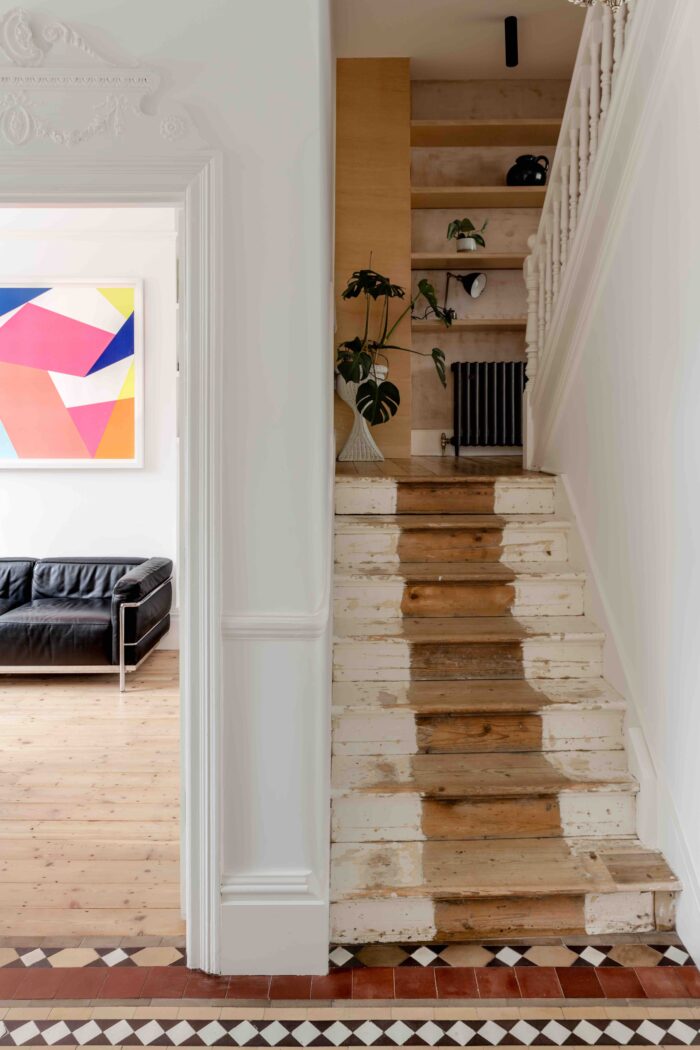
Finally, the decision to keep the original timber beams and tiled floors preserves the home’s heritage while also reducing embodied carbon.
Period Meets Modern
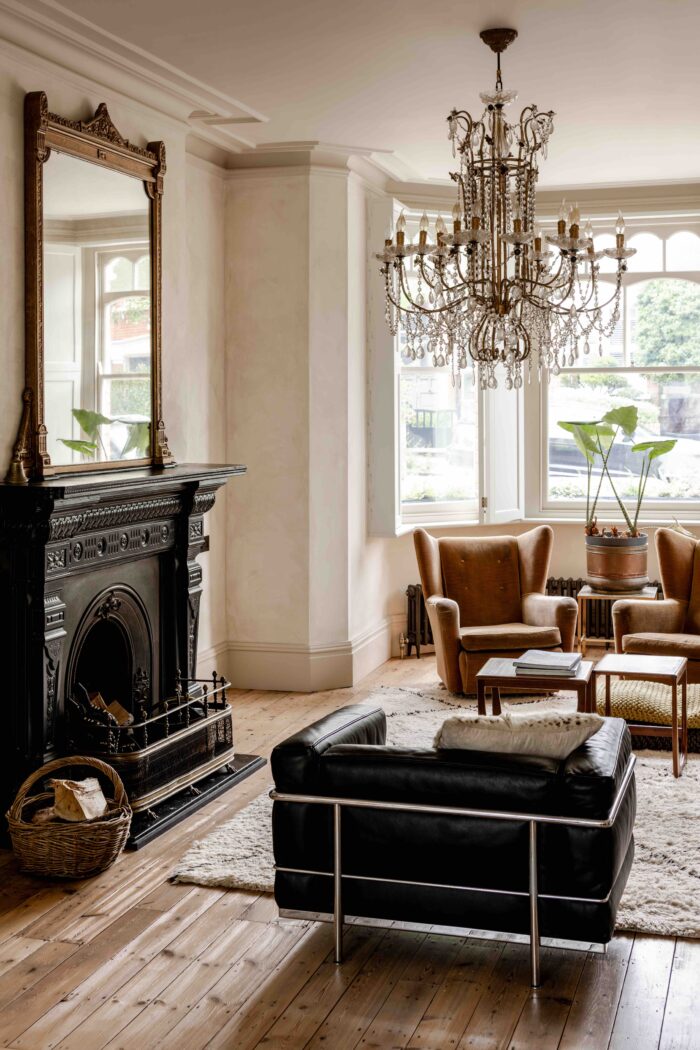
In both the old and new parts of George and Alice’s home, the interiors are restrained, celebrating both modern and Edwardian architectural features.
White-painted walls accentuate texture and the play of light throughout the day. An eclectic mix of furnishings, selected by Alice, reflects different eras.
“We wanted a clear difference between the new and old spaces,” says George.
“The link is that everything is paired back, for example, the (Edwardian) floors are stripped back and fit with the concrete and steel of the new parts of the building.”
Kitchen Heritage
Even the kitchen, a sleek yet practical space, celebrates heritage.
A playful tiled splashback was inspired by the decorative columns of Harrods’ historic food hall, which has personal significance for the family.
“Alice’s grandfather was Chair of Harrods,” explains George.
“We do a lot of cooking as a family, so the kitchen was really important to us, and this is a nod to our family history.”
The kitchen was designed by Matthew Giles Architects and built by Sygnet Style.
“Our best decision was choosing this team,” says George.
“We’ve never done anything on such a big scale, and they were fantastic.
“They made it relatively painless and even enjoyable.”
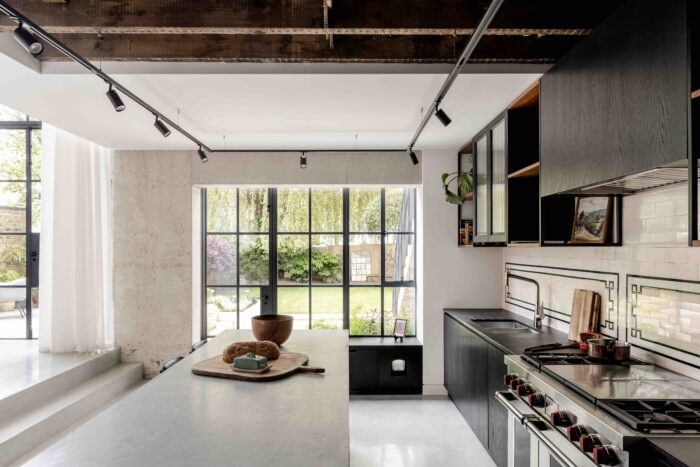
The home now is a creative mix of past and present. History and contemporary design are layered without losing any sense of identity.
This creates a quiet conversation between old and new, allowing the house to feel grounded yet open.
“The extension does more than expand the home’s footprint,” says Lu.
“It…enhances the way Alice and George experience the living environment.
“By respecting the integrity of the original architecture while introducing a bold new dimension, this project demonstrates the enduring relevance of well-considered, sustainable design.”
Living in a New Space
This home is a masterclass in how considered design can transform a period property into a modern, functional, and beautiful family residence.
It showcases the enduring value of restrained, thoughtful architecture: one that respects history while embracing the possibilities of today.
Open plan areas flow naturally, but zones for work, cooking, play, and relaxation are clearly defined. Even with a large family and social circle, the home’s spaces feel generous.
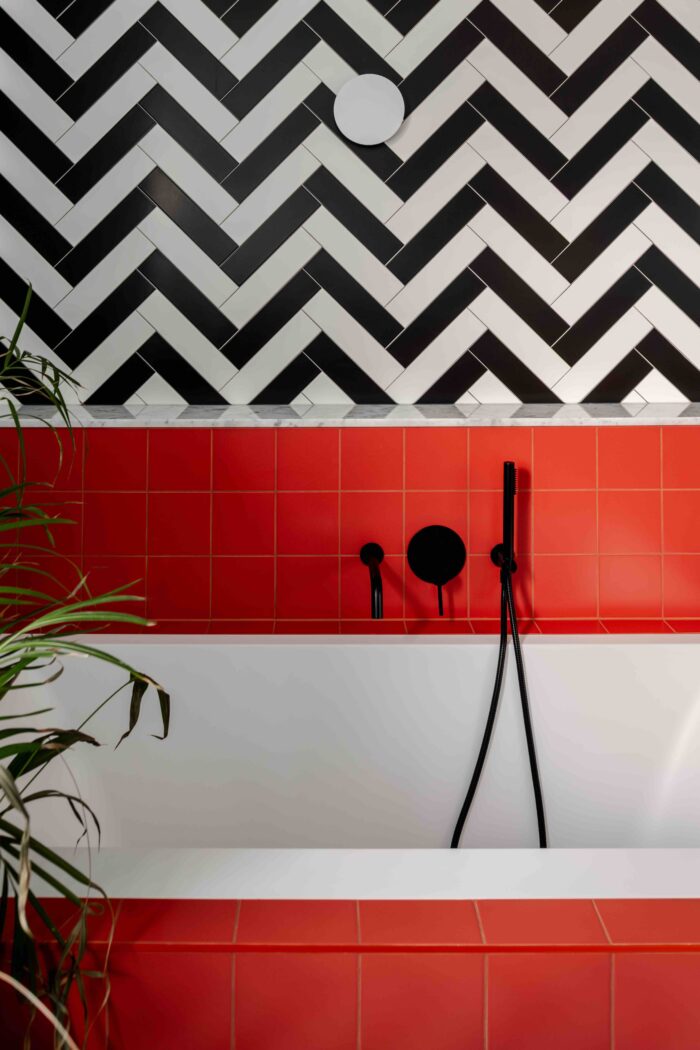
Now that the family has moved back in, what do they love most about the home?
“The functionality works well,” says George. “But most of all, we love the feeling of space.
“With three children, their friends, there is room for everyone to do their thing, and yet we have space for everyone to get together.”
Photography: French + Tye