
The heat pump revolution
What are heat pumps, and should you be considering one for your home?
You may have heard heat pumps being described as the future of home heating in the UK. But for many people, they still feel unfamiliar, maybe even on the abstract side of things.
Are they a radical new technology, or simply a smarter way of doing something we already understand? And do they really make sense in the typical UK home?
Heat pumps don’t create heat in the way that a boiler does. Rather, they move heat from one place to another. This basic principle – also used in fridges and air-conditioning systems – allows heat pumps to deliver far more energy than they consume in electricity, making them one of the most efficient ways to heat a home.
What is a heat pump?
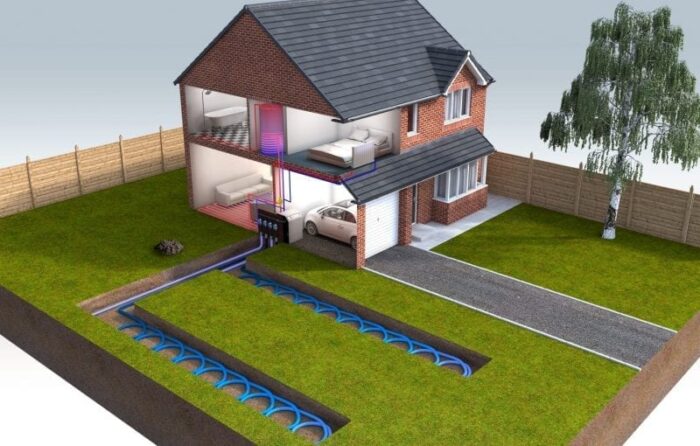
Image credit: Kensa Heat Pumps
A heat pump extracts low-grade heat from the environment and upgrades it to a usable temperature for heating and hot water. In the UK, the two most common types are air-source heat pumps, which draw heat from the outside air, and ground-source heat pumps, which take heat from the soil via buried pipes.
Even in winter, the air and ground around us contains thermal energy. A refrigerant inside the heat pump absorbs this heat, is compressed to raise its temperature, and then releases the heat into the home’s heating system. The process is continuous, quiet, and crucially, highly efficient.
For each unit of electricity used, a well-designed heat pump can deliver three to four units of heat. This ratio, known as the coefficient of performance, is what underpins the environmental and financial case for heat pumps.
Why are heat pumps becoming so popular?
There are three big drivers behind the growing uptake of heat pumps in the UK.
The first is climate policy. Heating accounts for a significant proportion of UK carbon emissions, largely due to the widespread use of gas boilers. Heat pumps, when powered by an increasingly renewable electricity grid, offer a route to low-carbon heating without changing how homes feel to live in. As the grid continues to decarbonise, heat pumps become cleaner year on year.
The second driver is energy security and fuel costs. Heat pumps reduce dependence on gas, the price of which has been volatile in recent years. While electricity remains more expensive per unit than gas, the efficiency of heat pumps narrows (and in some cases reverses) the cost difference, particularly in well-insulated homes.
Finally, there are various forms of policy support currently available. Government schemes such as the Boiler Upgrade Scheme have helped offset installation costs, bringing heat pumps within reach of more households, particularly those already planning renovations or self-builds.
What are the benefits?

Heat pumps can offer a steady, even warmth in your home: Photo by Roman Skrypnyk on Unsplash
From a comfort perspective, heat pumps can offer a steady, even warmth rather than the peaks and troughs of traditional boilers. This is because they work best with low-temperature heat emitters like underfloor heating or oversized radiators, which distribute heat gently and efficiently.
Running costs can be competitive, especially in modern or upgraded homes with good insulation. Maintenance requirements are also relatively low, with fewer moving parts than combustion-based systems and no gas safety checks.
There is also a growing future-proofing argument. As the UK steps towards tighter standards on home energy performance, properties with low-carbon heating may hold their value better and be easier to sell.
Are there any downsides or risks?
Photo by James Hollingworth on Unsplash
Heat pumps are not a universal fix-all solution, so this is where expectations should be managed somewhat.
Installation costs are still higher than those of gas boilers, even with government grants. Fitting them in older homes may require insulation upgrades, new radiators, or changes to hot water systems, adding another layer of expense.
Performance very much depends on design and installation quality, too. Faulty systems can lead to higher bills or inadequate heating, which has contributed to some of the more negative perceptions of heat pumps. That’s why choosing an experienced installer and carrying out a proper heat-loss calculation is essential before taking the plunge.
There are also practical considerations. Air-source units need outdoor space and can be visually invasive if poorly positioned, while ground-source systems require significant garden space for trenches or boreholes.
Should everyone install a heat pump?
Heat pumps make the most sense in homes where energy efficiency is already good, or where improvements are already in the works as part of a wider renovation. For new-builds, they’re increasingly the default option. For older homes, they tend to work best when approached as part of a whole-house strategy rather than a like-for-like boiler swap.
In short, heat pumps are neither a magical remedy or a passing fad. They are an established technology, already common in much of Europe, that aligns more and more with the direction of UK housing policy and energy systems.
For homeowners willing to plan carefully and invest upfront, heat pumps can offer a quieter, cleaner, and more resilient way to heat homes. And a glimpse of what low-carbon living in Britain may soon look like.