Renovating a Tuscan Farmhouse
Design duo Robert Hall and Elisa Pardini transformed a derelict Tuscan farmhouse into a sustainable and contemporary home
For many, renovating a crumbling Tuscan farmhouse is the stuff of daydreams.
For architects Robert Hall and Elisa Pardini of Pardini Hall Architecture, it was a test of patience, partnership and design conviction.
In three years, this husband and wife team have transformed a derelict ruin into a covetable and sustainable home for them and their daughter (plus two cats) – proof that sometimes the dream is worth the dust and the delays.
“The property came to us as an inheritance from my grandmother,” explains Elisa.
“Then, we had a choice; to sell it or turn it into a project.
“Being architects, the challenge was simply too interesting to let go.”
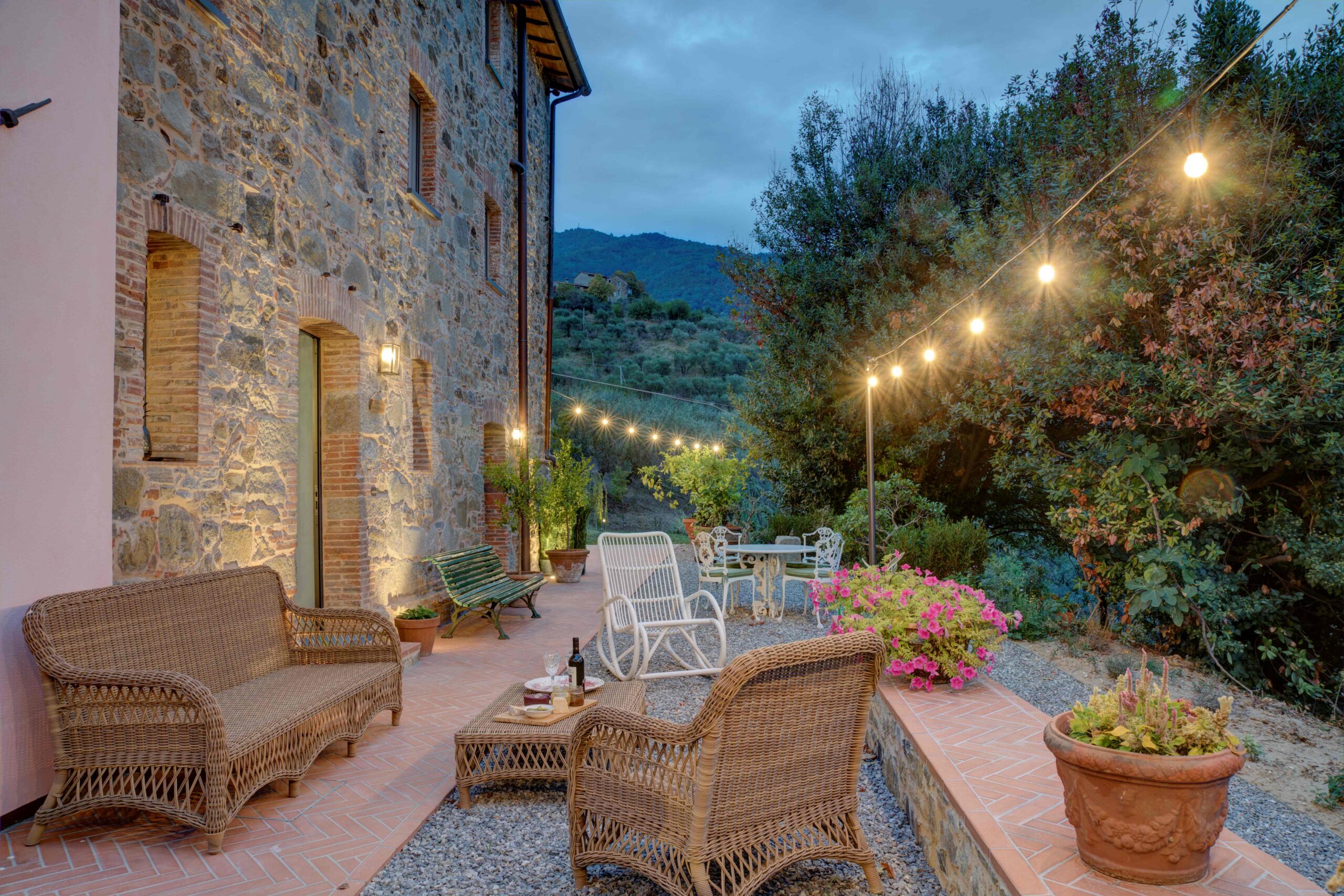
Set in an olive grove and surrounded by classic Tuscan hills, this farmhouse had plenty of potential, but was in a terrible condition.
“While it had a roof and a basic water supply, there was no internal heating, the bathrooms were external, and the basement canteen was very dark, with just dirt on the floor, previously used for animals,” says Elisa.
Reworking The Layout
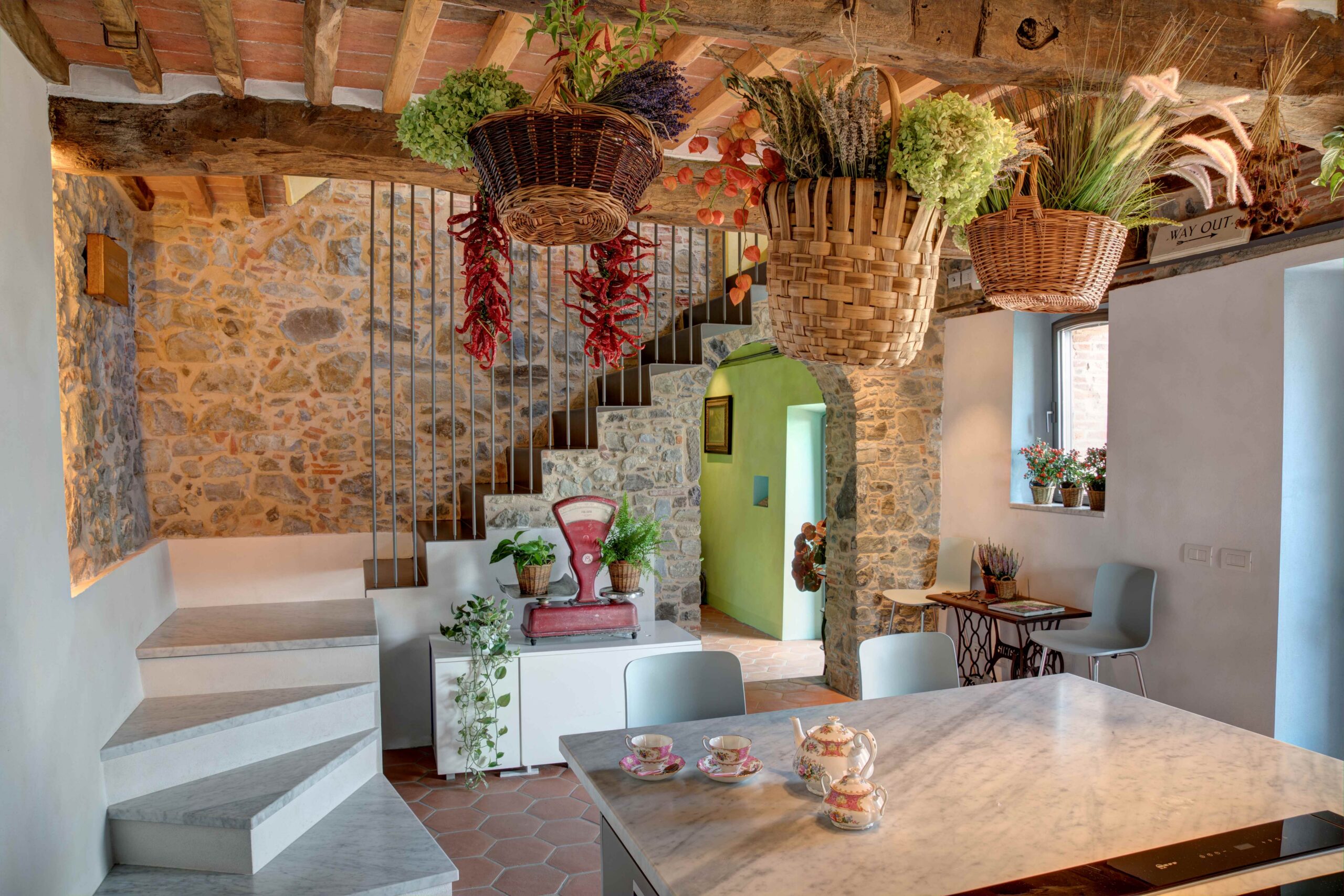
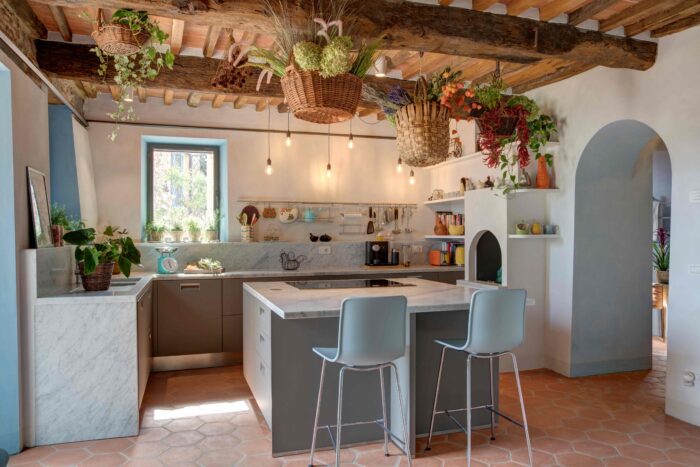
That ‘canteen’ is now the family’s kitchen and dining area and is perhaps the most significant change to the home’s layout.
Partly underground, this space was previously divided into small rooms.
Robert and Elisa excavated this space and dropped the floor by a metre.
In doing so, they have created a bright, liveable open-plan area boasting new windows from Secco System and a sleek, contemporary kitchen by Arclinea.
“The kitchen is where we spend most of our time and it’s a very generous space,” says Elisa.
Images: Carlo Carossio
“We designed it to have plenty of natural light, thanks to the stainless steel and glass windows and doors.
“The ‘canteen’ has been transformed into a bright, livable space.”
A key feature of this new ground floor is a bespoke metal staircase, which replaces a wooden ladder.
The design of the stair also allows light travel through the home.
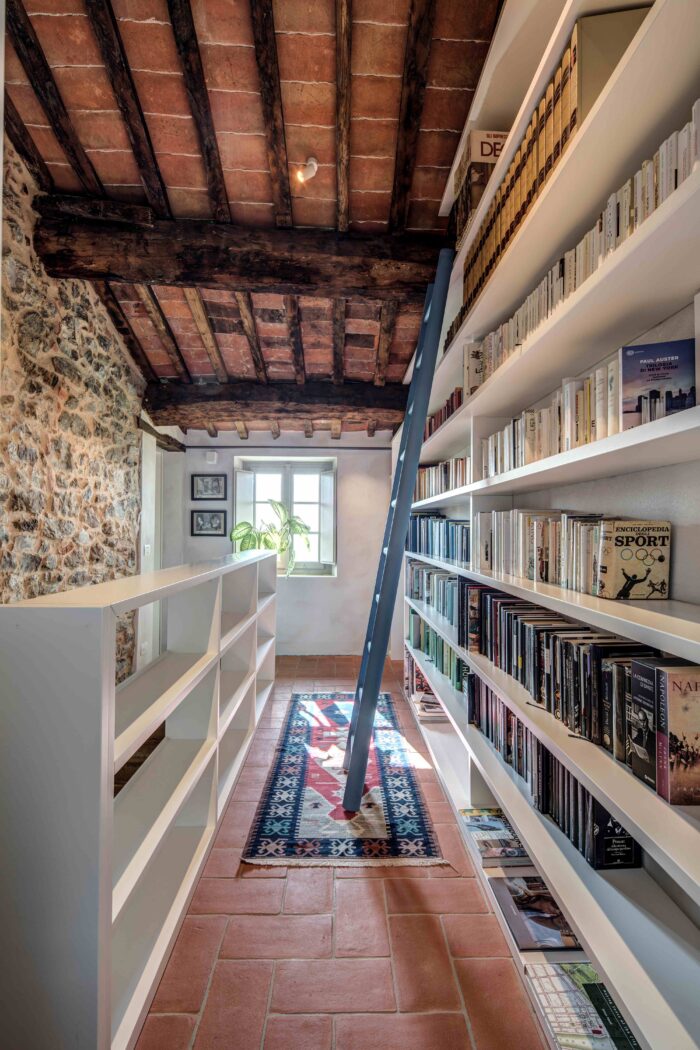
The original stone staircase on the upper floors is preserved and incorporates a library on the second floor.
Images: Carlo Carossio
Preserving Character and Structure
On the first floor, there are three reception rooms, while the top floor has two bedrooms and two bathrooms, a dressing room and the library.
All the existing windows and doors were refurbished, double-glazed and reused.
Although the couple introduced new windows, such as in the kitchen, they are also intentionally small.
This reflects the traditional design preserves character.
Unsurprisingly, the building’s structure was poor.
The exterior had been repaired in the 1950s, using brick and concrete.
Robert and Elisa removed these inappropriate materials, revealing the original stone.
This was repaired with new stone and climbing plants are encouraged to soften the surface.
Sustainability in Design and Build
Images: Carlo Carossio
Inside, a big part of renovating this Tuscan farmhouse was adding insulation.
The couple insulated everywhere they could, including under the floors and in the roof.
They also added underfloor heating. With sustainability as their focus, the choice of an air source heat pump to run the heating was easy.
The addition of rainwater harvesting for the vegetable plot and solar panels means the home is now almost energy neutral.
The couple’s local council wasn’t initially supportive of this approach, but the couple persevered and now,
“The comfort created by the (natural) insulation and the right heating strategy is fantastic,” says Elisa.
Another aspect of the sustainable approach was Robert and Elisa’s approach to construction.
This focused on creating as little waste as possible.
The couple refurbished and reused furniture and equipment found on site wherever possible.
They also reused all the excavated materials, either in the build itself or as part of the landscaping. Extraordinarily, no waste left the site.
Re-use and Restore
Where necessary, Elisa and Robert purchased new materials locally.
They used salvaged wood, doors and stone throughout the home, from the beamed ceilings to the timber-accented archways.
They also reused old farm doors in bathrooms or even as exterior doors.
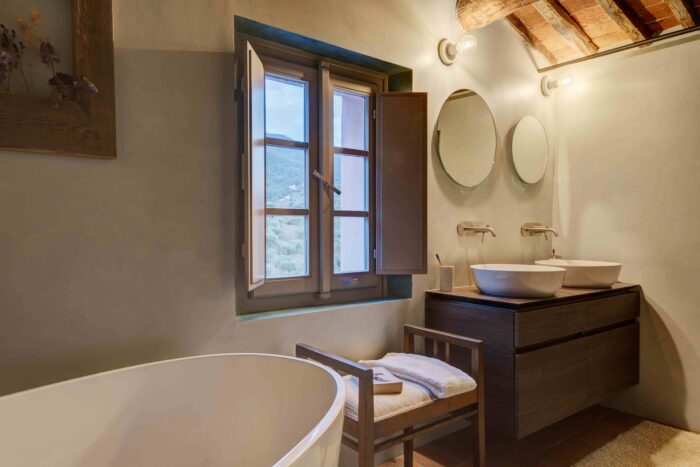
In the bathrooms, the chosen finishes include resin, as well as local marble and hand-painted tiles, giving each room a specific ‘mood’.
All the showers and bathtubs face the garden, to mimic the liberating experience of being at one with nature.
Images: Carlo Carossio
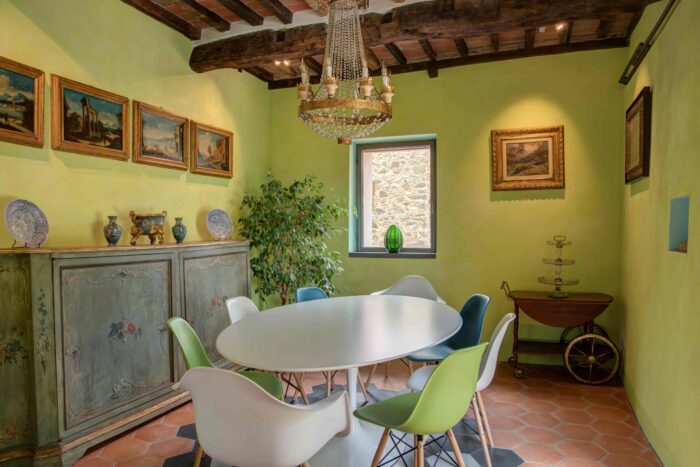
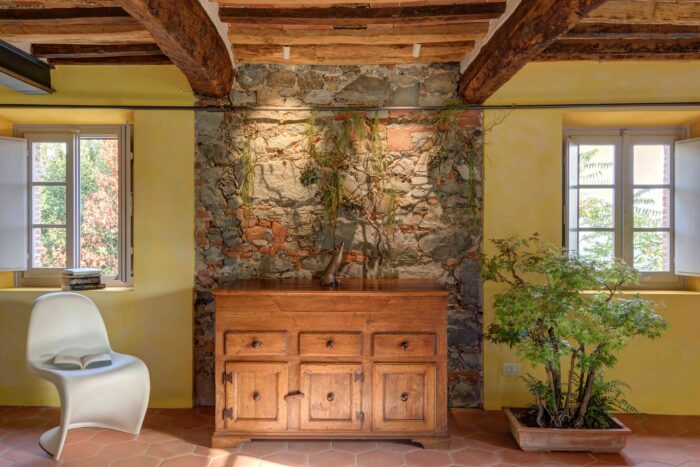
Cleverly, the effect of all these interior design choices is to make the home feel unmistakably Tuscan, using colour and some contemporary, as well as antique, furnishings.
Lighting, supplied by Delta Light, highlights key pieces of furniture or artworks.
Each piece of furniture was hand-picked by Elisa and Robert to create a cosy living space that successfully mixes the contemporary and the traditional.
“I love contrasts,” laughs Elisa.
“I enjoy mixing old and new, balancing the calmness of clean lines with the warmth of antiques.
“Each room has its colour, which visibly influences the mood throughout the day.”
Images: Carlo Carossio
Navigating Italian Bureaucracy
Yet the family faced significant challenges in renovating their Tuscan farmhouse.
The first was, perhaps inevitably, Italian bureaucracy.
It took Elisa and Robert two years just to obtain the correct permits before they could begin work.
“The bureaucracy in Italy seems never-ending, and the time it took to get paperwork approved was on a completely different scale,” says Elisa.
“The low point was definitely navigating that process.”
However, once work could begin, the couple found they also had to project manage.
“The concept of a ‘main contractor’ wasn’t common,” recalls Elisa.
“So, we project-managed the renovation ourselves and hired various subcontractors.
“I had to coordinate everyone: plumbers, electricians, bricklayers, painters.”
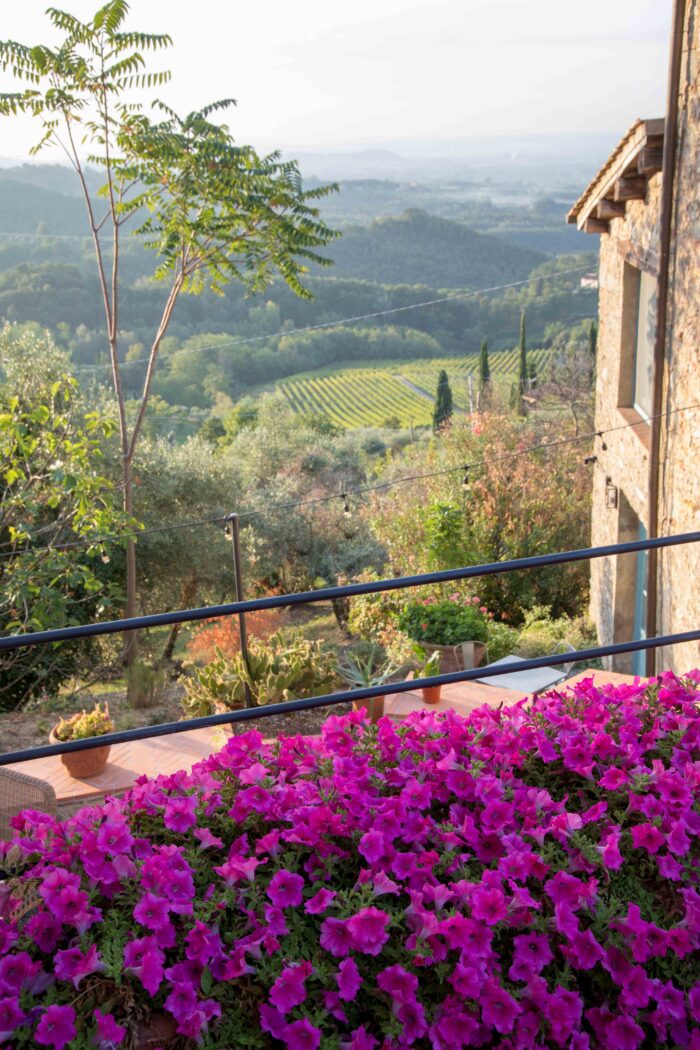
Yet their biggest challenge was the land itself, which is typically hilly and can be unstable.
Images: Carlo Carossio
“Heavy rain can intensify landslide risks, so there was a lot of unexpected work required to stabilise the land,” recalls Elisa.
“We managed it with the help of a very skilled geologist on our team.”
Now, the land immediately surrounding the house is divided into different spaces, not least the pizza oven, which is in the former outside bathroom!
Pathways meander to a shaded reading area, a herb garden and a vegetable garden, surrounded by fruit and nut trees, including a substantial olive grove.
A Contemporary Tuscan Home
For Robert and Elisa, the ‘high’ moment came when everything started to take shape.
“Seeing the houses flooded with natural light…it was truly uplifting,” says Elisa.
“The renovation has had a positive impact on our lives.
“This is a place filled with memories and love, where it’s easy to feel good.”