

Is it ever ok to move a drain during a renovation project?
Whether you're undertaking an extension or other house project, are you allowed to move drains?
Moving a drain can be a common practice during a renovation project, particularly an extension or a self build – but, the rules around it are really important, and not as widely known as you might believe.
If your drain only serves your property, and sits within your boundary then it’s less complicated.
You are free to move a drain in this instance, providing the work meets Building Regulations and is signed off.
It’s commonplace with extensions where a kitchen or bathroom layout changes and it is fairly routine for builders with experience.
The situation is more complex if the drain serves other houses, or connects to the public sewer.
A public sewer belongs to the local water company, even if it runs through your property so it cannot be moved without their consent.
Often, you can’t move them at all and instead are forced to build over with a formal build-over agreement – or even have to redesign your project to avoid the drains.
It can be a long process so it’s definitely worth looking into before work begins.
We had a chat with the experts to get the lowdown on moving drains…
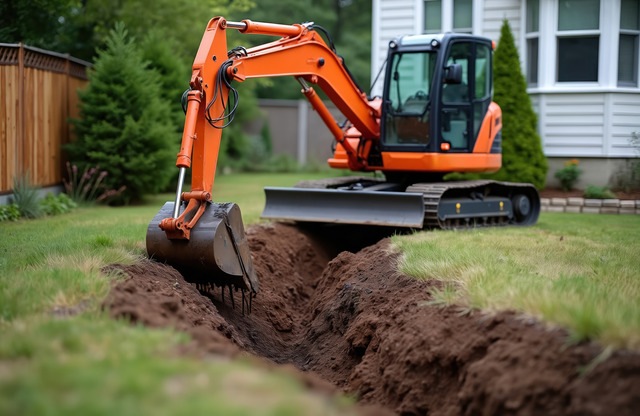
Photo: Adobe Stock
Can you move a drain for an extension or renovation?
Kevin Xing, product manager at BOLEO explains: “Yes, it can be okay to move a drain, but only under specific conditions.
“From a construction perspective, private drains that serve just one property are often movable as part of an extension or rebuild, provided the work meets building regulations and is properly inspected.
“Problems arise when people assume all drains are private, which isn’t the case.
“My general rule of thumb for homeowners is to never assume a drain can be moved just because it’s in the way.
“Check whether it’s private or shared, confirm permissions early, and involve professionals before any digging starts. Drainage mistakes are expensive to fix once concrete is poured.”
How do you get permission to move or build over a public drain?
The matter gets more complicated if it’s a public drain, or shared with a neighbouring property.
Kevin comments: “If it’s a public drain, or one shared with another property, this would mean you typically can’t move it freely.
“Those drains are protected because changes can affect other homes or the wider system.
“On site, we see many projects paused because a drain turns out to be shared when the homeowner thought it wasn’t.”
However, that doesn’t mean all is lost and the project can’t go ahead.
Kevin continues: “Public drains can sometimes be moved, but only with permission from the local water authority.
“In many cases, the preferred solution is to build around them or protect them rather than relocate them.
“Approval can take time and usually involves surveys, drawings and inspections, so it’s not something to decide late in the project.”
How much does it cost to move a drain?
Costs can vary but it is generally cheaper if the project is straightforward.
Robin Edwards, property buying agent at Curetons: “Diverting or building over a public sewer however could run into the tens of thousands once surveys, approvals and specialist contractors are involved.
“From a buyer’s point of view, it’s all about paperwork: as long as the right permissions are in place and the work has been properly signed off, it’s not a red flag.
“Problems only arise when drains have been moved without consent or proper documentation, which could delay or derail a sale later on.”
Kevin adds: “Moving a private drain might cost a few thousand pounds, depending on depth, access and ground conditions.
“Once public drains or shared systems are involved, costs can rise quickly due to approvals, specialist labour and delays.
“That’s why early surveys are critical because surprises underground are one of the biggest budget risks in renovations.”
READ MORE: