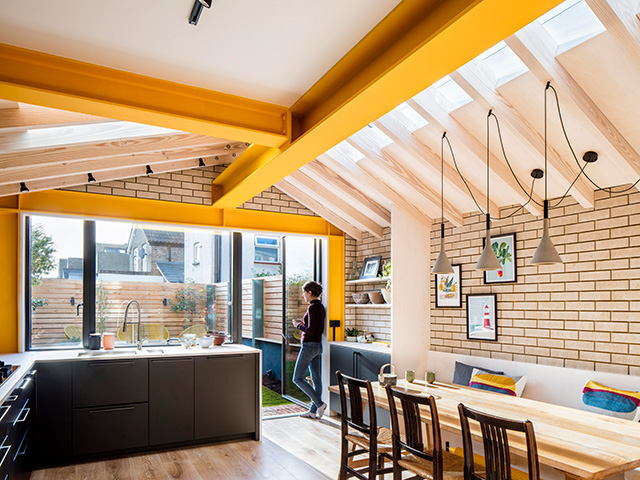

Is moving a staircase during a renovation worth it?
We chatted to the experts to gather whether the disruption of moving a staircase during a renovation project is worth it, and what the benefits can be.
Moving a staircase is one of the most disruptive renovation projects you can undertake.
Yes, it will transform the space instantly, but it can be very messy and complex.
This is especially the case if you’re doing it whilst living in the family home.
Staircases are a big feature of a property, they’re more than a vessel to get to the second floor – they can often be the defining element of a home.
Moving a staircase can completely change the feel of a home.
But, before you do so it’s best to consider the process of what’s involved.
We spoke to the experts to discover the pros and cons of moving a staircase, and whether it’s worth it.
Why might you need to move a staircase?
There are lots of reasons one might decide to move a staircase.
Many older houses weren’t decide with the modern style of living in mind – so the staircase was built taking up floor space that would now be utilised more.
Changing the type of staircase, or moving it so it’s against a wall or to one side can give you invaluable extra downstairs space.
Kenny Macfarlane, Managing Director at Handrail Creations explains: “Property owners tend to move staircases to improve the layout of their space, maximise space, or improve access between floors.
“Moving a staircase can in some cases increase the value of the property.
“Especially if it improves functionality and optimises the space for a more open-plan layout with more natural lighting.
“Sometimes staircases are moved to enhance safety in the home.
“If the house is a historic Victorian or Edwardian property, steep, narrow staircases can be hazardous and in need of an upgrade.”
How much does moving a staircase cost?
We’ve already mentioned the upheaval it can cause when moving a staircase, especially in a lived-in home, but another huge factor is the cost.
Due to it being a tricky project, it’s one you’ll have to call in a workforce to help with – it can get expensive.
Robert Aumann, luxury real estate advisor and interior design expert at Luxury SoCal Realty adds: “The cost of relocating a staircase is high as it is considered a structural renovation.
“The cost may include demolition, framing, flooring, and finish work.
“Even a simple project can become quite expensive when the underlying structural or utility needs are taken into account.”
Kenny agrees: “Relocating a staircase is a substantial investment.
“The cost of the project can vary based on the complexity of the staircase, materials, structural calculation and design.
“However, it can be a great opportunity to alter, enhance the flow, space and visual impact of a home.”
It’s all about weighing up how much the impact will have on your space and how important it is to the renovation plans.

Photo: Adobe Stock
What is the process of moving a staircase?
Moving a staircase isn’t something you undertake lightly, it’s only when it’s absolutely necessary for an extension or renovation – the process is complicated.
Kenny adds: “It involves a tailored specification, with professional structural planning, bespoke design, and expert installation.
“You’ll need an initial assessment, with a consultation from a specialist like an architect or a highly experienced builder.
“They will then determine whether the relocation is possible and feasible – ensuring compliance with building regulations, too.
“If an assessment concludes that it is possible and will be beneficial, a structural engineer will design and support the process.
“This tends to involve removing the old staircase, altering floors and ceilings, and installing new structural supports.
“Once the new staircase is fitted, installation includes plastering, specialist joinery, and finishings.”
What are the pros and cons of moving a staircase?
This completely depends on what you’re looking to achieve with the project.
The positives of moving a staircase are that it can improve the flow of a space, as well as increase a property’s value and usability, especially as part of a wider renovation or conversion.
Moving a staircase can also maximise lighting and space within a property, ultimately improving the quality of life for those living there.
But, it’s a substantial costly investment and is incredibly disruptive whilst going on – you’ll lose access to large parts of your home during the works.
It takes a lot of structural planning so it’s crucial that the benefits will outweigh the means to ensure it’s a worthwhile project.
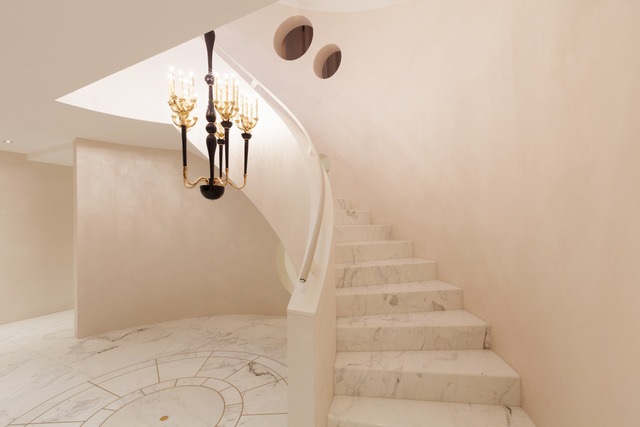
Photo: Adobe Stock
Can you ever move a staircase yourself?
For many projects we’ll opt to have a go ourselves to try and keep costs down, especially in the country financial climate.
But, moving a staircase is not one of those that you can try yourself before requiring expert assistance.
Moving a staircase requires structural assistance from the planning to the execution and often for the aftermath, also.
Kenny agrees: “Moving a staircase requires specialist input in various areas at every single stage of the process.
“This includes carpenters, structural engineers, and building control.
“It’s not recommended as a DIY project unless you’re highly skilled and experienced in one of those fields. It’s a complex task and not safe or realistic to attempt to do yourself.”
What planning permission or building regulations are required for moving a staircase?
As always when considering a renovation project, it’s crucial to understand what planning permission or building regulations need to be adhered to.
Kenny explains: “Usually for an internal refurbishment, planning permission isn’t required.
“This is providing you own the property. However, if the building is listed then it would need looking into via your local authority.
“When it comes to building regulations approval, this is something you will need as it is considered structural work that must comply with safety regulations.
“Approval for this is obtained through local Building Control or an approved inspector, with inspections taking place during the construction.”
READ MORE