A Grand Design on a part time island
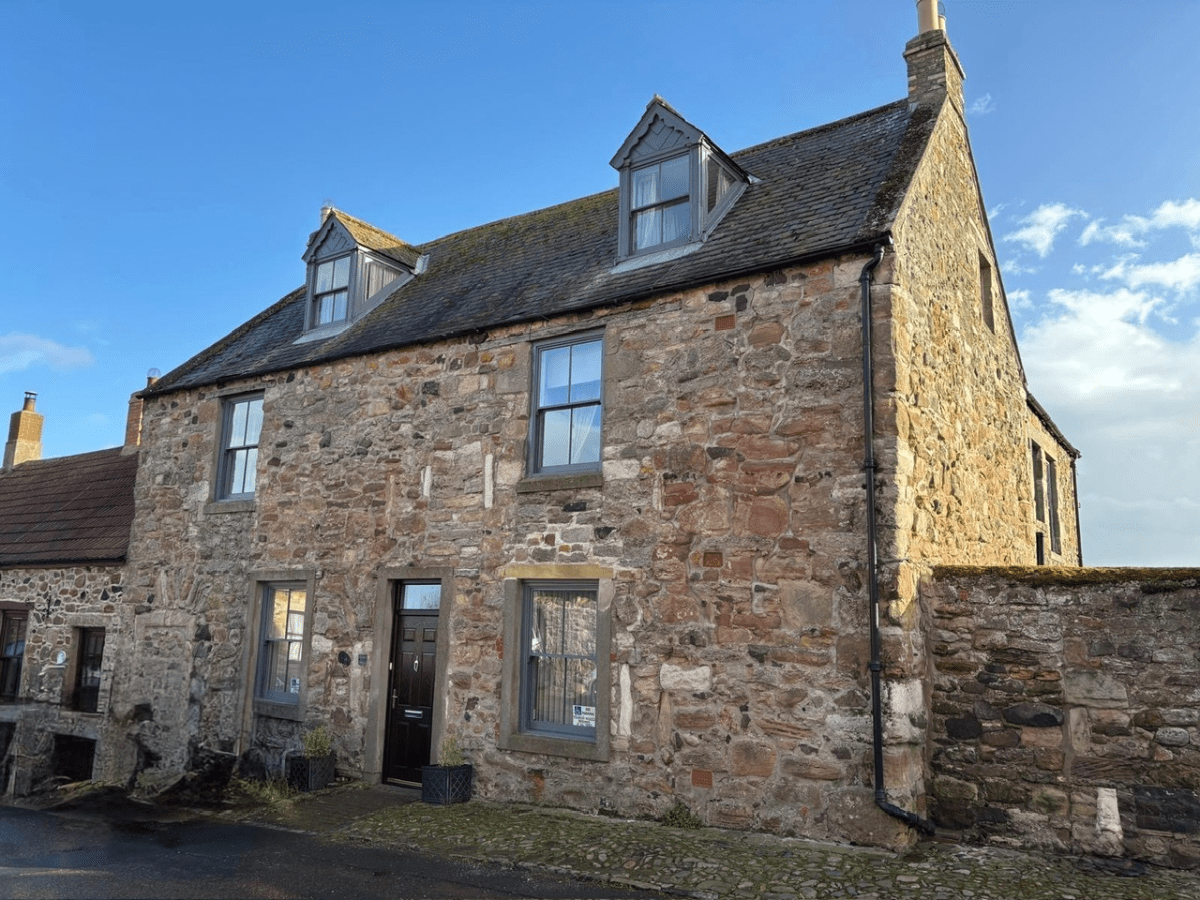
Sue and her husband Clive had set their sights on Palace House, a 3-storey 16th century stone-built house with half an acre of garden on the island of Lindisfarne
In June 1988, excited buyers gathered for a property auction in the surprisingly opulent surroundings of the White Swan Hotel, Alnwick.
The grandiose wood-panelled room was formerly the first-class lounge of the liner RMS Olympic (sister ship to the ill-fated Titanic) and was itself bought at auction in 1935 by the hotel’s then owner.
As Sue Massey recalls,“We’d never been to a property auction before, so we had no idea what we were doing.
“We asked our solicitor to bid, but he had no experience either, so we were in at the deep end.”
Sue and her husband Clive had set their sights on Palace House, a 3-storey 16th century stone-built house with half an acre of garden on the island of Lindisfarne.
Lindisfarne or Holy Island is just off the northeast coast, just a few miles south of the Scottish border.
A magical and beautiful place, it’s a part time island; being cut off from the mainland twice a day by the incoming tide.
Palace House is one of the oldest properties in the village, with a view of two of the island’s most famous landmarks: the mediaeval priory, and the 17th century castle.
Unfortunately, by 1988 it had fallen into a sorry state of disrepair; there were holes in the roof and the downstairs hadn’t been lived in for over 20 years.
“Everywhere was very damp,” says Sue.
“There was wet rot and dry rot, but we also knew from the moment we walked in that it could be wonderful, especially for us and our three boys. It just had this lovely atmosphere and an amazing location at the heart of the island’s village.”
Luckily the auctioneer held their hand through the sale, especially when Clive got overexcited and bid against himself a couple of times.
In the end, they managed to buy the house for close on £60,000, all borrowed by putting their hotel up as collateral.
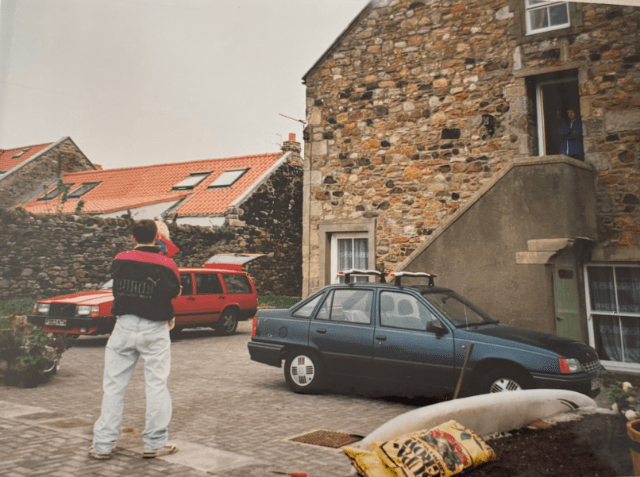
Palace House in 1988 – outside back staircase. Photo: Sue Massey
Tackling the Restoration and Renovation
Next the hard work really began. In the 1960s the house had been divided into two, four bedroomed flats.
Upstairs was where its last owner Miss Selby Sinton lived, while downstairs a flat designed originally as a holiday let had been left empty, its rooms full of huge cobwebs and even bigger spiders.
To save the building from further deterioration, the most urgent priority was to replace the roof and put in a damp course, which required hiring in professionals.
The roofers arrived in the autumn of 1988 and layed a whole new slate roof just in time for winter.
Under the living room floorboards, Sue and Clive discovered there was just bare earth, so the damp specialists came the following spring and installed a new damp course, including adding a long French drain to one side of the house, to divert water away.
With costs mounting (the roof and the damp course took another £20,000) a big help was that Clive and Sue were already living and working on the island.
“Clive came from a building background,” says Sue, “so could do much of the work himself, putting in a new kitchen and doing all the painting and decorating.
On one day, with the help of a neighbour he put up 49 rolls of wallpaper.”
It was a huge task; physically very demanding and at times slow going because they were still juggling full time jobs as hoteliers.
As Sue recalls, “I would sometimes be working from 8am until 1am in the hotel”.
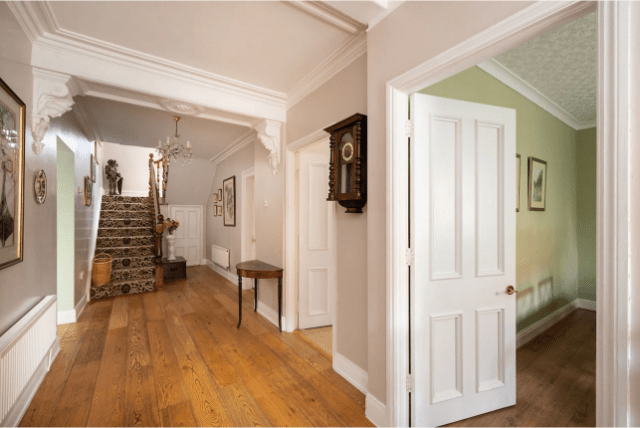
Photo: Livia Russell
By early 1990, the downstairs was fully restored, but new family needs meant any idea of joining the two flats into one was put on hold.
Sue’s elderly aunties, living on their own in Derbyshire required extra help and so came to live with them in Palace House.
Meanwhile upstairs, having used the flat as an overspill for the hotel, once they’d upgraded all the rooms, they rented it out as a self-contained holiday let.
But sadly, the renters abused it, so Sue and Clive decided that they would live in it themselves.
Following the aunties, next it was Clive’s mum who moved in downstairs and then finally in 2009 the time was right to think about making it a single house again.
With the help of a local architect, they applied for planning permission to remove the external staircase, take out one of the downstairs bedrooms and insert a magnificent wooden staircase.
It also required some room rejigging to add in a bathroom on the top floor and transform the upstairs kitchen into an ensuite bedroom.
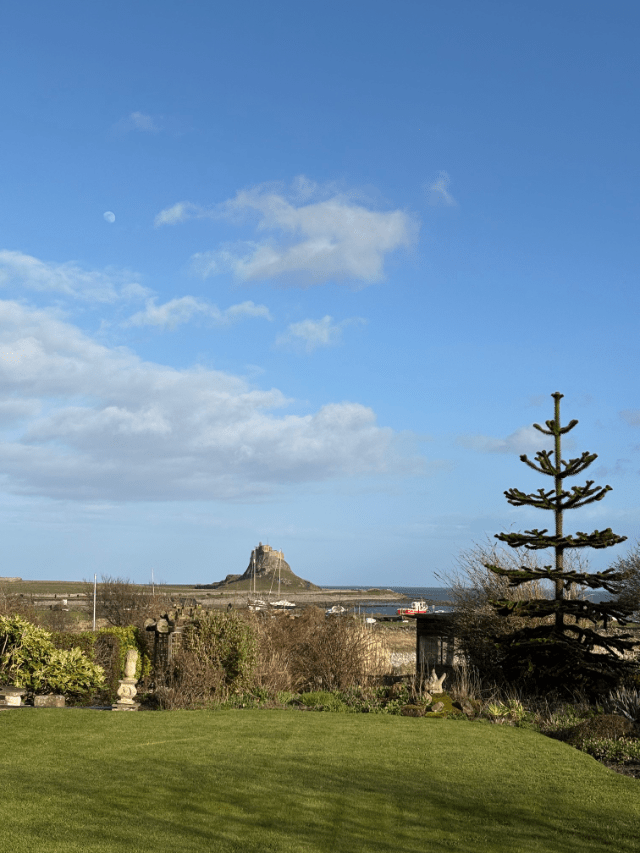
Outside view from Palace House gardens looking to Lindisfarne castle. Photo: Livia Russell
But as Sue points out, “With old buildings there’s always something and the stonework was like a historical jigsaw puzzle. There were great chunks of mediaeval monastic stone embedded in the wall.”
Sue and Clive remortgaged again to pay for the redesign and the £10,000 staircase but finally – 23 years after first buying the property – the house became a single majestic family home.
Almost 40 years on, Sue is rightly proud of what she and Clive achieved, and her favourite spot is the downstairs living room with its stunning garden views.
As for Clive, he loved his studio, where he discovered a real talent for painting and drawing island scenes.
But time moves on and Sue now hopes that a family will buy Palace House and enjoy all it (and the island) has to offer.
“It’s a unique home and the island’s remoteness makes it an incredibly special place. Our children have had the freedom to roam, explore its beaches and watch grey seals swimming in and out on the tide. You also have three pubs in walking distance, and locally caught crab sandwiches.
“I remember walking along a street in Venice at night and turning to Clive and saying, isn’t this brilliant! Now that the people have gone home, it’s just like Holy Island.”
One thing’s for sure: when the tide begins to sweep in and the tourists depart, the island breathes a deep sigh and reveals its uniquely serene character.
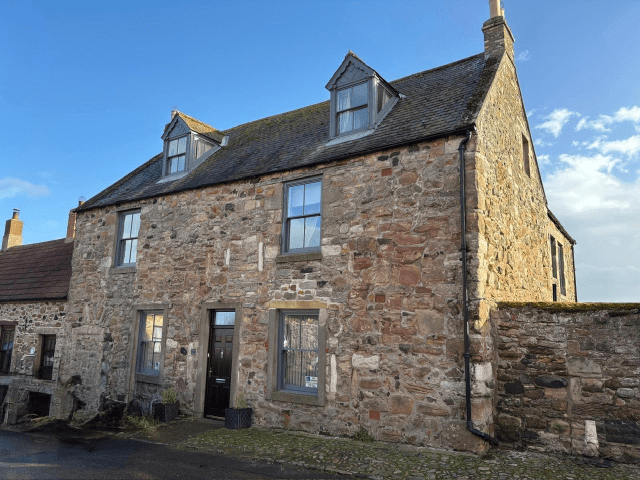
Front of the Palace House in 2026. Photo: Livia Russell
A Little Bit of History…
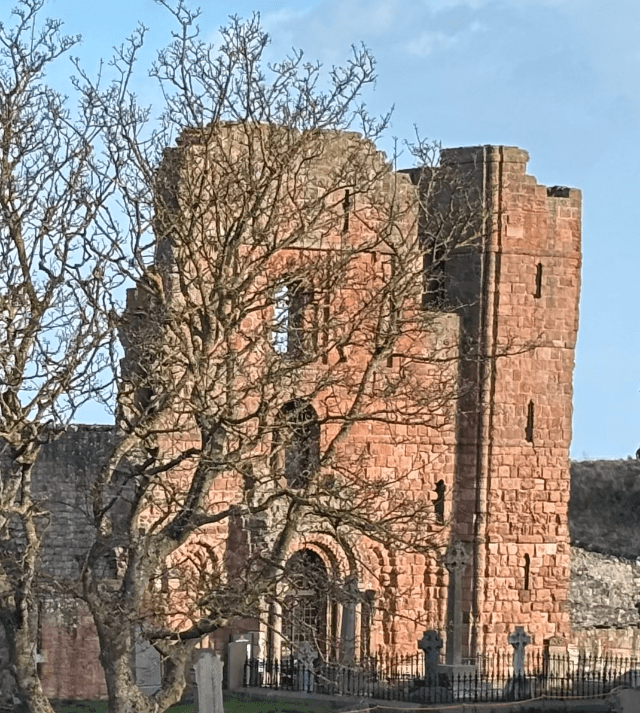
The first monks came to Holy Island in 635AD under the leadership of Aidan, who was invited to Lindisfarne by King Oswald of Northumberland.
These Celtic monks created an early monastery possibly beside Palace house, but in the 9th century the largely wooden buildings were destroyed by the Vikings.
In the 12th century the monastery was re- established, but in the 1530s the final death-knell came with the Dissolution of the Monasteries under Henry VIII.
The remaining ruins still give visitors a sense of how imposing the structure must have once been.
Looking at early wills and deeds, it seems that Palace House was once referred to as Cuthbert’s House, perhaps because it faces Cuthbert’s Square.
It’s also long been rumoured that a bishop’s palace once stood nearby, but there’s no firm evidence to confirm this.
5-bedroom Palace House is currently for sale through Paton and Co estate agent.