Demolition and Self Build: Starting Over
Melissa and Andy Cooke replaced a tired 1930s house with a spectacular contemporary self-build that frames their river views
“We love the Helford River, and when we looked at the house that stood here previously, we did not think there could be a better spot for us,” says Melissa Cooke, a retired strategy consultant.
Melissa and her husband Andy, also retired, bought a 1930s home in an extraordinary location on this Cornish river, famously associated with Daphne du Maurier.
For the next year and a half, the couple drafted and re-drafted renovation plans, unable to get it ‘right’.
Then, a friend suggested they demolish and replace the house with a contemporary self-build.
“We believed we had bought a home, not a plot, so it was a hard decision,” says Melissa.
“But I had always wanted to [self] build,” adds Andy.
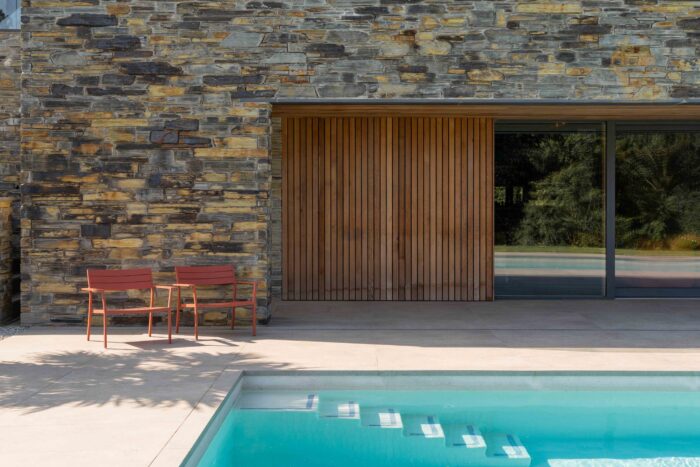
Life by the water
Before moving to Cornwall permanently, the couple had a holiday home in the same village, spending many happy holidays there with their five children, now all grown up.
This has long been a special place for them and a natural place for their retirement.
This location is exceptional; a steep, south-facing slope with views down the river.
Yet this brought significant challenges: a steep slope, limited access, and its location within an Area of Outstanding Natural Beauty, right on the edge of a creek.
It therefore demanded a very special design, and the couple turned to local architecture practice KAST.
“We spoke to several potential architects, but we chose Nick and David at KAST, as they had good ideas but listened to us too – it was a joint project,” says Andy.
The couple wanted a sleek, contemporary self-build home with clean lines and a nod to mid-century design.
Most importantly, they wanted something reflecting 21st century Cornwall, as the village has houses from many other eras.
However, because the plot sits within a National Landscape (formerly an AONB), their first planning application was refused.
Rethinking The Site
“Everything was on one level, which is better for wheelchairs,” says Melissa. “So [when the application was refused], we lost our ‘futureproofing’, which is madness.”
Fortunately, their second application was approved.
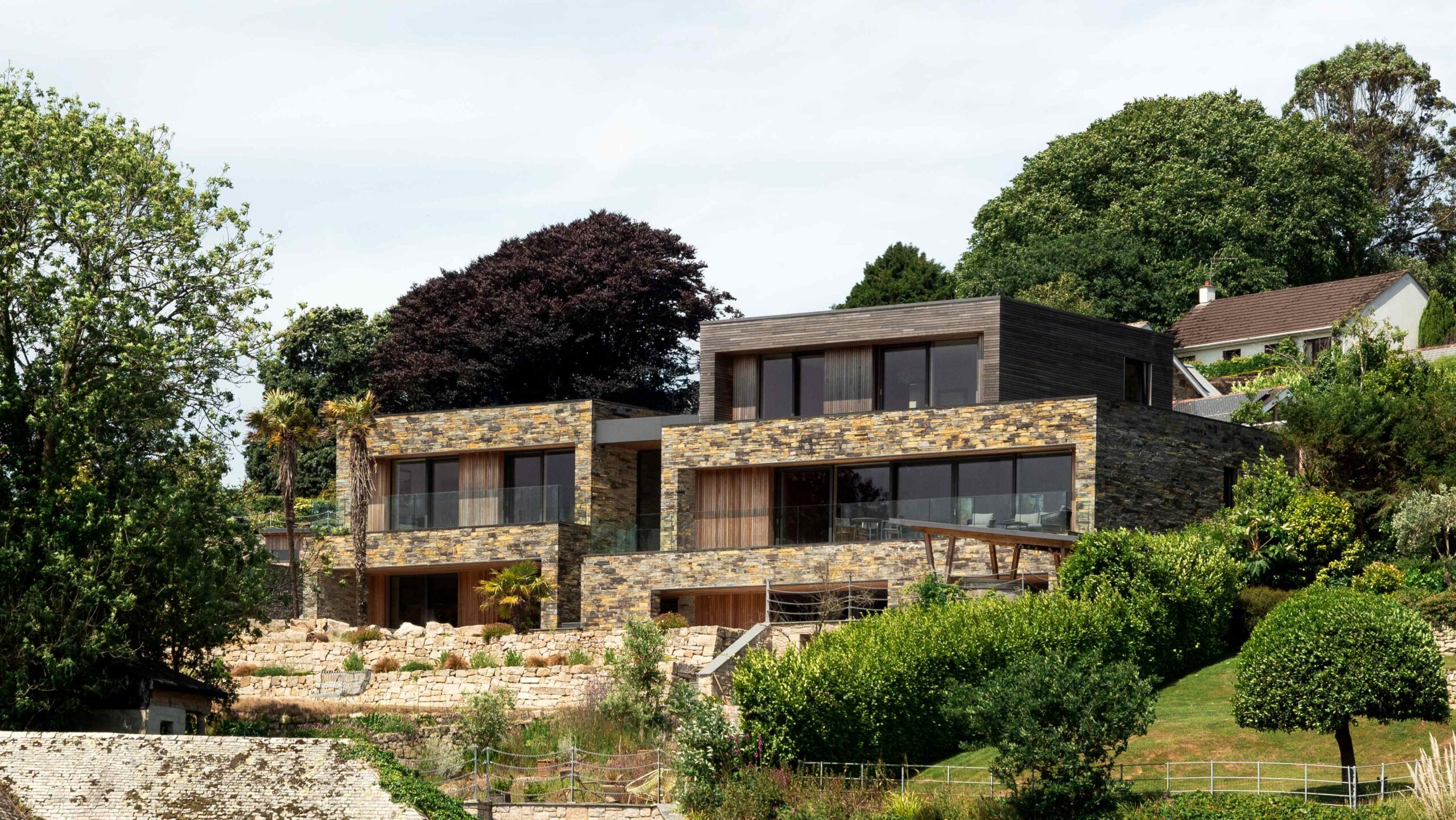
This plan reshaped the design into a split-level, three-storey home stepped into the hillside, with only the master suite on the top floor.
“In the end, we got the house that we’re really happy with, in the location that we love.
Although we lost the benefit of having a guest bedroom and living space on the same level, it does work well architecturally and practically,” says Melissa.
“As first-time homebuilders, we were navigating uncharted territory, but David and Nick from KAST guided us through every step with clarity and professionalism,” adds Andy.
Local Materials, Contemporary Form
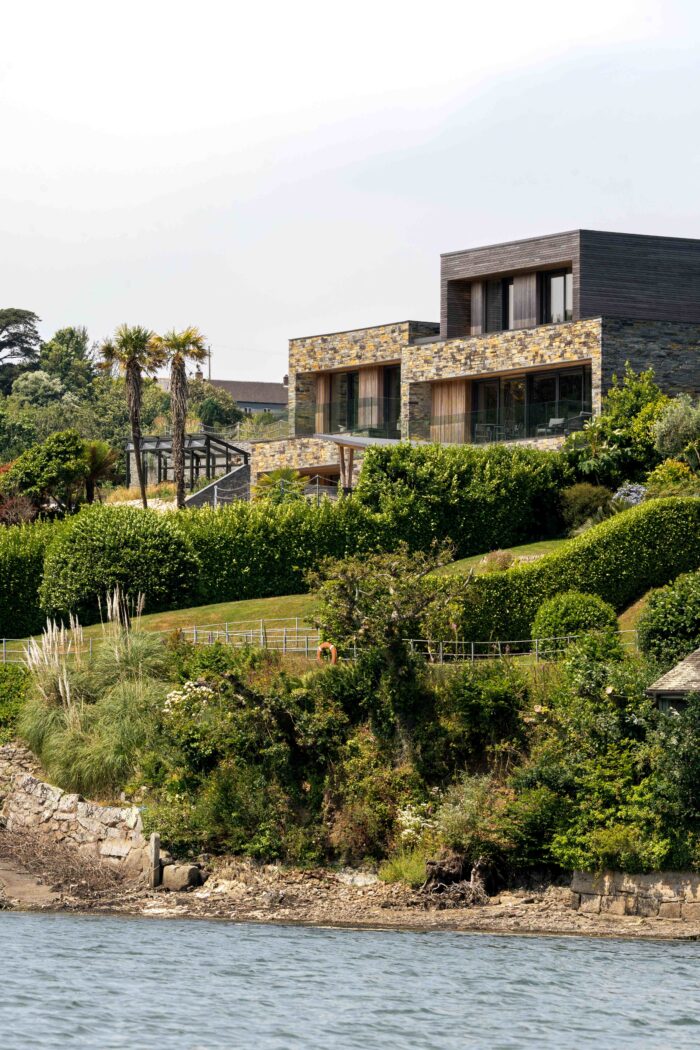
A big part of the home’s design success is the choice of materials.
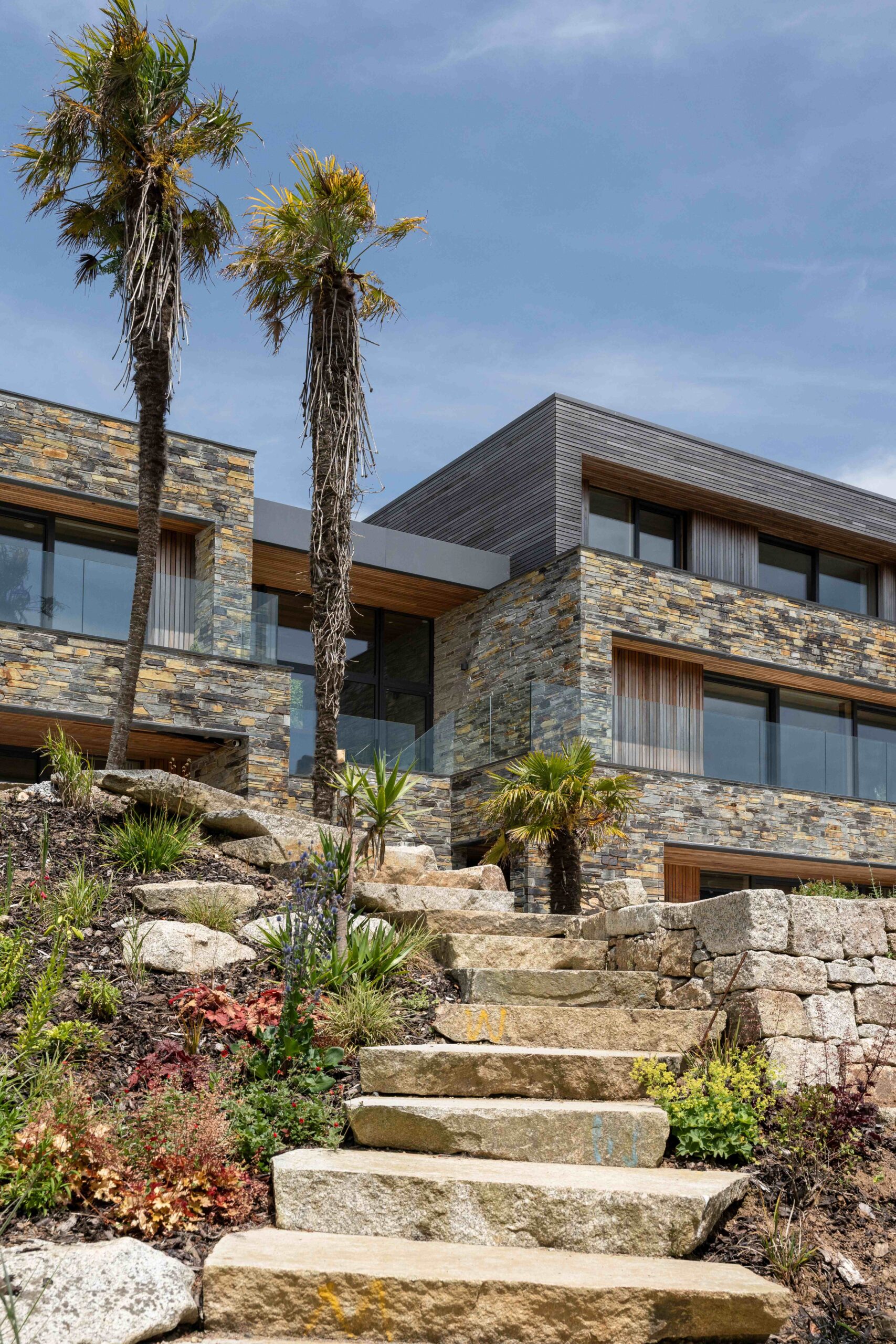
Local stone on the lower two storeys connects the building to its surroundings, while the cedar cladding on the top floor helps it blend into the woodland visible behind the property and around the creek.
Behind the stone facing, the house is constructed from concrete block, with only the timber-clad section a combination of steel and timber frame.
The build took 25 months before the couple could move in, which they found frustrating, and the first stage in particular “felt very long,” says Melissa.
This involved building a 30m long retaining wall, where the lower floor steps into the hillside.
It’s not visible from the road, but this was “a huge, technical operation,” recalls Andy.
In such a deeply rural spot, mains gas was never an option, so the couple opted for a low-carbon trio: an air-source heat pump to run the underfloor heating, solar panels for on-site generation, and a mechanical ventilation system that keeps fresh air flowing while capturing warmth from the air it expels.
This is complemented by a “huge amount” of insulation and triple glazing.
Learning as they Built
The couple, who had never run a build project on this scale before, chose to hire a local builder and subcontractors, paying them by the hour.
They also dealt directly with material suppliers. Although pleased with the results, Andy and Melissa now believe this approach created little incentive for efficiency on-site.
Another challenge was the decision-making required to bring such a substantial home to completion.
“We were very focused on detail, and found the requirement for decisions – from tiles to door handles, step size to lighting plans came thick and fast. Andy put a lot of work into us being consistent,” says Melissa.
“He managed this by treating it as a job, living on-site for five days a week over ten months.”
“We had a big safari tent, which we furnished from the old house we were demolishing, with a kitchenette, a log burner…we had some fun with it.”
Engineering the Hillside
While some of the delays will be familiar to anyone who has run a significant build project – yes, the windows were delayed – Andy and Melissa faced a unique challenge.
A long steel beam runs front to back, underneath the living room floor.
Their youngest son remembers seeing his dad “bouncing on his house” during construction.
Andy was checking the level of movement in the floor, given the span of this main beam. (Think like the twanging of a guitar string!)
It turned out that “for residential properties, resonant frequency analysis is required only if the beam is over 8m. Ours was 7.9m.”
Andy’s investigation of this level of movement meant that the beam needed further reinforcing to avoid later issues.
“It was never going to be a huge problem,” says Andy, who had owned a machine-making business before retirement and therefore has relevant expertise.
“It came as a surprise. But would anyone else have spotted it?”
Light, Space and Views
Andy’s previous business life again became relevant when the couple needed a company to make the striking steel and oak staircase, also designed by KAST.
“We used Spiral UK as I had previously sold them steel-cutting machines,” says Andy.
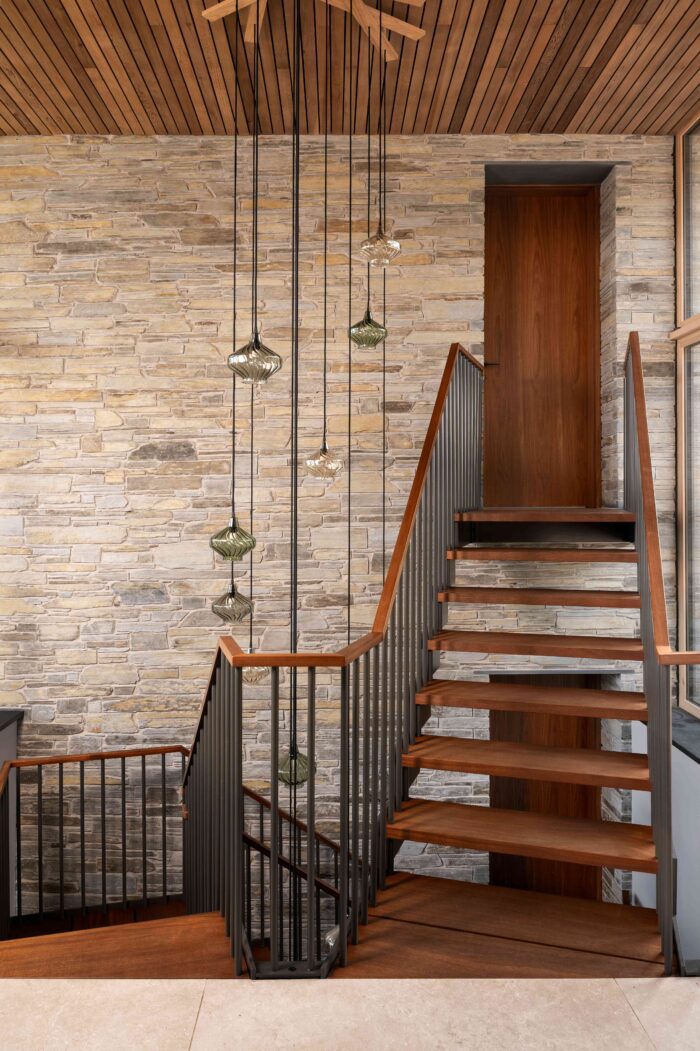
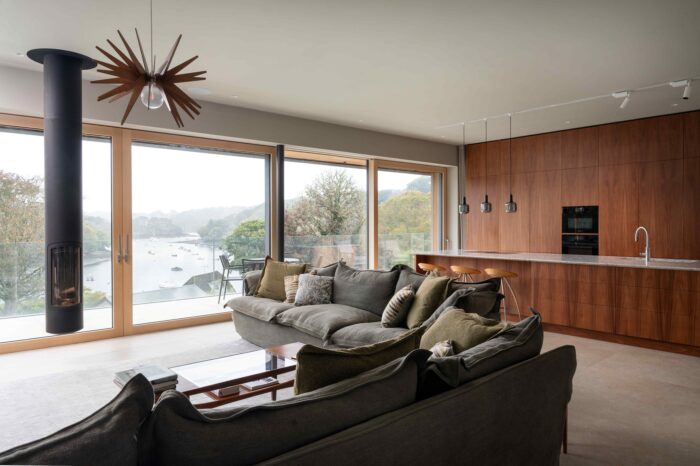
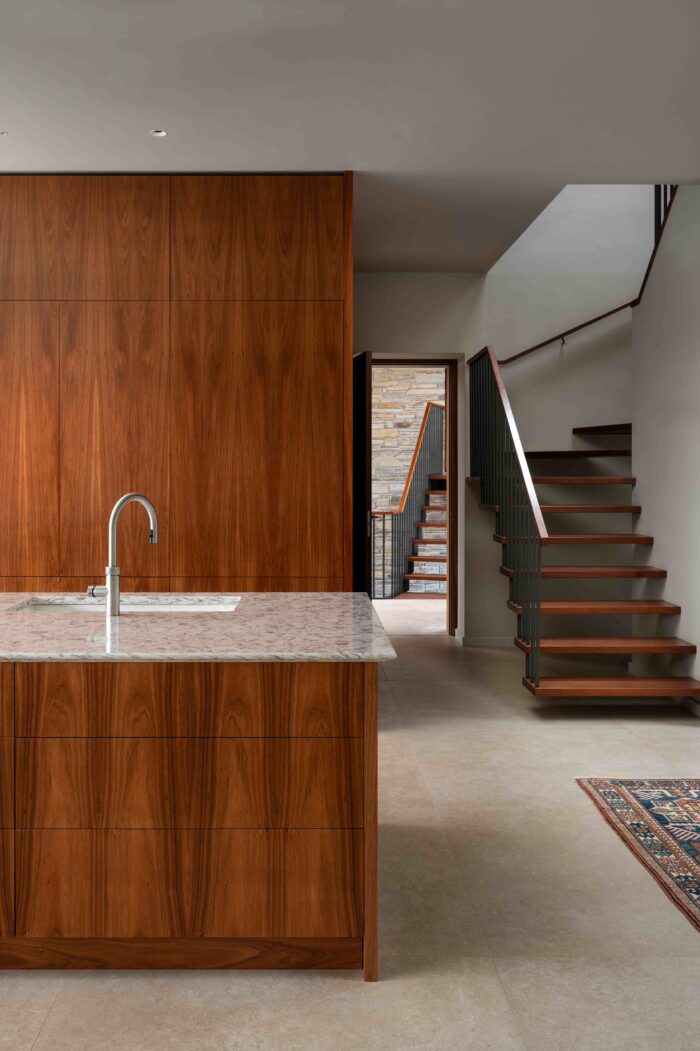
This staircase, with its open treads, adds to the overall sense of airiness in the house, further enhanced by 2.3m-high internal doors, large windows and expansive glazed sliders — including an 11m by 2.7m panel that perfectly frames the views.
Rather than opt for oak throughout, the couple gravitated towards the warmer, reddish-brown tones of less commonly used timbers, including etimoe (also known as African rosewood) and sapele.
The kitchen,
“Is designed to look like a giant block of wood,” says Andy. Built by local firm George Robinson Kitchens, there is no extractor hood to mar the cabinetry’s sleek lines, and a hidden door opens into a walk-in pantry.
Ideal, says Melissa, for keeping the mess out of sight when entertaining.
A Home for Two – and for Many
The house’s layout balances two varied needs: working beautifully as a home for two most of the time, yet easily expanding to accommodate Andy and Melissa’s large family and many friends.
The focus in this contemporary self-build is on generous living spaces (there are three such spaces – snug, living room and movie room) while the bedrooms are more modest in size.
“But we use all of the house, and it adapts to all those changes,” says Melissa.
The couple took on the interior design themselves, though Melissa did enjoy a visit from a colour specialist from paint manufacturer Coat to confirm the colour palette choices.
“We wanted everything inside the house to be subservient to that view of the river.”
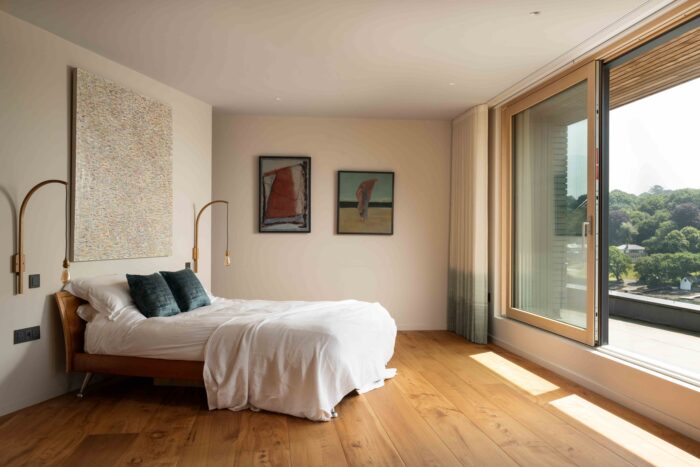
Curating the interiors of this contemporary self-build meant reassessing decades’ worth of belongings and keeping only what truly suited the new home.
Treasured pieces, such as Murano glass, paintings, and rugs from India, now sit comfortably within the calm, contemporary scheme, reflecting the life they’ve built together.
“Local designer Ali Cary is a friend of mine and has done a super job of offering up choices of furniture and fabric options that blend the new seamlessly with the old.”
Life on the River
Now the couple live full-time in their new home, enjoying access to the water from their pontoon and generally messing about in boats.
What do they feel was their best decision during the build?
“Knocking the original house down!” laughs Melissa.
“I love the connectedness, the inside/outside feeling we have here.”
“I love the light,” adds Andy. “This has been a long-held ambition; we just love being on the river.”
All images: Form Photography