A model home for our times
This distinctive new self-build family home is aesthetically and functionally innovative. On the outside it puts a fresh spin on local traditional building styles, and inside it has been designed to be flexible enough to suit multigenerational or single-family living
Design duo Andre and Jessica Templeton Ford have created a beautiful and unique home for three generations of their family in a quaint West Sussex village.
And, in doing so, they have broken new ground in both the form and function of the family home, creating a model we could all do well to take note of…
Clay Rise, as their house is called, is no sterile, rectilinear, Modernist-lite self-build, but a far more interesting organic and fluid contemporary take on the local vernacular.
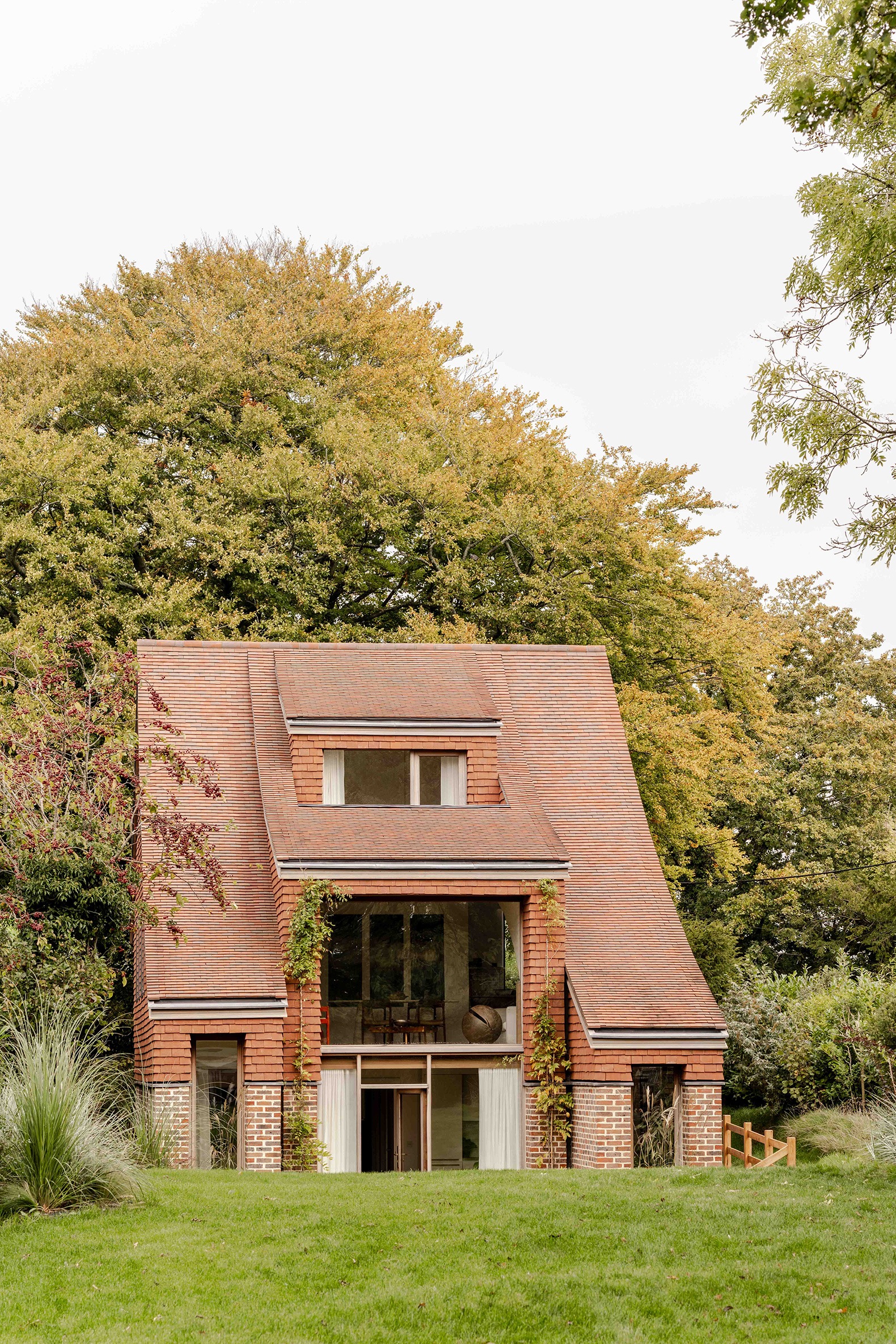
Clay Rise has a distinctive look all its own, while echoing local buildings too Image credit: French + Tye
Three key influences
In fact, in architect Andre’s design it is possible to detect three distinct strands of inspiration, which have come together to shape a rather special home for him, wife Jess, their young family, and his parents Mike and Helena.
For one thing, the house is directly inspired by local materials and by the older houses in the wider village in which it sits.
It speaks too of Andre’s career at one of the most innovative architectural firms in the world.
And it also was explicitly influenced by his childhood growing up in the spiritual and artistic “intentional” community in which the house is sited.
In Andre’s talented hands, this mix of influences has proved to be a winning one.
Inside Clay Rise, meanwhile, the keen eye and good taste of his stylist wife are clearly on display.
The house sits at the foot of Hoathly Hill, in West Hoathly within the High Weald area of outstanding natural beauty.
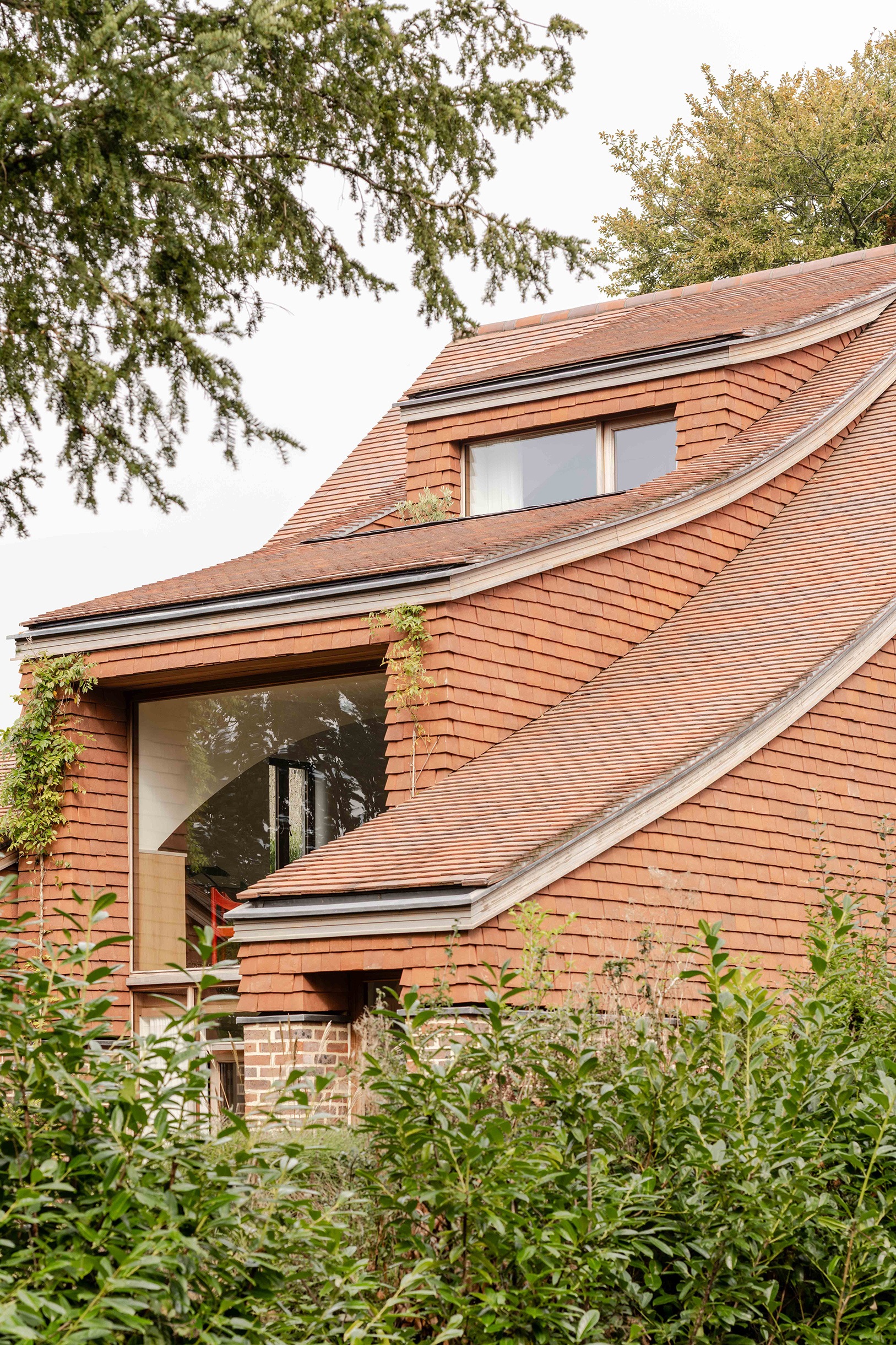
The unique curved and layered roof is the house’s trademark Image credit: French + Tye
Distinctive roof
From the outside the unusual three-storey build is all about the roof: a striking, swooping curved roof that almost looks as if it has been peeled up in layers to reveal large windows tucked beneath the tiles.
The height of the building was constrained by planners, while a minimum height for the eaves was also prescribed.
That meant a lot of roof to work with and so it became a feature. Layered sweeping curves roll from the top of the pitch to frame large windows on all three floors that overlook neighbouring fields and beyond to the South Downs.
The one-off roof was installed by a local firm. “We were on a tight budget and had to go with the cheapest quotes for pretty much everything.
“But we really lucked out with our roofer because he loved the design and really wanted to do it because it was so unusual,”
Andre recalls. “He bought into the ambition of the project and really worked hard with his team to make it look as good as it does.”
Jess adds proudly, “I think you inspired people with your design. People don’t get the opportunity to work on something a bit out of the ordinary like this very often.
“I was keen that whoever came here and worked was excited about the project – that it wasn’t ‘just a job’ for them because it was never ‘just a job’ for us.”
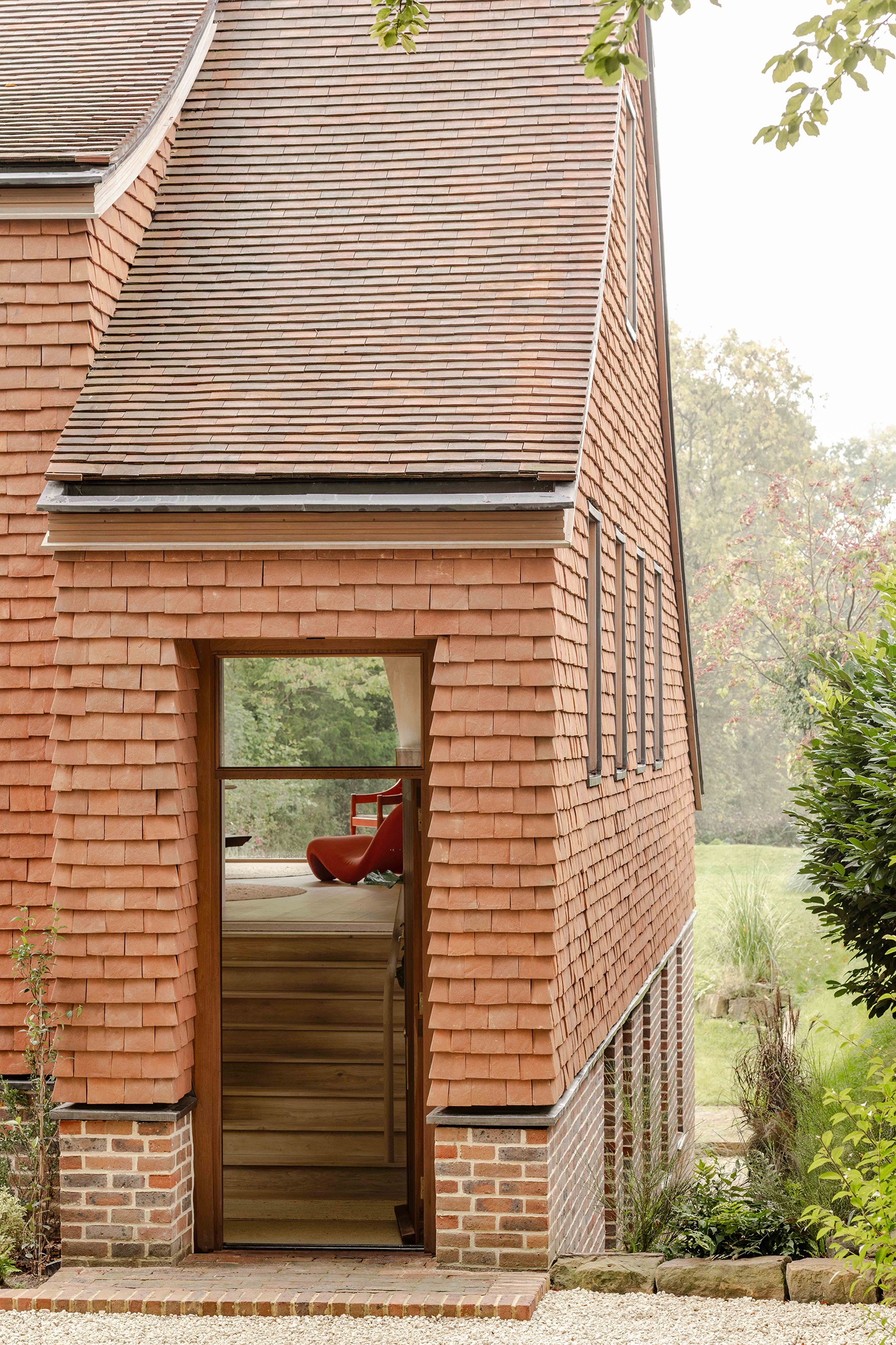
There are entrances to the house on both the ground floor and first floor. Image credit: French + Tye
Hanging tiles
External walls are covered in hanging clay tiles and bricks, inspired by the local vernacular cottages and farmhouses with their handmade bricks and characterful hanging clay tiles.
The hanging tiles are an unexpected touch on a modern build, but a very appealing one, which brings texture, character and historical continuity.
Local bricks
Brick is a key local building material, too: the village sits on the large seam of Weald clay that runs on into Kent, and brickmaking took place in the village for almost two centuries until the last large brickworks there shut down in 2020.
The bricks Andre chose for the lower portion of the walls came from another local brickworks and were made from the same clay on which the house sits.
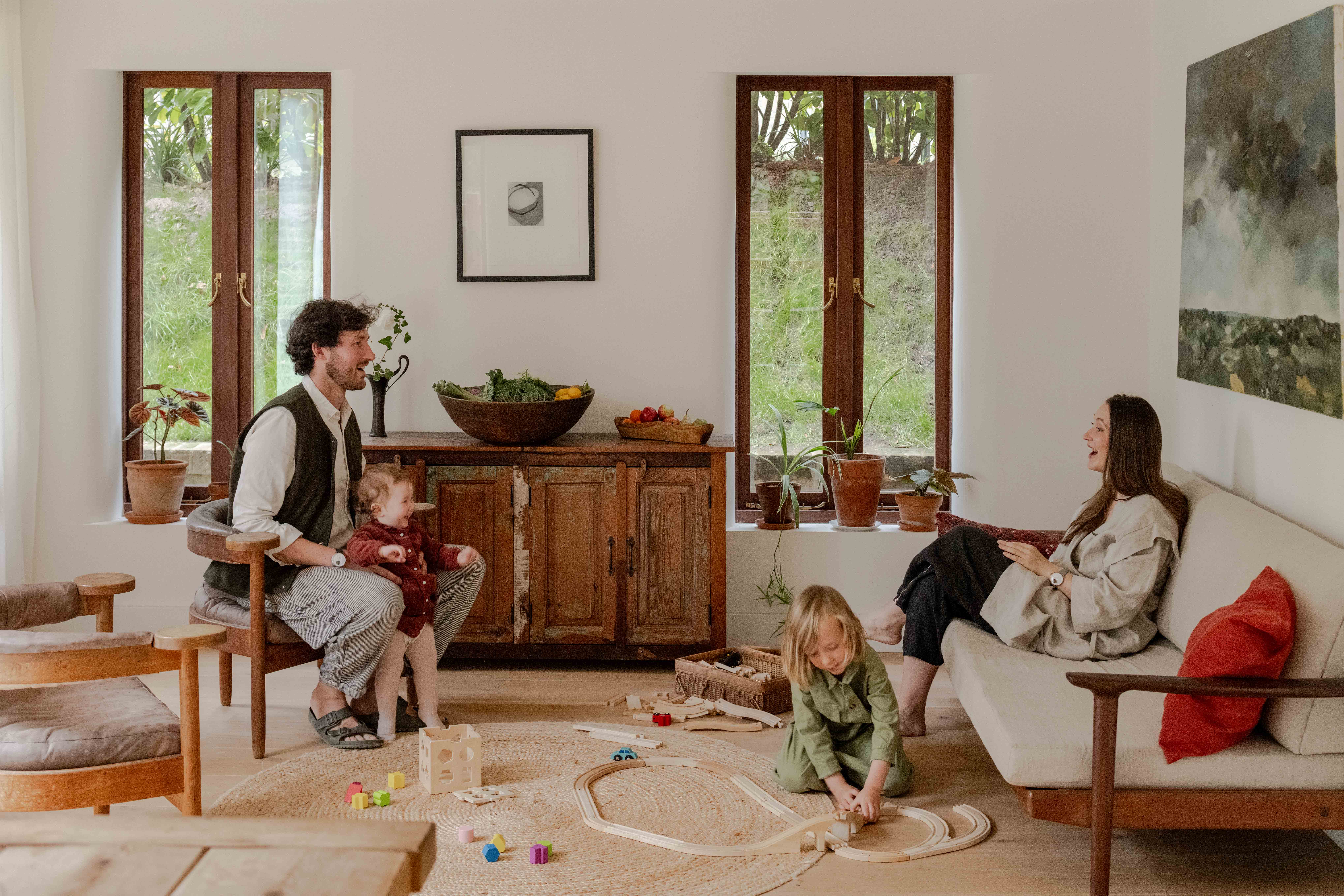
Andre and Jess moved to the country with their young family Image credit: French + Tye
Intentional community
But it wasn’t just the local vernacular and materials that inspired Andre’s design.
For Hoathly Hill is a village within a village: an “intentional” community of 30 or so families that share a belief system and communal activities.
It began as something of a hippie commune in the 1970s, based on the teachings of Rudolf Steiner, the 19th century Austrian philosopher, educator and social reformer.
This is a very creative community, with its own craft, pottery and sculpture workshops, as well as a theatre company based on the hill.
And this creative heritage inspired Andre as much as the local building traditions.
His parents Mike and Helena moved to the community in the 1980s, and he grew up in the house next door to the new build.
In fact, the plot for Clay Rise was carved out of the large garden of his childhood home.
Plans to split the garden and build a new house were first hatched by his parents decades ago, but they never quite came to pass.
Planning permission for a new dwelling was secured two decades ago, but it wasn’t until Andre had qualified as a building designer years later that the idea of building in his parents’ garden finally came to fruition, in the form of his wonderful design.
He explains, “The sculpture studio is a short walk away and there are lots of sculptures that have been made there dotted around the grounds on Hoathly Hill.
“So, I grew up surrounded by these organic, flowing forms. Lots of the buildings round here are quite stiff and rigid, but I wanted to make something more in keeping with that artistic heritage.”
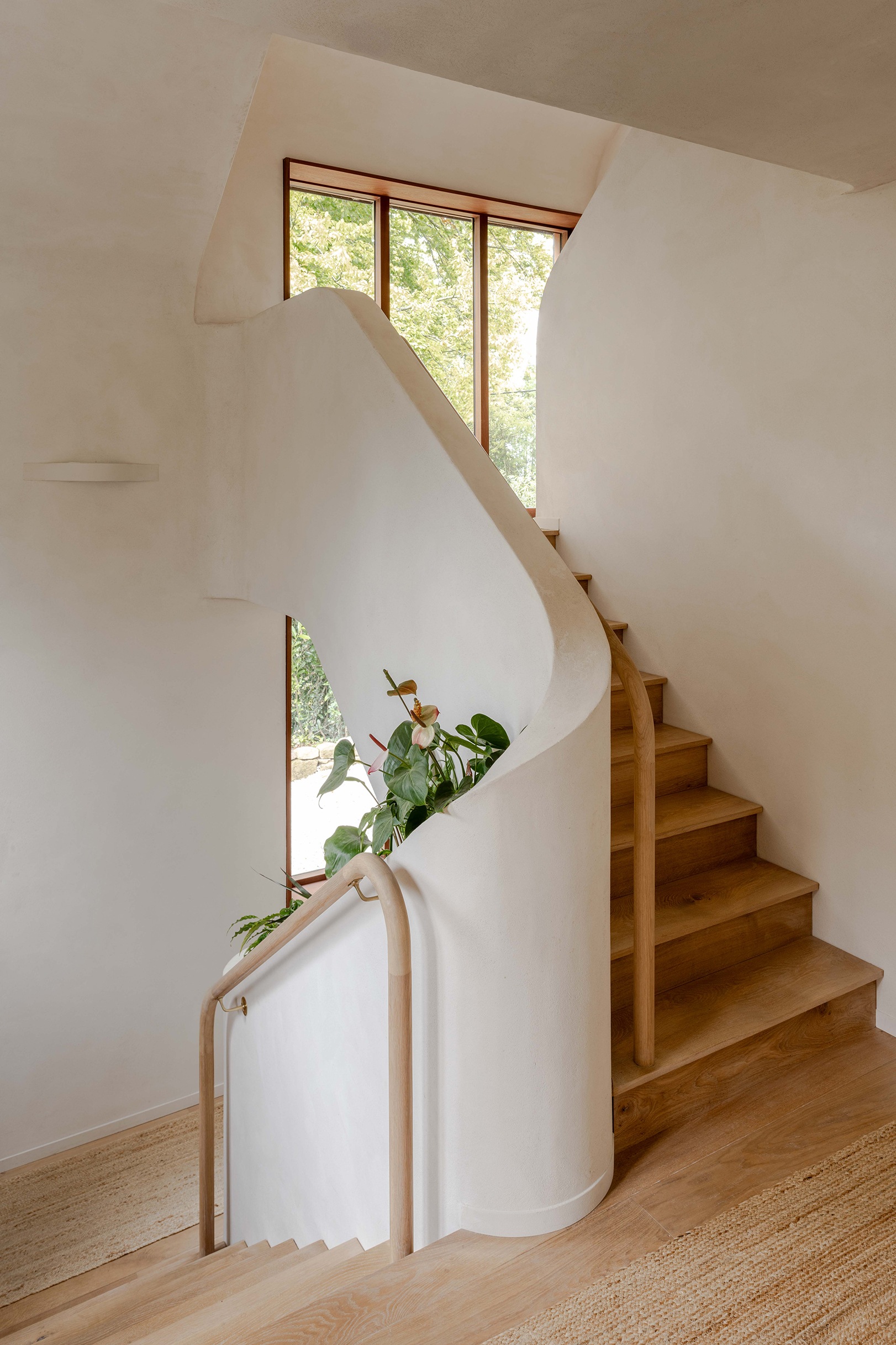
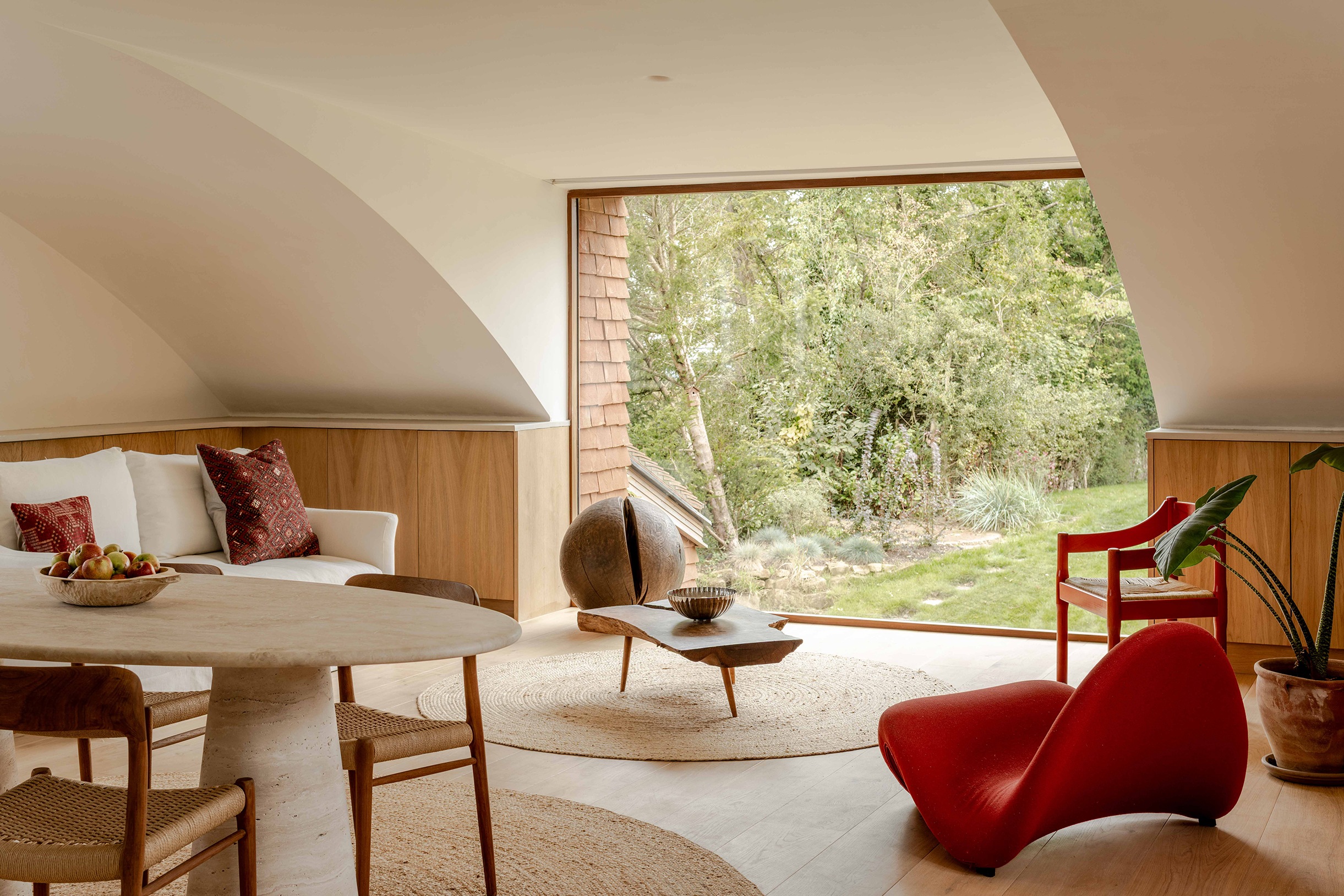
The interior of the house is all about the curves Image credit: French + Tye
Organic forms
As well as the curved roof, the interior of the house is all about curves and organic shapes.
A curved lime-plaster staircase is the spine of the home, with simple curved custom handrails that Andre fabricated along with other bespoke joinery elements using a CNC machine at the BLOQS workshop in Enfield.
“It meant that we could get quite a bespoke design really cost effectively,” he says.
Before coming to down to Sussex, Andre and Jess lived in Walthamstow, east London, and Andre worked at Heatherwick, one of the country’s top architecture firms, on prestigious projects such as the redevelopment of the former Olympia exhibition centre.
The influence of the design philosophy of controversial and outspoken Thomas Heatherwick, head of Andre’s former practice, can also be detected in the house.
Heatherwick has been vocal about the need for us to build more visually interesting buildings instead of boring neo-Modernist, minimalist and bland ones that don’t appeal to the human eye or heart.
I reckon Clay Rise would pass the “interestingness” test that he sets out in Humanise, his plea for better buildings. (And in fact, the Humanise campaign has recently been in touch asking to feature Clay Rise on its Instagram account.)
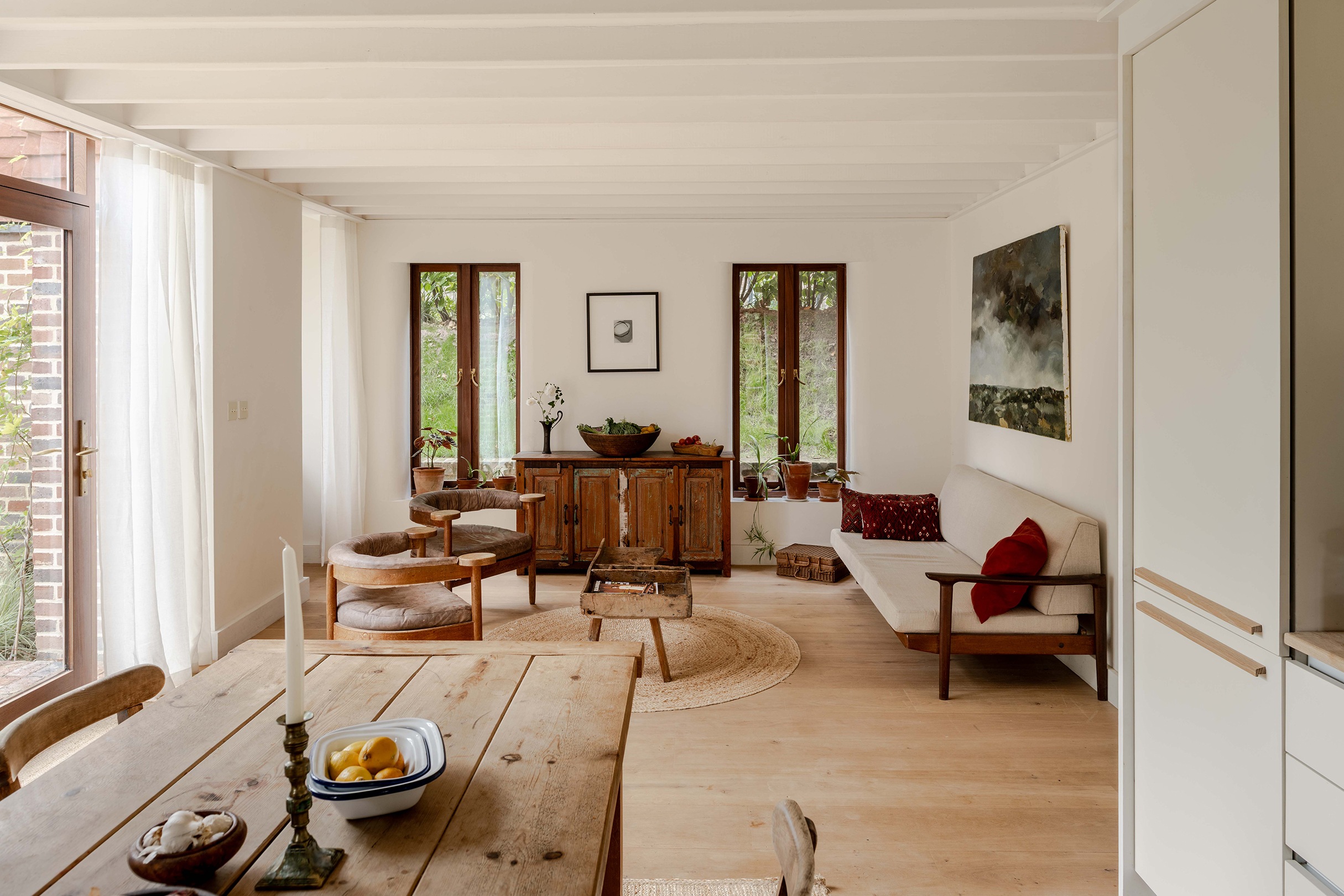
Jess has sourced some wonderful and eclectic pieces to furnish the house Image credit: French + Tye
Escape to the country
Once they had children, the couple’s priorities changed. Andre’s parents were spending a lot of time travelling up to London to help with childcare.
So a plan slowly came together for the young family to move down to the country to share the self-build being constructed in mum and dad’s garden.
At that point, their son was four and Jess was pregnant with their daughter, who is now 18-months.
Nonetheless, the young family packed up and moved to Sussex to begin a new life in the country.
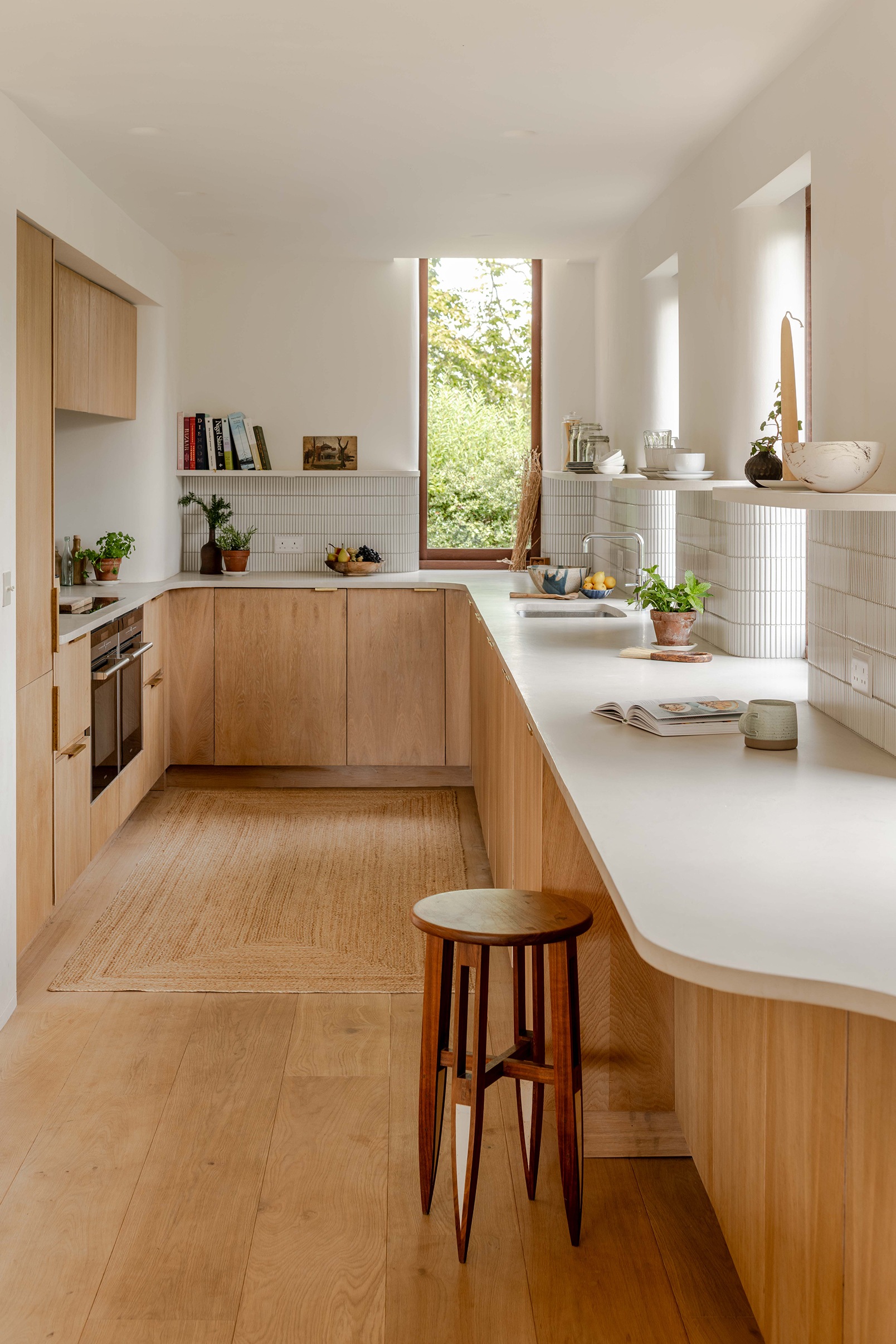
A second-hand kitchen was stylishly repurposed. Image credit: French + Tye
The necessity to self-build
Andre explains that they didn’t originally set out to do a self-build, and admits that, although professionally he has worked on some of the biggest redevelopment projects in the land, when it came to building a house for his own family with their own money, the nerves kicked in.
He smiles, “I was quite keen for somebody else to manage and built it all. But we only had so much money, and the quotes we were getting were beyond that. So, we did some research and started to get in individual quotes for the groundworks, structure and so on, to work out if we could do it ourselves.”
As Andre’s parents were still living in his childhood home next door to the new house, they were on hand to lend moral support and practical help.
He recalls, “My dad is very optimistic, and I am a bit more cautious, but together we had enough confidence to take it on.
“The groundworks was the bit that I was most worried about. We hired a driver and a digger from a local firm.
“We went down more than two and a half metres right next to the old house. It was a very wet winter, and, at one point, it looked like an Olympic swimming pool.”
But eventually the ground dried, and the bones of the house – constructed from a prefabricated panelised timber frame system, chosen for precision, speed, affordability and environmental credentials – went up in just two weeks.
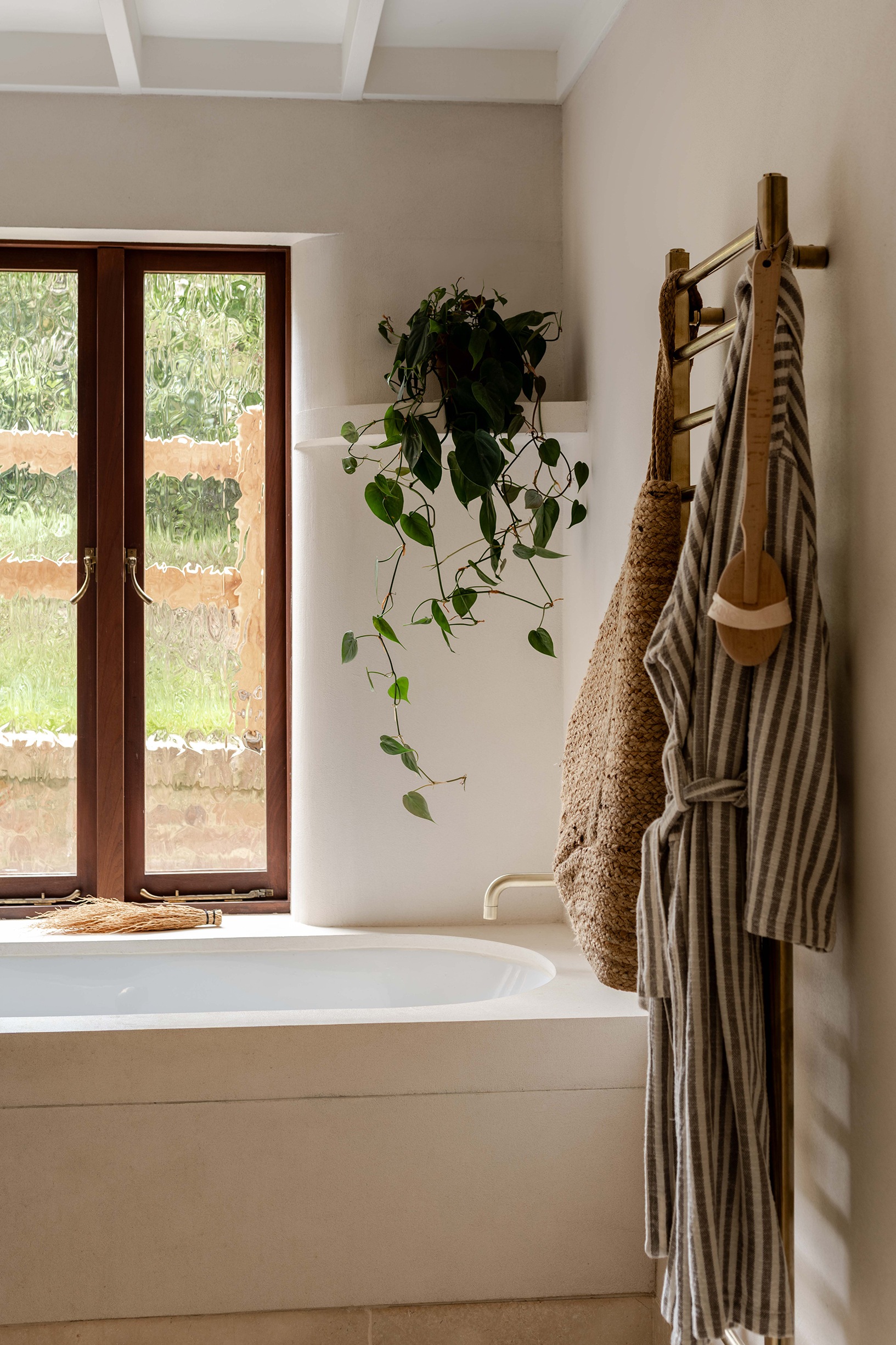
Muted neutral tones give the home a calming atmosphere Image credit: French + Tye
Flexible design
Flexibility was cleverly built into the design even before it was decided that all three generations would live in the house together.
Andre designed the main bedroom so it could be split in two to create an additional bedroom, and the living areas can function independently for different family configurations or for carers or lodgers.
If a single family were occupying the house, the ground floor space could serve as a home office or a spacious main bedroom with ample storage.
Digging into the hill gave the house entrances at both ground floor and first floor levels, and the split-level floorplan allows the house to function easily as two independent units.
Andre and Jess live in the self-contained two-bedroom apartment on the ground floor, with his parents in the main living quarters above.
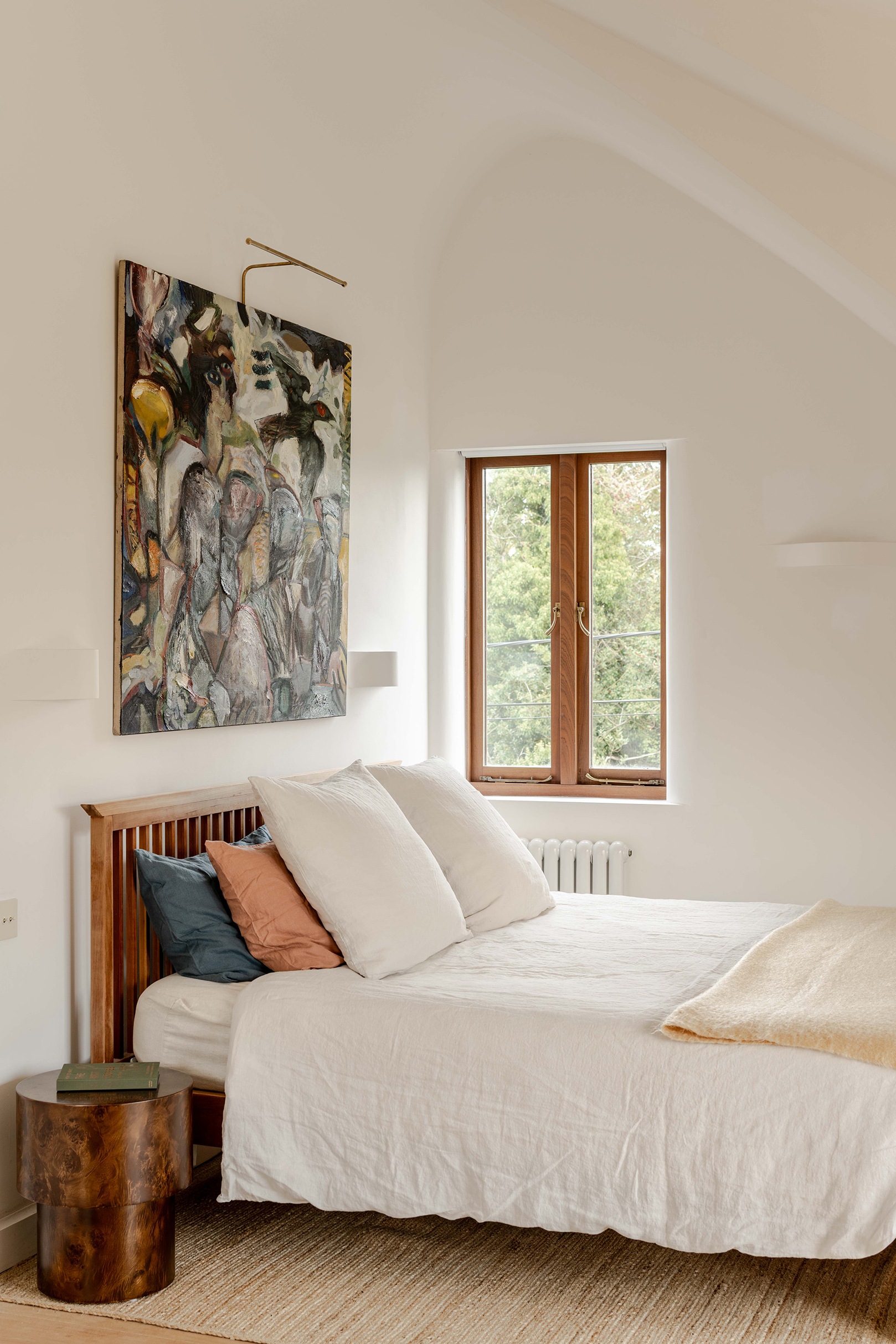
Jess has mixed and matched furniture made from different woods to great effect Image credit: French + Tye
Environmental features
Passive environmental strategies inform both the form and detailing of the building.
The house is oriented to optimise solar gain and shading, with a deep south-facing window allowing low winter sun to penetrate while limiting summer overheating.
Cross ventilation is encouraged through opening widows on both sides of the house, and the central stairwell acts as a thermal chimney, drawing warm air upward to maintain comfort year round.
An air-source heat pump provides the heating and hot water, complemented by high levels of insulation.
Material reuse reduced waste: the kitchen was second hand and offcuts from the timber frame were repurposed on site as custom joinery.
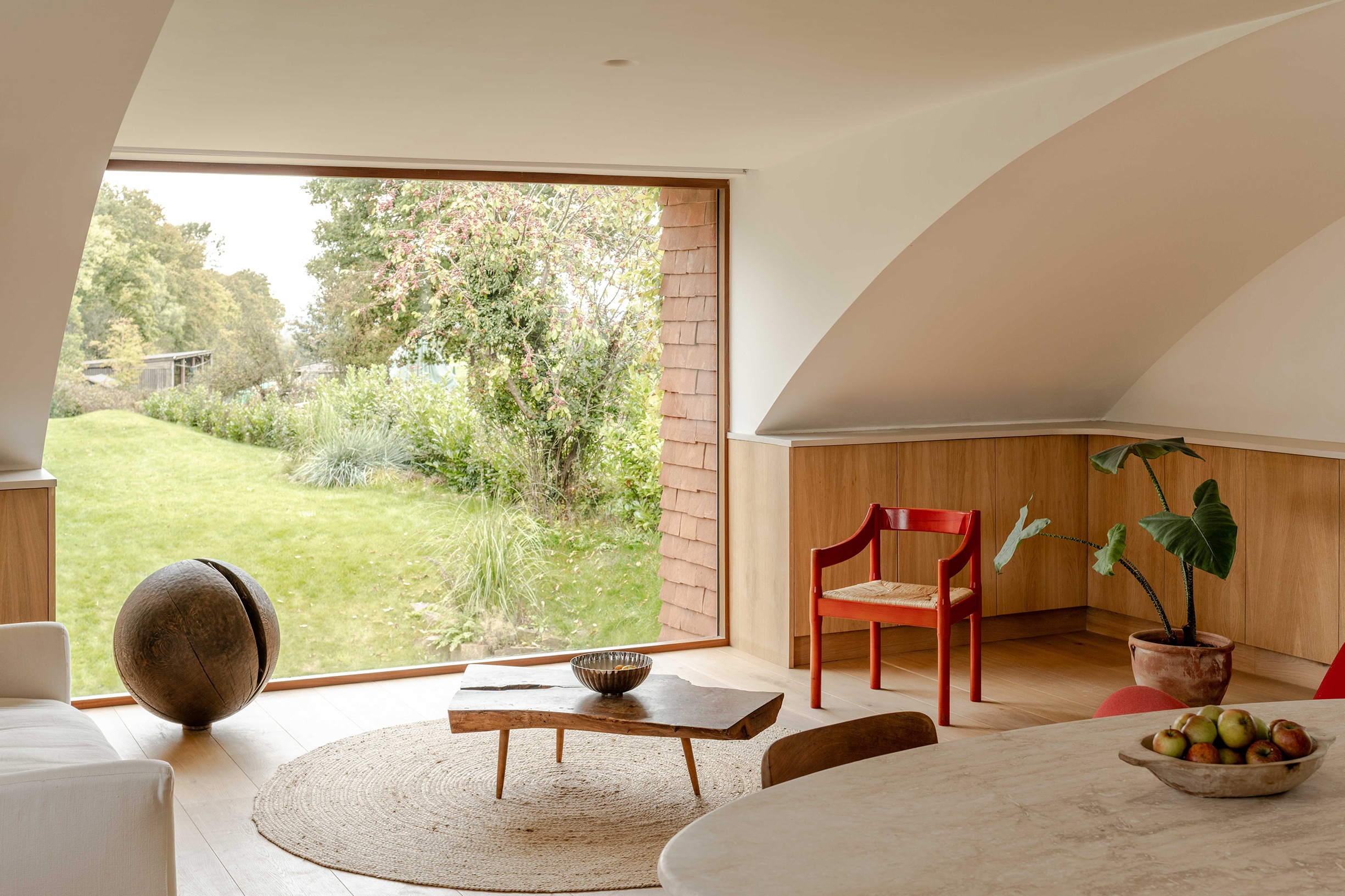
The curved forms of the roof are reflected in the interior spaces Image credit: French + Tye
Interior design
As for the interior aesthetics, the lime-plastered walls of the house are grounded by exposed timber and stone floors.
The windows have deep sapele reveals.
The deceptive simple interiors feel curated, with bespoke and found furniture and fixtures guided by Jess’s impeccable eye, and antiques and auctions expertise.
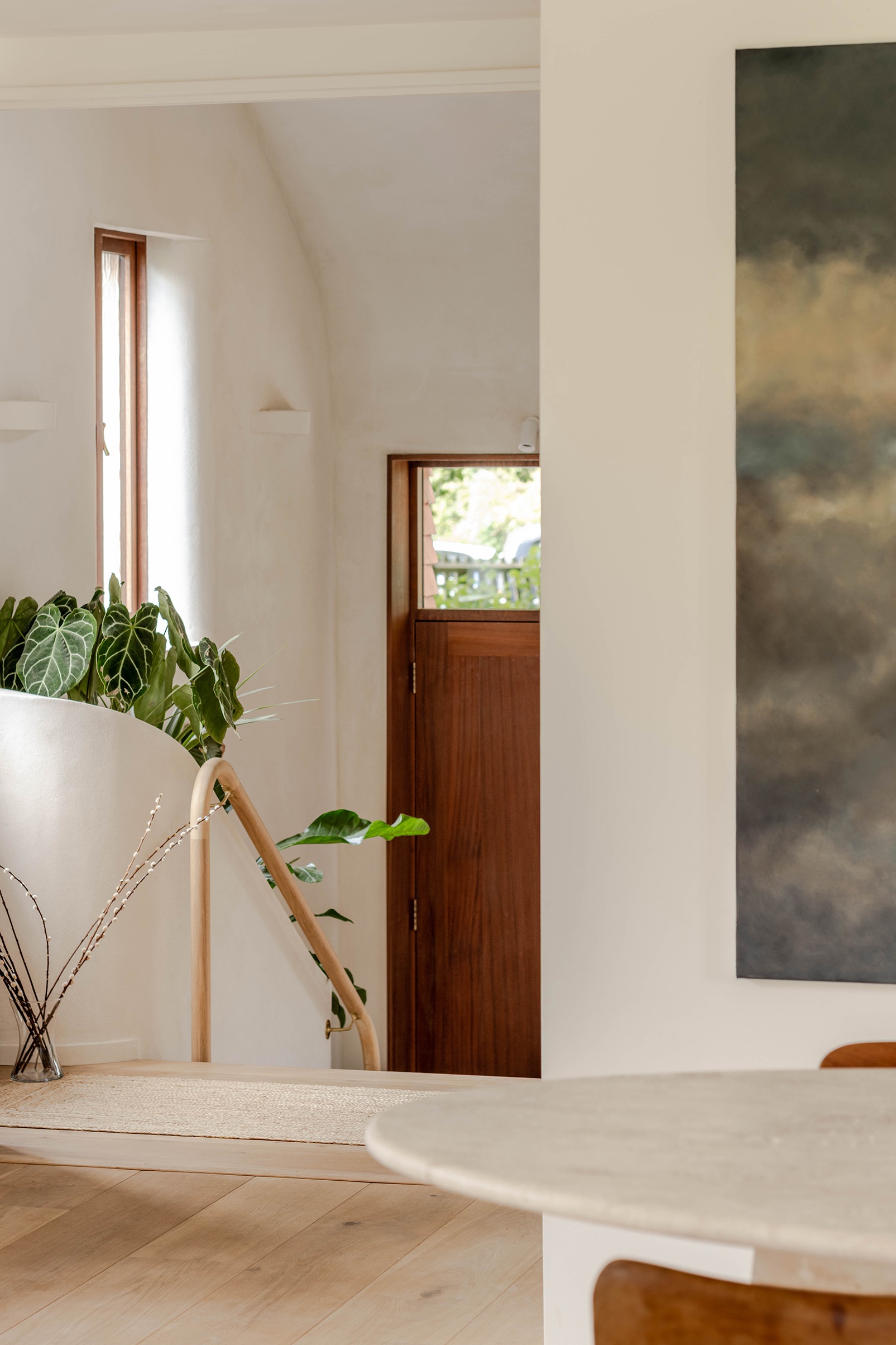
Biophili design: the house is full of plants Image credit: French + Tye
Exceptional exemplar
Both expressive and functional, Clay Rise is of its place, and yet a relevant model for others.
Andre has created a contemporary expression of local vernacular – a crafted building made to last and adapt gracefully to future needs.
It is no surprise that the house was shortlisted for the Manser Medal, a prestigious UK award for the best newly completed house.
This is an exemplar build in so many ways: offering as it does a more visually interesting and contextually alternative to the bland sterile boxes that typify so much contemporary self-build design.
But it also offers a template for flexible design suited to multigenerational living, which is something more and more families are likely to find themselves have to embrace to beat the chronic housing affordability crisis.
As part of their move to the country, the couple decided to set up their own architecture and interior design firm – Templeton Ford – with Clay Rise as their first project. Based on its many admirable qualities, they deserve to do well.
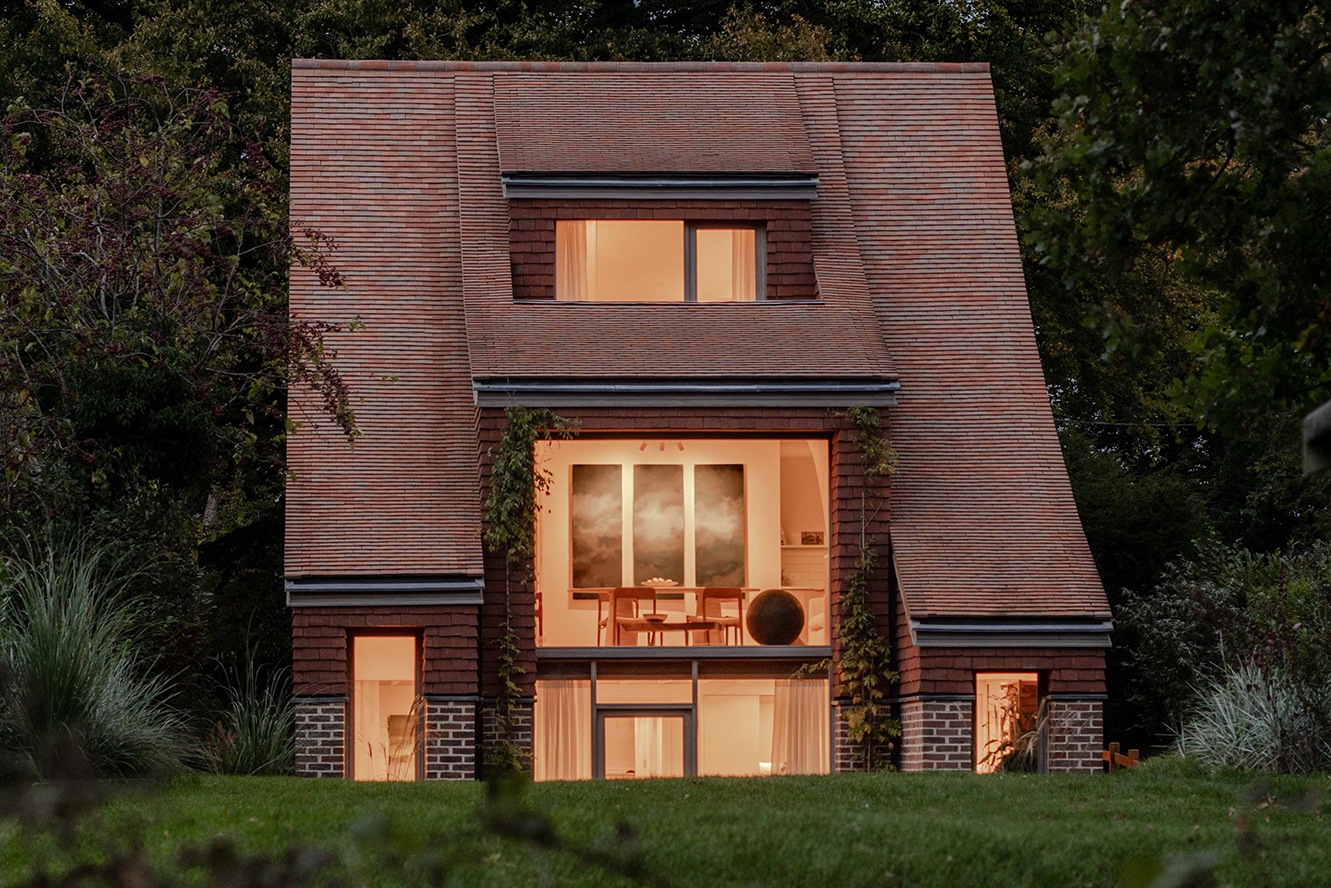
A new model for multigenerational living Image credit: French + Tye