

Solar water heating: how to use the sun’s energy to heat your water
Using solar collectors to directly heat water using the sun's power is a green way to meet your demand, but the technology may not suit all homes
We think of solar energy as primarily a way of generating electricity. However, solar water heating is an alternative use of the sun’s energy, using the sun’s power to warm a liquid directly. This is instead of using electricity to power some form of water heater.
Jon Bonnar, of Cotswold Energy, explains, “Solar water heating involves using solar panels to absorb the heat of the sun and transfer it to the water you use in your home.
“It uses free energy harvested from the sun to heat up your hot water for baths, showers, washing clothes and other daily tasks. Therefore, working alongside conventional water-heating systems to heat your water.”
How do solar collectors works?
Katharine Allison, from Independent Advisor Solar Panels, says, “Solar-thermal panels, also known as solar collectors, capture sunlight and convert it into heat.
“This heat is used to warm a fluid – typically a water-antifreeze mixture – that is circulating through the panels.
“The heated fluid then transfers the energy to your home’s water supply via a heat exchanger in your hot-water cylinder or thermal store.
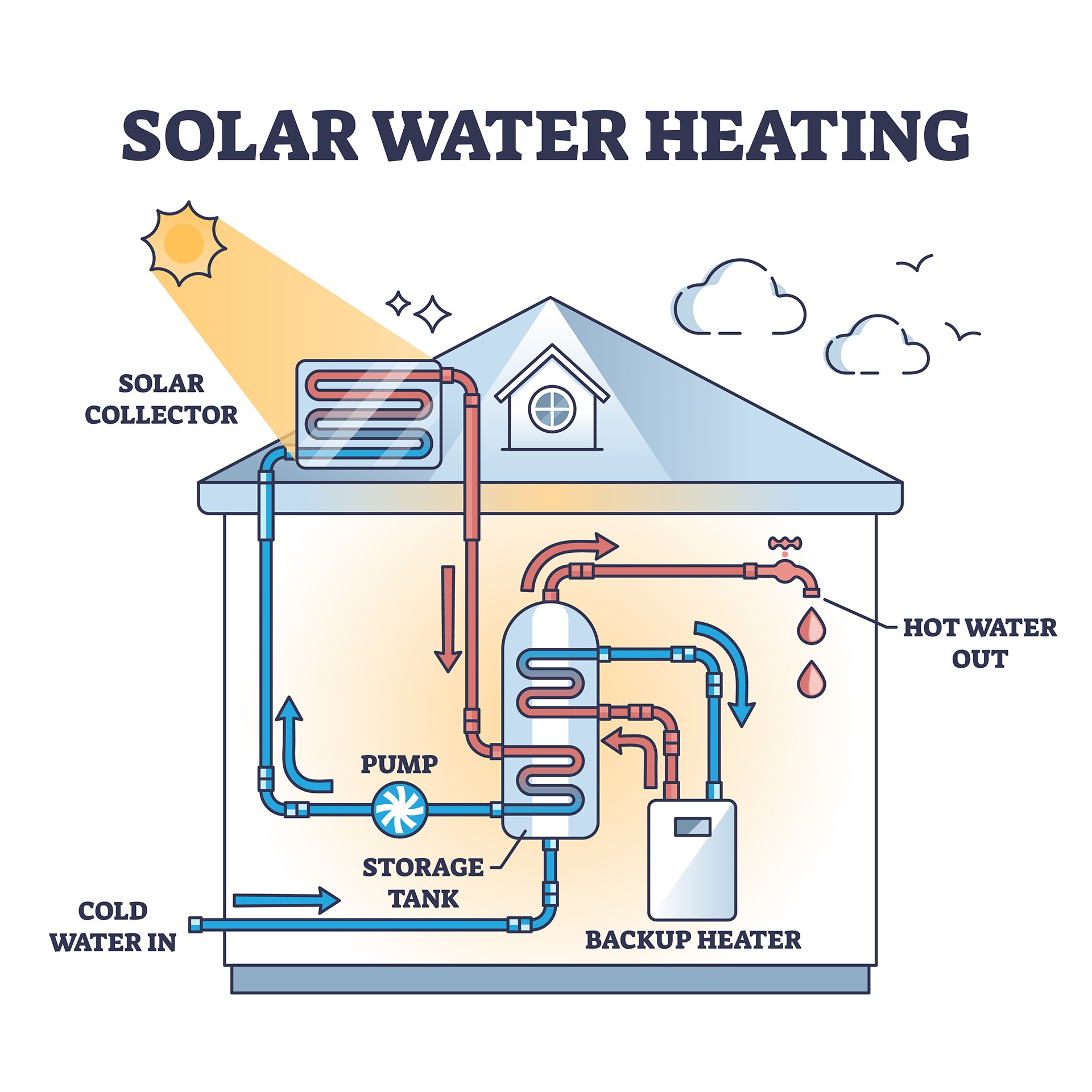
- Image credit: Adobe Stock
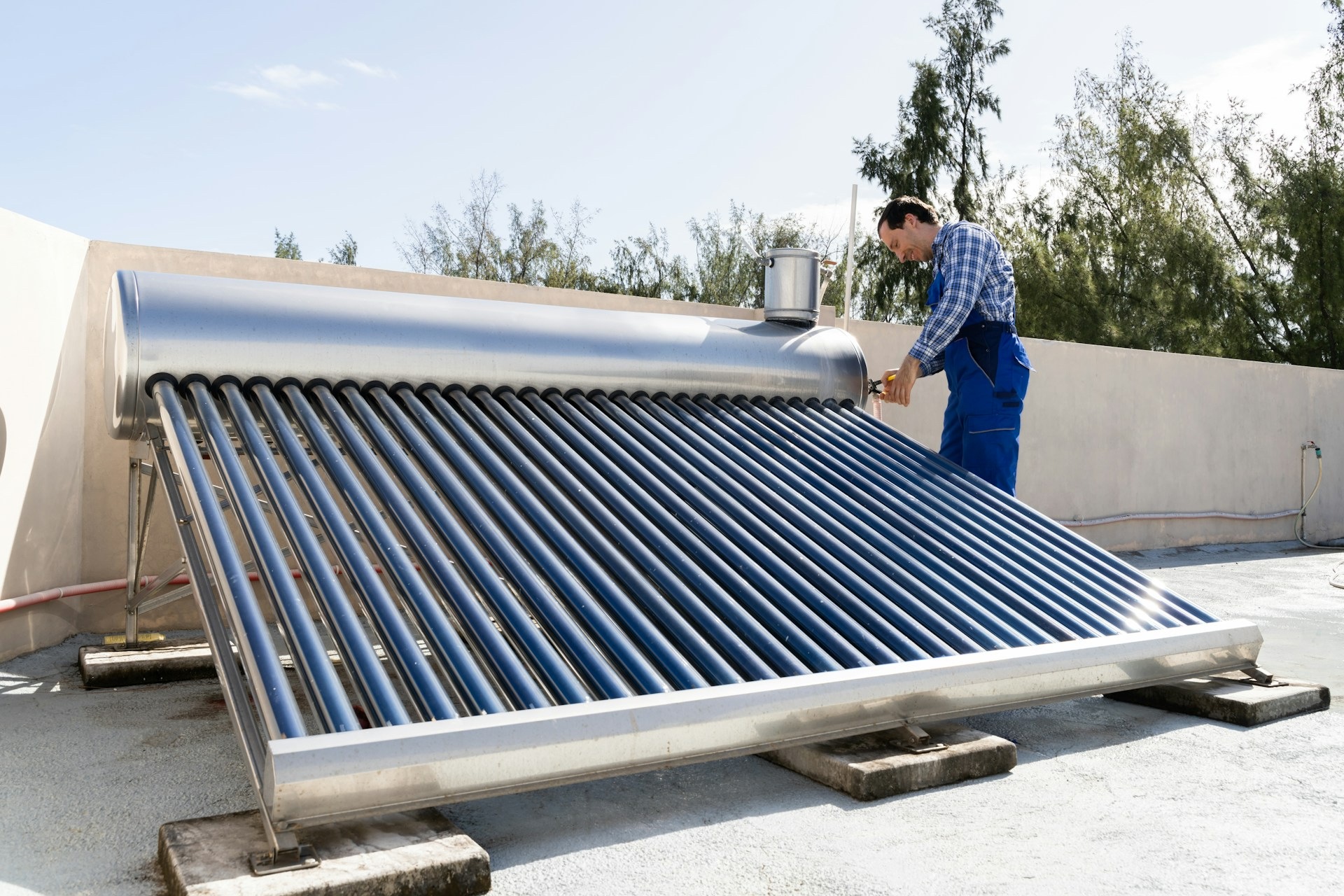
“There are two main types of solar-thermal collectors: flat-plate collectors and evacuated-tube collectors.
“The latter are generally more efficient as they retain heat better because of their vacuum-sealed design.”
William Hobbs, from trades-matching site MyJobQuote.co.uk, says, “The solar collectors need to be installed in a place that gets sun for most of the day.
“This is usually a south-facing roof, but a flat roof, wall or space in the garden can also be used.”
- Image credit: Cotswold Energy
Katharine explains, “The optimal location for solar-thermal panels is typically on a south-facing roof with minimal shading, allowing maximum sun exposure.
“The angle of the roof should ideally be between 20 and 50 degrees.
“If roof space or orientation is an issue, ground or wall-mounted systems can also be considered.
“It’s important to ensure there’s enough structural support. Especially for evacuated-tube collectors, which can be heavier than flat-plate systems.”
How does solar thermal integrate with your existing heating system?
Jon tells us, “The system works all year round whether the sun is shining or it’s the middle of winter.
“However, you’re still likely to need to heat the water further with a boiler or immersion heater, especially in the lower-daylight months.
“During the summer you can expect the system to provide 90% of your hot water. This will usually drop to around 25% throughout the winter with typically low light levels.”
William says, “A combination of solar thermal with conventional gas, LPG and oil boiler systems and heat-pump systems as these use hot-water cylinders.
“Making solar thermal compatible with a combi boiler is a bit more complex but can sometimes be done.
“Typically, you’ll need to install a thermal store or hot water-cylinder and a diverter to allow you to bypass the boiler when you want to use water from it.
“There are two main issues with this. Firstly, you’ll need to find space to fit the cylinder and secondly, you’ll need to find an MSC-certified heating engineer or solar installer to set it up for you.”
How much can you save?
Jon says, “A well installed solar-thermal system used properly will drastically cut your hot-water bills by up to 70%.
“The Energy Saving Trust estimates savings in the region of £120 to £225 a year for an average 4m2 collector system.
“It does depend on a variety of factors. These include: the size of your house, the type of system being replaced and where the panels are installed.”
How much does it cost?
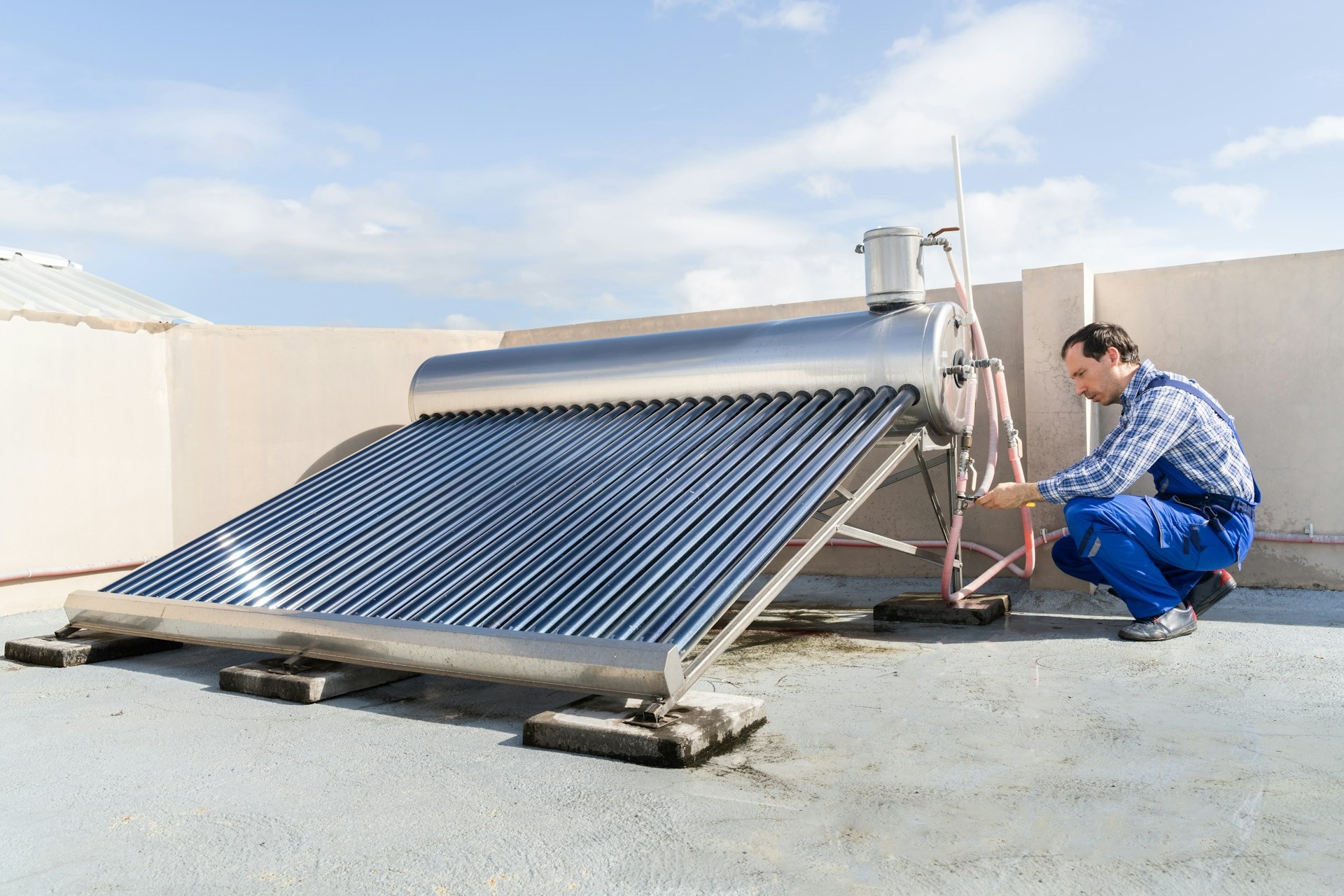
Katherine says, “The cost of installing a solar-thermal system in the UK ranges from £3,000 to £8,000, with an average cost of around £4,500.
“This includes the panels, hot-water cylinder, control panel, and installation. DIY kits are available at lower costs (around £1,750). However, professional installation is recommended to ensure system efficiency and eligibility for potential future incentives.
“Maintenance costs are relatively low, making solar thermal an economical long-term investment.”
- Image credit: Cotswold Energy
What is the payback period?
William points out, “Whether the cost is worth it largely depends on how much hot water you use and what you want out of the system.
“If your energy bills are currently high but the main portion of your gas and electricity use comes from heating the home or using appliances, it might be worth looking at other green technologies. This could be heat pumps and/or solar PV panels.
“Also, if your home is fitted with an electric shower, then a thermal system won’t reduce these running costs as the water will still be heated by electricity.
“On the other hand, if you use most of your hot water in the evening and have a mixer shower, a solar-thermal system could prove useful.”
In strictly financial terms, the initial investment will take a long, long time to pay back. Also, you may, in fact, not get your money back over the lifespan of the equipment.
What if I already have solar panels?
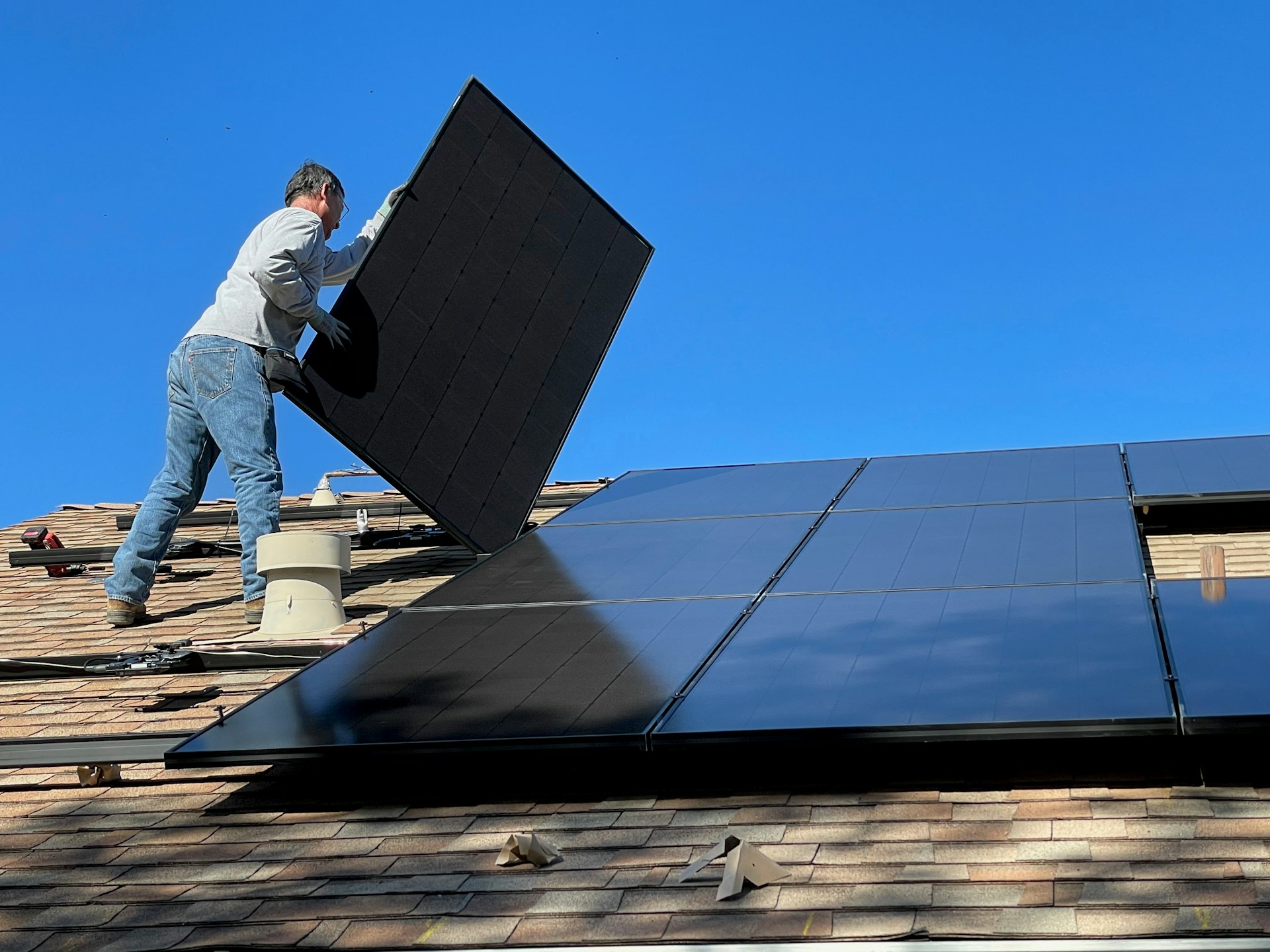
Jon draws attention to another option for heating water for those who already have a conventional solar-power set-up. This is an immersion power diverter, sometimes called a immersion optimiser.
“This is a gadget costing £700-£1,000 that diverts excess energy from standard solar panels towards your immersion heater to heat water.
- Image credit: Cotswold Energy
He explains, “If you already have solar panels, it’s likely you’re not using all the solar energy you generate.
“Surplus energy will be exported back to the national grid, but you could use it to get free hot water instead.
“If you’ve generated it yourself then it would make sense that you’d want to use your own solar energy. Especially if it could heat your water up for free.
“If you have a conventional boiler and hot-water cylinder system, you could install an immersion power diverter to maximise your solar-panel usage. As well as diverting the extra energy you’ve generated into heating your hot-water tank.
“This won’t affect ‘feed-in’ tariffs either – which pay for 50% of the energy your system generates. Therefore, you will still be paid the same whether you export it to the national grid or divert it to your appliances.
“The resultant reduction in energy bills means that you’ll have effectively paid off the cost of installing an immersion power diverter within two years.
“However, the Smart Export Guarantee allows energy suppliers to decide what tariffs to offer their customers.
“This means it may not be financially beneficial if you’re on this. So, it’s worth checking the rate you’re getting for your excess energy. This could determine whether it’s worth installing before you go ahead with an immersion power diverter.
“It’s also worth noting that you won’t be able to invest in one of these if you have a combi boiler.”
Do you need planning permission?
Jon says, “As most solar-thermal systems are considered ‘permitted developments’, they don’t generally need planning permission.
“However, if you live in a listed building or a conservation area, for example, then you may have more restrictions.
“If you’re unsure, it’s always worth double-checking with your local planning office.”
What about maintenance?
Jon says, “Solar hot-water systems are generally low maintenance and can last up to 10 years as long as they’re serviced regularly. Also depending on where they’re installed and how they’re used.
“They also tend to come with a five- to 10-year warranty. This means any repairs should be covered for the duration of the system’s lifespan.”
Sustainability
William concludes, “If you look at solar thermal from a purely economic point of view, then you might decide that it’s not worth the outlay.
“However, it will also reduce your carbon footprint. Additionally, if other technologies are too expensive or difficult to install in your property, it can be a handy way to improve the eco-credentials of your home.
“For homes that aren’t connecting to a gas main and rely on oil or LPG for heating, solar thermal can reduce your reliance on the market’s fluctuating prices. It can also improve your home’s energy efficiency.”
Katharine adds, “Solar-thermal panels significantly reduce greenhouse gas emissions.
“For instance, a typical system can prevent up to 930kg of CO2 emissions annually.
“Over a decade, this can mean a reduction of 3,100kg to 9,300kg of CO2, depending on your existing heating system.
“This makes solar-thermal panels an excellent choice for environmentally conscious homeowners looking to reduce their carbon footprint.”
READ MORE