Installing air conditioning: Can aircon be green?
Air conditioning has a reputation for high energy use. But new units are more efficient and where you source your electricity makes all the difference to your carbon footprint
We’re in a time of climate crisis. We need to produce far less greenhouse gas and we also need to adapt to increasingly extreme weather.
Air conditioning is good at the latter but it uses a lot of electricity. So, can it ever be green?
While being very wary of greenwash, I’d say that there is a place for aircon.
Modern units are more efficient – and notably your energy use only emits carbon dioxide if your electricity comes from burning fossil fuels, not if it comes from renewables.
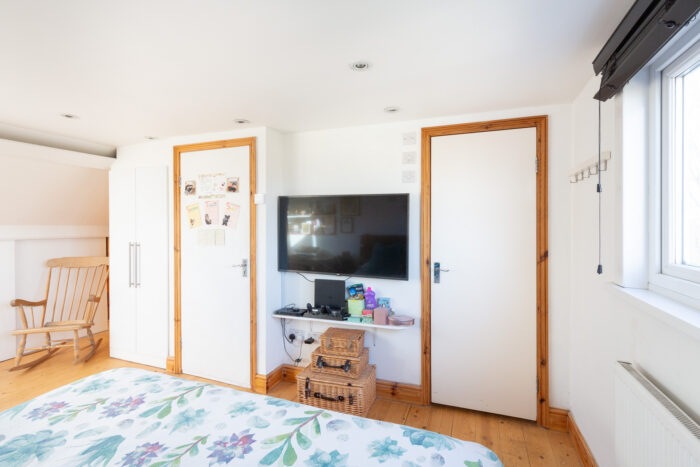
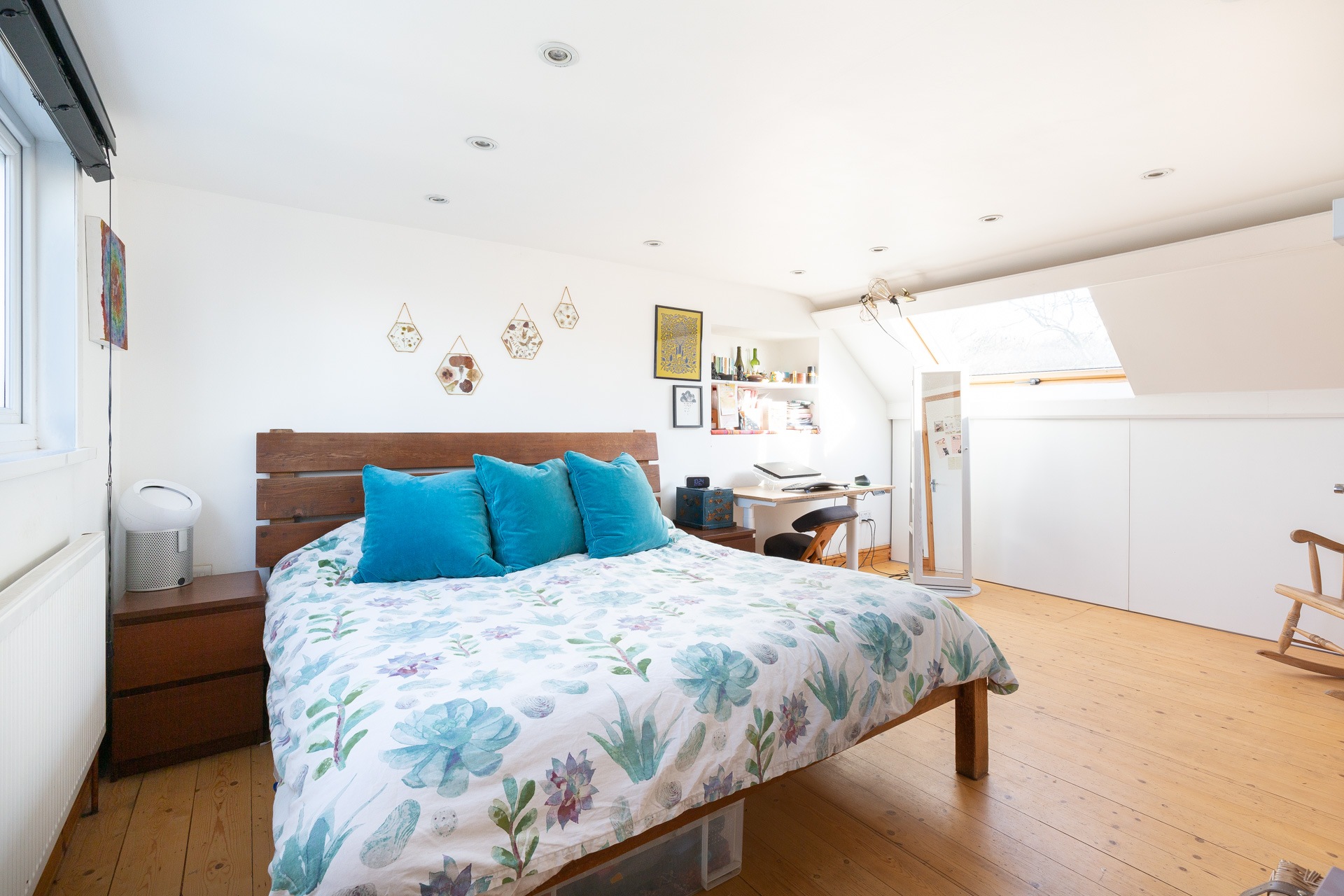
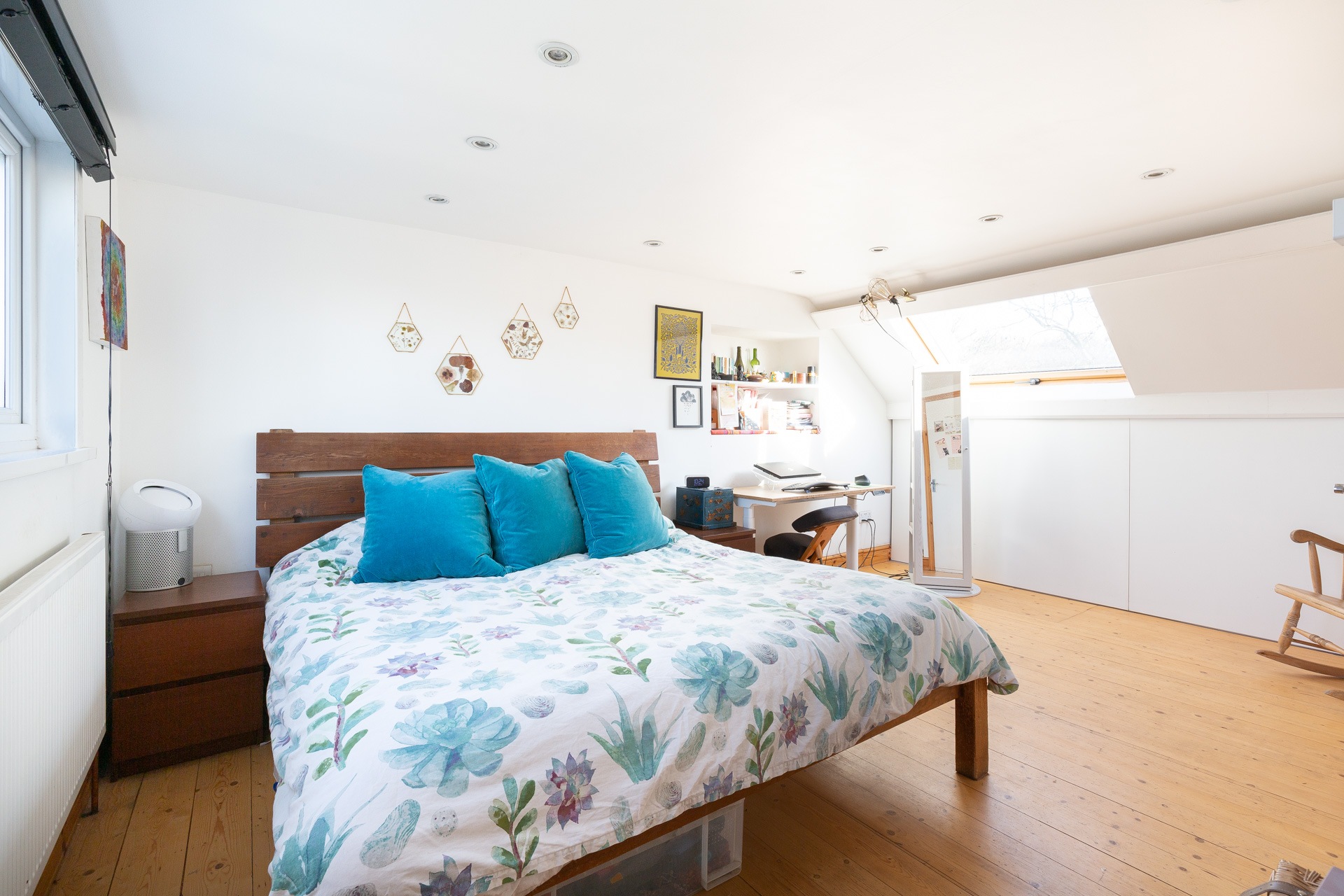
Before: the plan was to fit aircon above the TV, to cool the boiling hot loft
Cutting carbon
If you’re on a 100% renewable tariff (or if you generate your own electricity and store it in a big battery – an increasingly popular option as fuel prices rise and solar panels get cheaper) then your aircon isn’t powered by gas at all.
If you’re not on a renewable tariff then the energy mix that makes up your electricity will vary depending on the time of day.
At lunchtime, the vast majority of mains electricity comes from renewables – but avoid 6-10pm, when higher demand means gas-fired power plants are used three times as much.
Even if you plump for aircon, I’d advocate being thrifty. So that means using it for a short time while you get to sleep, not all day every day.
That’s because running aircon is expensive. Put simply, cooling off with a fan costs pennies and aircon costs pounds.
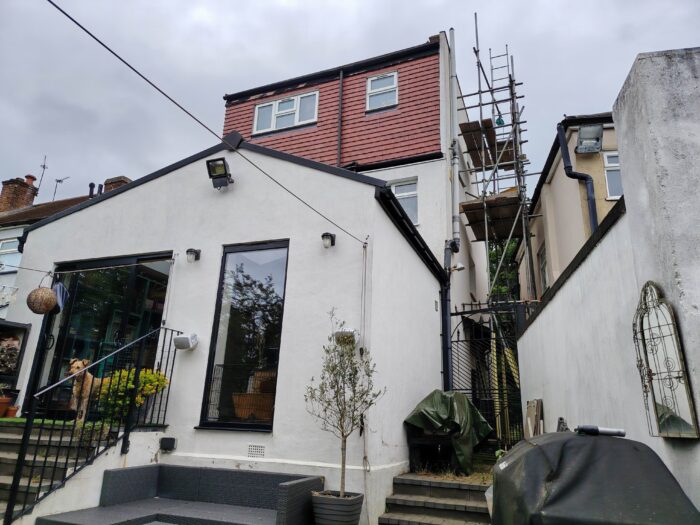
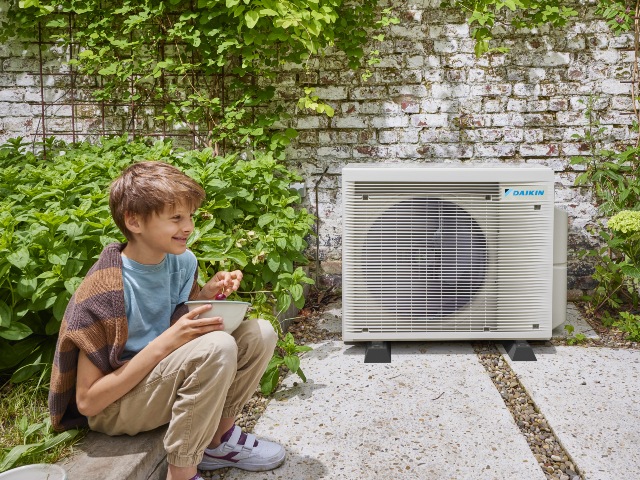
During: we needed scaffolding at the side of the house to fit the outdoor unit
Getting an aircon survey
I live in a 1930s end-of-terrace house.
Like many people, my bedroom is in the loft. And that’s the problem.
Loft conversions are exposed and rarely well insulated.
They tend to be cold in winter and boiling hot in summer, when the sun’s beating down on the roof.
To top it all, heat in the house rises up the stairs and turns my bedroom into a heat trap by the end of each day.
I ascend the stairs with a sense of dread on a summer’s night. (If you’re designing a loft conversion, combine insulation on the outside with thermal mass inside: high thermal mass is slow to change temperature, like a thick stone wall.)
I opted for a fixed air conditioning unit, in the loft only, from heating and cooling specialists BOXT.
The company is better known for boilers but it does air conditioning, solar and heat pumps too.
BOXT operates online and keeps costs down by doing its surveys remotely.
A video call with a technician and uploading photos are all it needs to give a quote – and the quote’s competitive because savings are passed on to you.
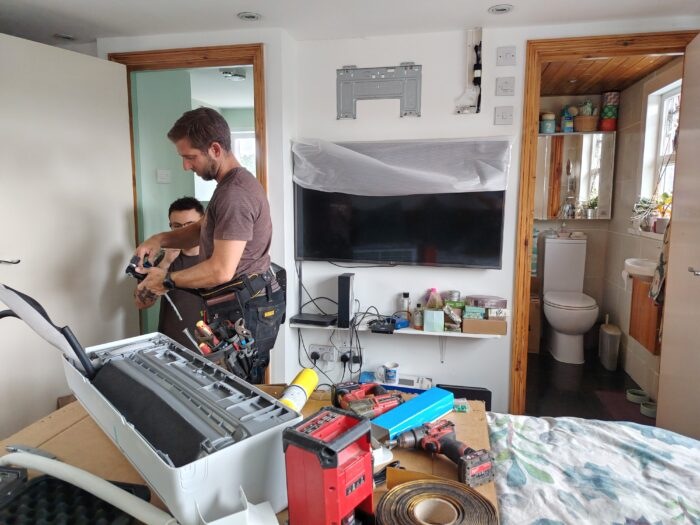
Installation day: a team of two fitted the units, indoors and out
Installation day
I picked a convenient day. Two days, in fact.
The first was for scaffolding at the side of the house, the second was for the aircon installation.
Scaffolding went smoothly and I was pleased that very little needed to be moved.
The aircon installers arrived the next day and knew their stuff.
They confirmed my suspicions though: doing away with an in-person survey means that installers sometimes improvise more.
For example, my installers proposed that the outdoor unit would be better on the roof than hanging on the side of the house (where my external wall insulation meant that the brackets and fixings would literally do a lot of heavy lifting).
I was a little wary of the idea of putting a pipe through my roof but the installers were confident there would be no leak and also assured me that BOXT had me covered. So I trusted them.
The installation was impressively smooth. I didn’t go up on the roof but I’ve seen photos of the external unit.
Meanwhile the indoor unit fits neatly on the wall above my TV as planned.
There was no mess and the job only took half a day. I was surprised that a separate electrician had to come hook it up (the aircon can plug into a socket for testing but then the electrician wires it in properly).
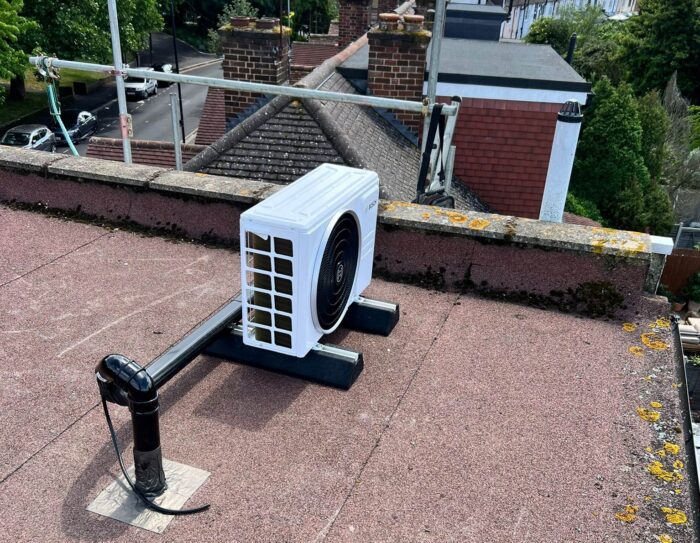
The team changed the plan on the day and proposed putting the external unit on the roof
The setup
The unit BOXT installed in my loft was the Bosch Climate 3000i 3.5kW (from £2,420, plus if you need scaffolding that starts at £550).
How much electricity it uses (and therefore how much it costs to run) depends on the difference between the outdoor temperature and the indoor temperature you’re aiming for.
Air conditioning units are basically air-to-air heat pumps, so they move heat energy from one place to another by compressing and expanding a refrigerant.
It’s the same way a fridge or a heat pump works. Fun fact: they work in both directions, so you can also use them to warm a room.
Let’s assume – and it’s a safe assumption – that I would only turn mine on when it’s a hot night.
If it’s 30°C outdoors and I’d like my bedroom to be 19°C, the Bosch costs around 72p an hour to run.
So it’s a luxury, but frankly a night of cool bliss would cost the same amount as a tub of good ice cream (yes, I’d set it to turn off once I was asleep – did I mention I’m frugal?). It’s a price I’m willing to pay.
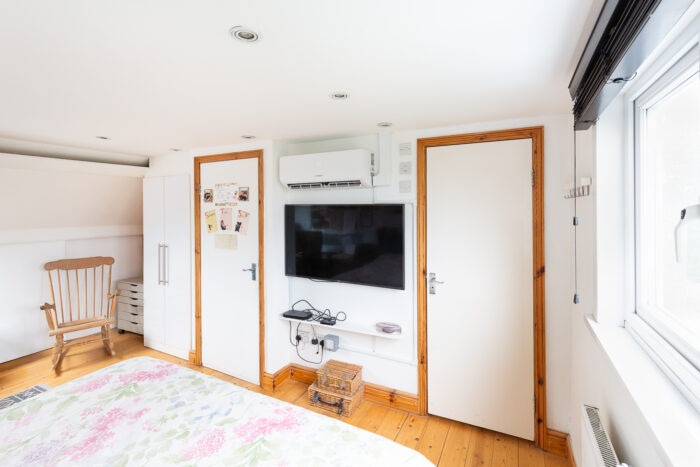
After: the aircon unit fits neatly above the TV
Quick cooling
When the installers showed me the ropes, I was surprised to learn that the unit has a built-in air filter and a dehumidifier.
I often use a dehumidifier to speed indoor laundry drying, so it was good to learn that the Bosch could do double duty.
It does quadruple duty really: cooling, heating, air filter and dehumidifier.
It’s quiet and it cools the room fast.
I was impressed with how it made the bedroom cooler in a matter of minutes.
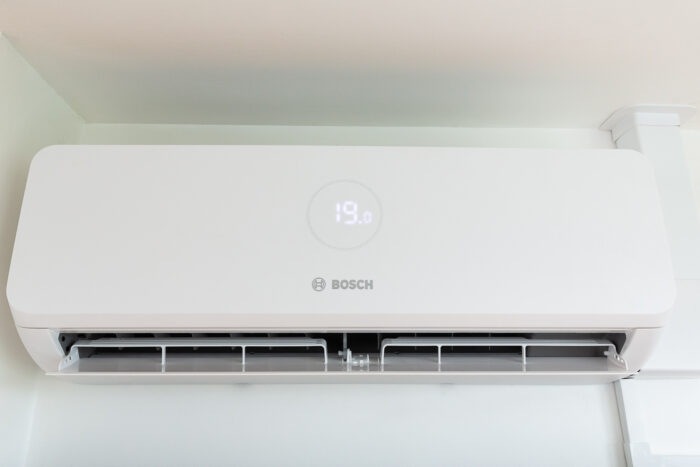
The Bosch doesn’t just do air conditioning, it’s also a heater, fan and dehumidifier
In conclusion, there are some rooms where – and certainly some vulnerable people for whom – air conditioning is more necessity than luxury.
But do it right. That means choosing a unit that does the job well and is built to last. It also means using it sparingly.
I only plan to use mine on the hottest nights, and with the bedroom door closed so it’s effective.
But it’s great to know that when a heatwave hits I have somewhere to cool off.
Meanwhile aircon’s climate impact can be mitigated with a renewable tariff.
There is still a climate impact because there’s embedded carbon in making the device – which is why I talk about getting a good-quality unit that’s built to last.
Where you get your electricity is key.
Adapting to cope with extreme temperature is a must, alongside cutting carbon emissions to lessen climate change.
It’s not an either/or. I’m still fighting climate change. Even at 19°C, I couldn’t sleep at night if I didn’t…
Main image: Paula Smith