Doors, Home maintenance, Home security
How to replace a door lock yourself
Save time and money on changing your door locks with this guide from the experts
Euro cylinder locks
A Euro cylinder lock is one of the most common locks used in both the UK and Europe.
It’s known for its modular design, easy installation and versatility.
It can be easily replaced without needing to remove the entire door handle, which is ideal for those wanting to do it themselves.
The adaptability of them means they can be used on various door types, although typically uPVC and composite doors, but also internal and external doors and both residential and commercial properties.
Anthony explains: ““Euro cylinders, commonly found on uPVC and composite doors, are widely regarded as the most DIY-friendly option.
“To change one, the fixing screw on the edge of the door is removed and the key is used to align the cam, allowing the cylinder to slide out and be replaced.
“It’s a quick job that typically requires only a screwdriver.”
This handy video from B&Q will show you how to replace the euro lock cylinder yourself.
Yale locks or night latches
A Yale lock is a type of night latch which is usually fitted on the internal side of a wooden front door.
Yale is one of the most common and trusted lock manufacturers in the world, being a household name in the UK and beyond.
Anthony adds: “Yale locks, or night latches, are types many homeowners can replace themselves.
“As surface-mounted locks, they can usually be removed by unscrewing the internal unit and rim cylinder from the door and fitting a like-for-like replacement.
“As long as measurements match, this is a relatively straightforward task.”
The video below shows you a quick fix of how to replace your Yale Lock in as little as 3 minutes.
Multipoint locking systems
A multipoint lock is a door locking mechanism that secures a door in multiple points along the frame – most typically at the top, middle and bottom of the door.
These are locked with a single action, such as turning the key or lifting the handle.
A traditional single point lock secures the door in one place, often at the handle or deadbolt – whereas a multipoint lock means it’s much harder to force it open.
They operate through a combination of bolts, hooks, rollers or deadbolts, that mean once the lock is engaged, all points secure at the same time.
This creates a tight seal along the full length of the door, providing security as well as preventing drafts and reducing the risk of a door sticking over time.
Multipoint locks are most commonly used on front doors in residential properties, as well as patio doors, French doors, and high security doors in commercial buildings.
Anthony adds: “Multipoint locking mechanisms, however, are much more complex.
These systems run the full length of a uPVC door and involve multiple locking points.
“Replacing one requires removing the handles and cylinder before taking out the entire locking strip, and then carefully matching it to the correct specification.
“Due to the level of precision required, I don’t generally recommend this as a DIY job as its better handled by a professional.”
Mortice locks
A mortice lock is a lock installed within a pocket cut into the edge of a door.
This offers enhanced security and a discrete appearance, making it more aesthetic and secure.
There are different types of mortice lock to suit your needs. Deadlocks is one, operated by a key with a single deadbolt and used for high security doors like a front entrance.
Sash locks are a combination of a sprung latch and a deadbolt, which allow access via a handle with additional security when locked.
Finally, mortice locks are commonly used as bathroom locks – designed for privacy rather than security.
Mortice locks are loved for their enhanced security and aesthetic appeal with a clean, uncluttered look.
They are also popular for their durability as they’re made from solid materials like brass or steel, which means they’re long-lasting and resistant to wear and tear.
Installing a mortice lock involves cutting a precise pocket into the door edge.
Homeowners can perform this with basic woodworking tools, but a specialist will be able to use a mortising jig for accuracy.
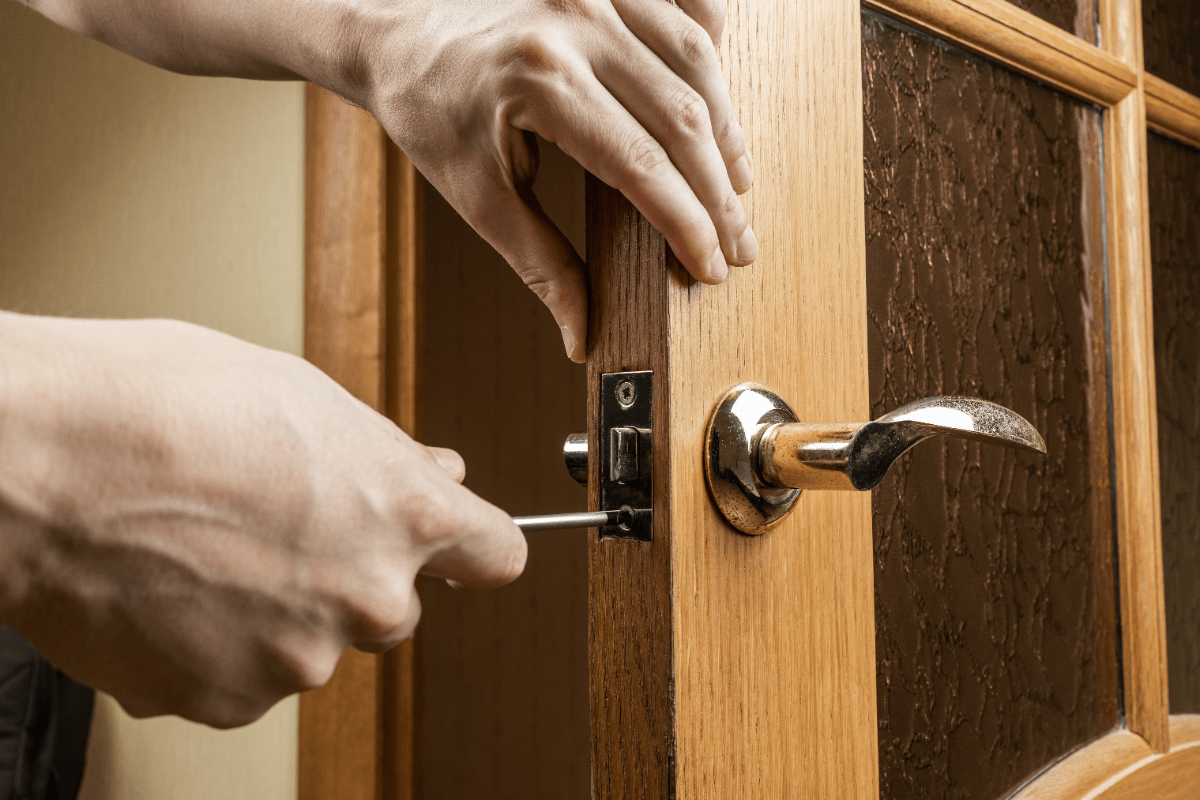
Anthony explains: “Mortice locks, typically found wooden doors, sit somewhere in between.
“Replacing one involves removing the door handles and faceplate so the lock case can be slid out from the edge of the door.
“While many follow standard sizes and can be changed by a confident DIYer, some adjustment may be needed to ensure proper alignment.”
This handy video from B&Q will show you how to change a mortice lock at home
Changing locks at home
Anthony adds: “It’s also important to note that in many situations such as lost keys or routine security upgrades, a full lock replacement isn’t necessary.
“Simply changing the euro cylinder can often resolve the issue quickly and cost-effectively.”